

Footy Manager
No Reviews · 0 reviews
Screenshots


Description
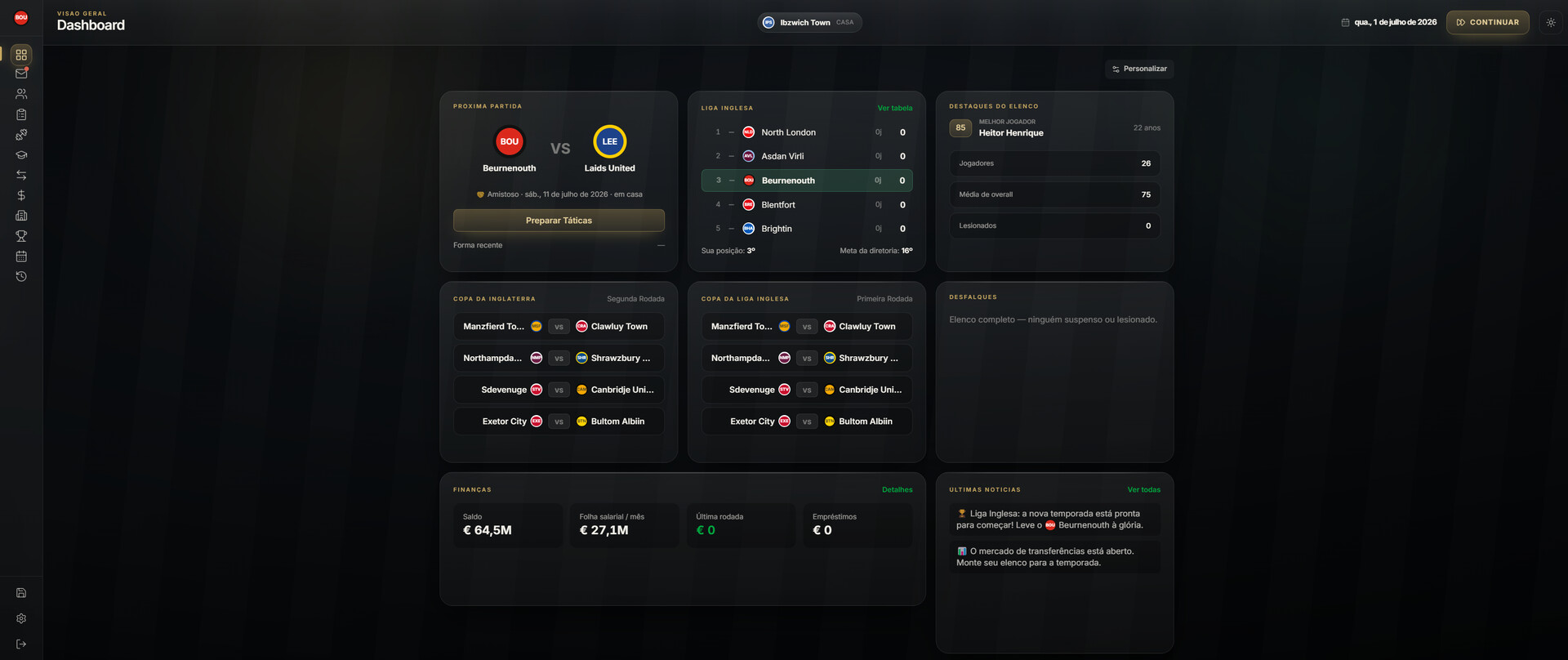
Take charge of a football club and answer for everything: sign players in a market where clubs haggle for days, balance the wage bill against the board's demands, and steer matches live from the touchline. 27 leagues, 690 clubs, one season at a time.
Platforms
Windows
Developer
Marajo Games
Publisher
Marajo Games
About
A whole club in your hands
You take over a team and you answer for it. Not just for Sunday's line-up: for the wage that fits
the budget, for the kid coming up from the academy, for the bid that lands for your best player the
night before the derby.
The board hired you with an expectation a place in the table, a run in the cup, the books in the
black. Meet it and you keep the job. Miss it and there are consequences, and they arrive before the
season ends.
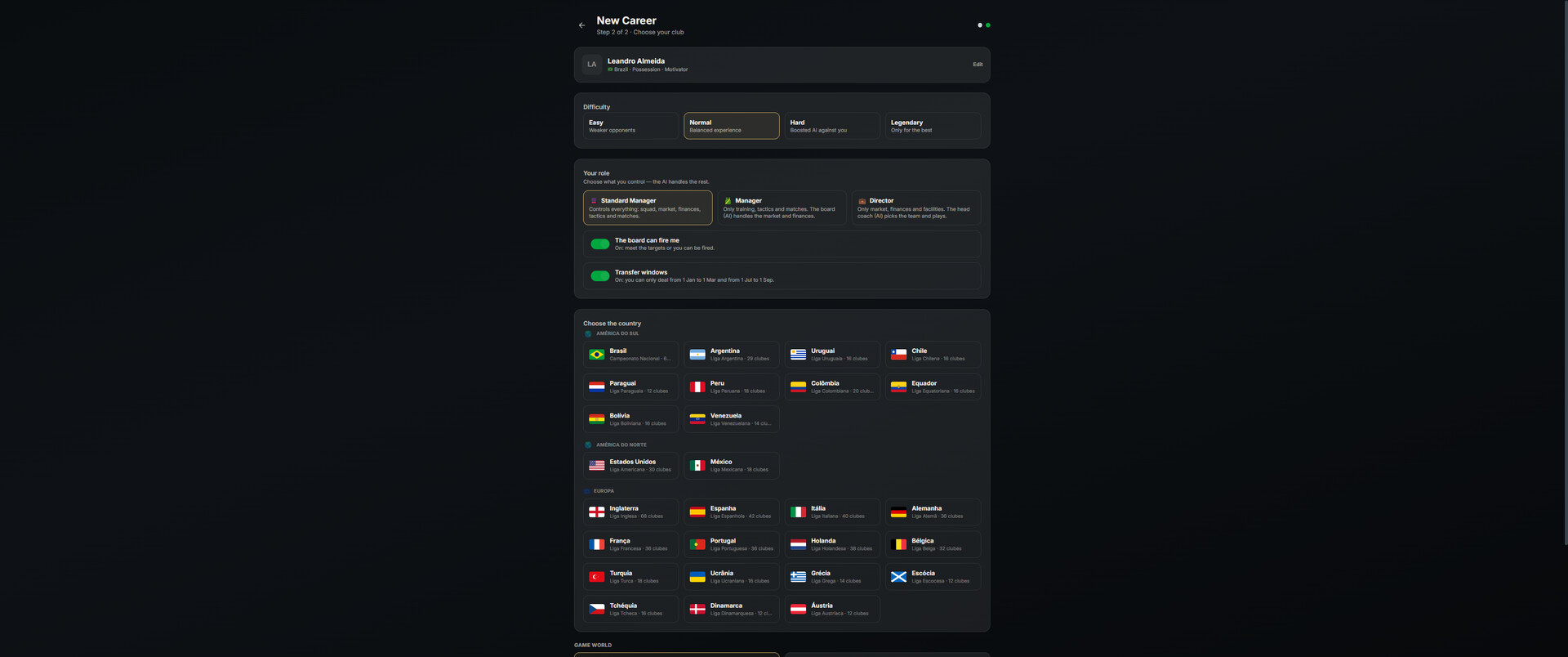
Pick your side of the club
Three roles, three different games inside the same world.
Manager - everything goes through you: line-up, training, transfers, finances and building work.
Head Coach - you handle what happens on the pitch. The board buys and sells, but they ask you
first when a bid comes in for one of your starters: he's essential, he'd do, I don't need him.
Your word carries weight it doesn't rule. With the club in the red they sell anyway, and the email
explains why.
Director of Football - you don't pick the team and you don't train it. You hire the person who
does, and you answer for the whole club.
DIRECTOR MODE - the club beyond the touchline
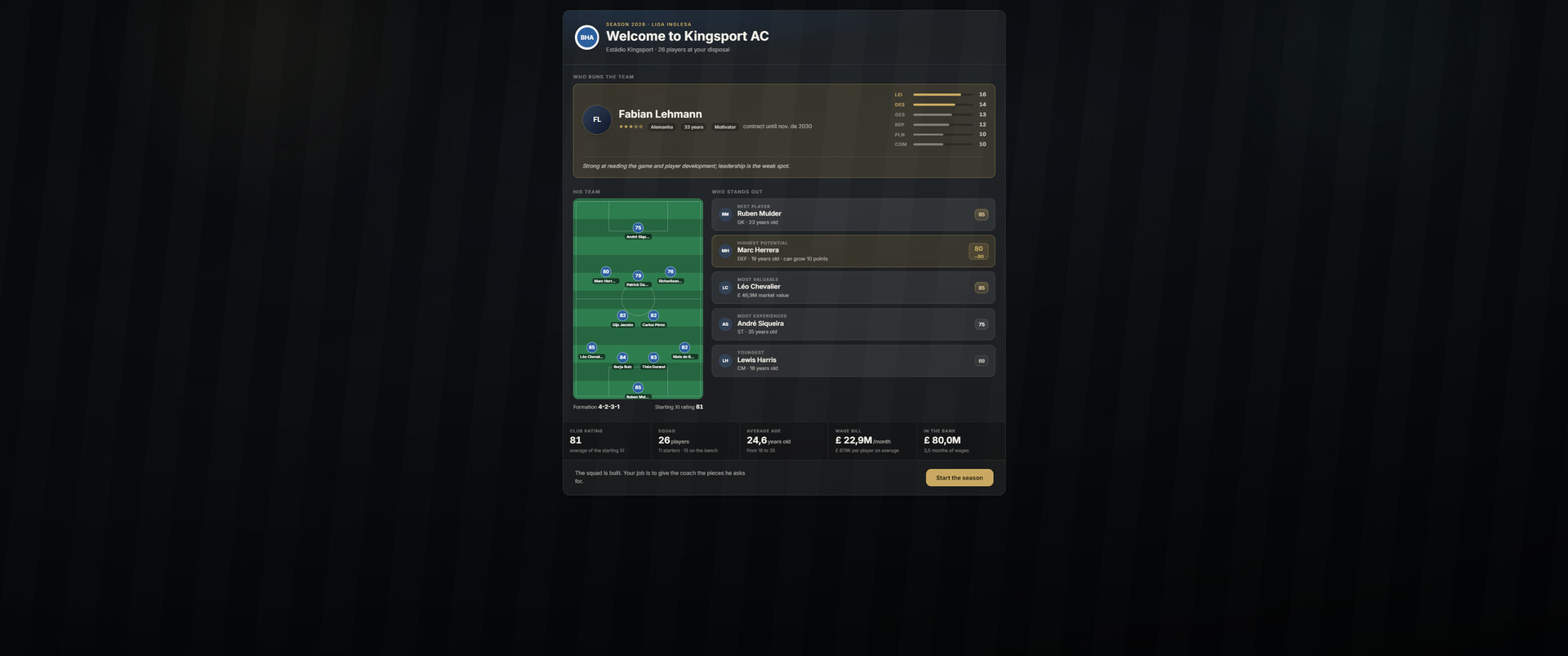
The coach is a person, not a menu
He has a name, an age, a personality, attributes and a contract. In the objectives meeting the two
of you agree the season league, cup, academy, finances and what you agree is locked until the
year turns.
After that it's a relationship: push him, praise him, call a squad meeting. Every conversation
carries risk, and his reaction depends on who he is. When the fans call for his head, you decide
whether to back him.
He asks for signings too. When the squad is thin somewhere, he arrives with names that make sense
for a club your size. Delivering improves the relationship; ignoring him until the window shuts
wears it down.
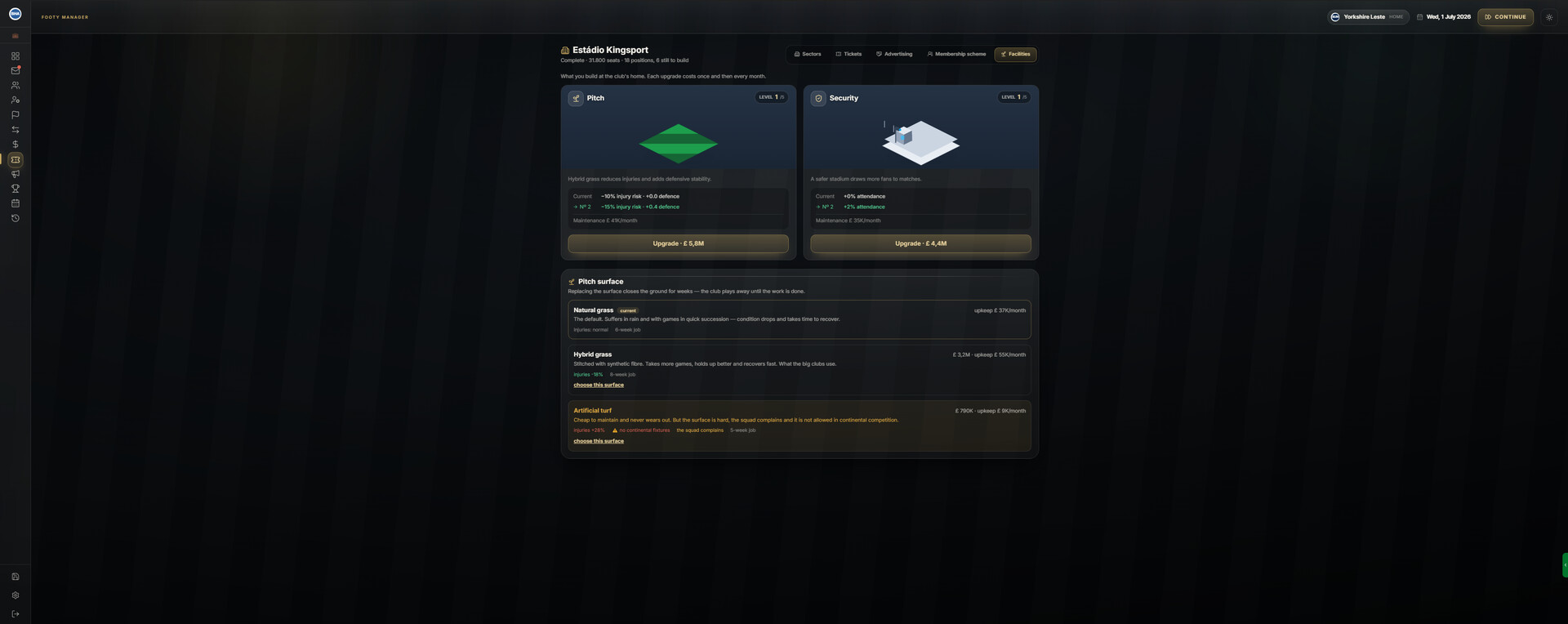
The stadium is yours, section by section
The stadium stopped being a single number. It is a map of up to 20 positions terrace, seating,
boxes, and the pitchside boxes right on the touchline and each section has its own price.
An expensive box empties the box and never spills into the terrace. You can bleed the people who
pay most and still keep the crowd in the ground, which is exactly what a real director does.
Six stadium shapes, and your club is born with one: complete, missing a side, ends only, missing an
end, single tier (which can double), and the bowl, where the ends curve round and swallow the
corners. The shape decides the club's ceiling and where you can build.
Expanding is a year-long decision. Work takes 20 to 52 weeks depending on size, and the section
stays shut throughout. You see the cost, the timeline, the revenue per match and how many matches
it takes to pay for itself before you sign anything.
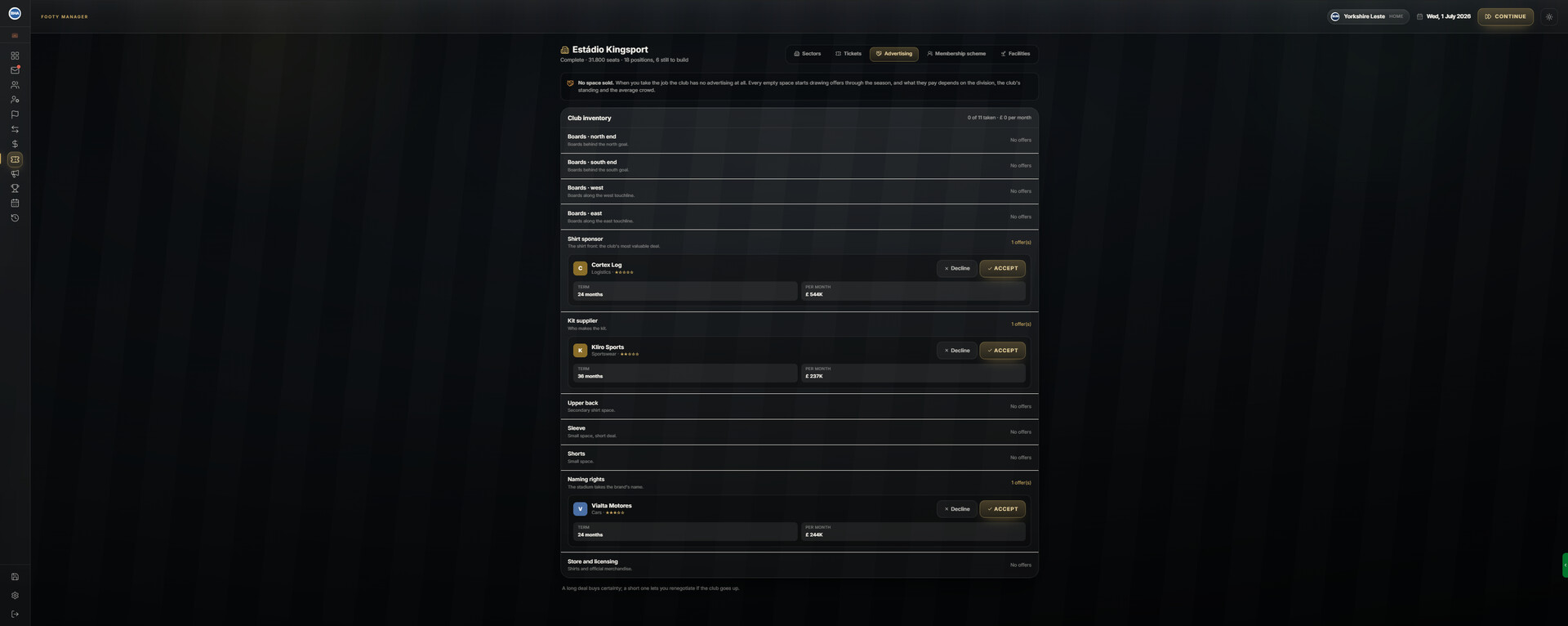
Advertising starts at zero
When you take the job the club has no deals at all: no pitchside boards, no shirt sponsor, no store
partner. Eleven spaces, and every one of them is negotiated.
Offers arrive through the season, and what they pay depends on the division, the club's standing
and the average crowd. A small club gets a small offer. Going up brings better ones. A long deal
buys certainty; a short one lets you renegotiate once the club grows.
Membership is a choice, not a number
Up to four plans, and you set everything: the monthly fee, the perks, and how much a member pays
for a ticket.
Free entry fills the membership and empties the gate. Stingy perks do the opposite: a full gate,
few members, shaky income. There is no right answer there's yours.
Social media has an owner, and you hire them
The club has accounts, but nobody runs them. They bleed followers until you hire a social media
manager one to five stars, on a wage that comes out of the club's payroll.
Their profile changes everything. The same goal becomes "Club goal. Smith, 38 minutes" from the
corporate type and a three-exclamation-mark shout from the supporter. The corporate one never slips
and never thrills. The provocateur gets the biggest reach and creates the crisis alongside it. The
content creator makes the video the fans share and gets the tone wrong on a bad day.
They work on their own: goals, full time, matchday eve, the table, a player's birthday on his real
date, a new signing, work starting at the ground. Three networks with different audiences images,
quick text and short video and what lands on one falls flat on another.
And they come to you when the call is a management one: the coach under pressure, complaints about
ticket prices, a rival taking shots on derby eve. You see what each path costs before you choose
or you leave it to them, and their profile decides.
Reach becomes money: members who arrive through social media, store sales, and weight in
sponsorship offers. That's what justifies the wage.
And when the rival goes out
The game knows who your real rivals are. Eighty-three derbies with names of their own the one
across the city, the one across the region, the one that stops the country. When one of them is
knocked out of a cup, the wind-up is available, and it has a price: go out yourself in the next
round and it comes straight back at you.
Sunday, 4pm. Kick-off.
The match runs and you follow it minute by minute. Speed it up when you're comfortable, pause it
when it tightens.
Losing on 60? Change the mentality, take off a holding midfielder, throw on another striker. Except
the bench gives you five changes across three stoppages the real rule and burning them early
leaves you with nothing when someone pulls up.
The other coach is doing the same. Behind, he'll commit; ahead, he'll shut up shop. The game
doesn't wait for you to decide on your own.
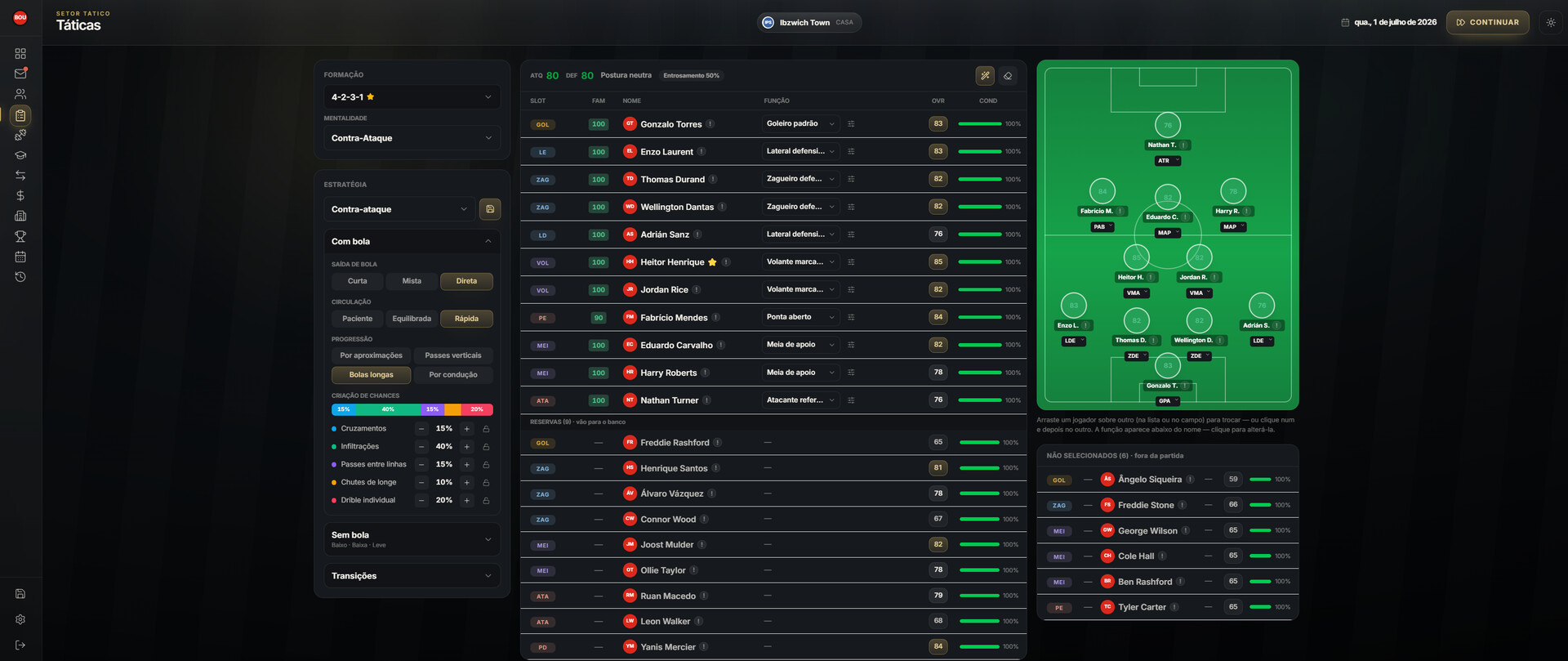
A settled team is a better team
Naming the same eleven builds understanding, and that is worth points on the pitch. Rotating too
much tears it down. But the calendar doesn't forgive: cup on Thursday, league on Sunday, and a
tired starter gives you less than a fresh substitute.
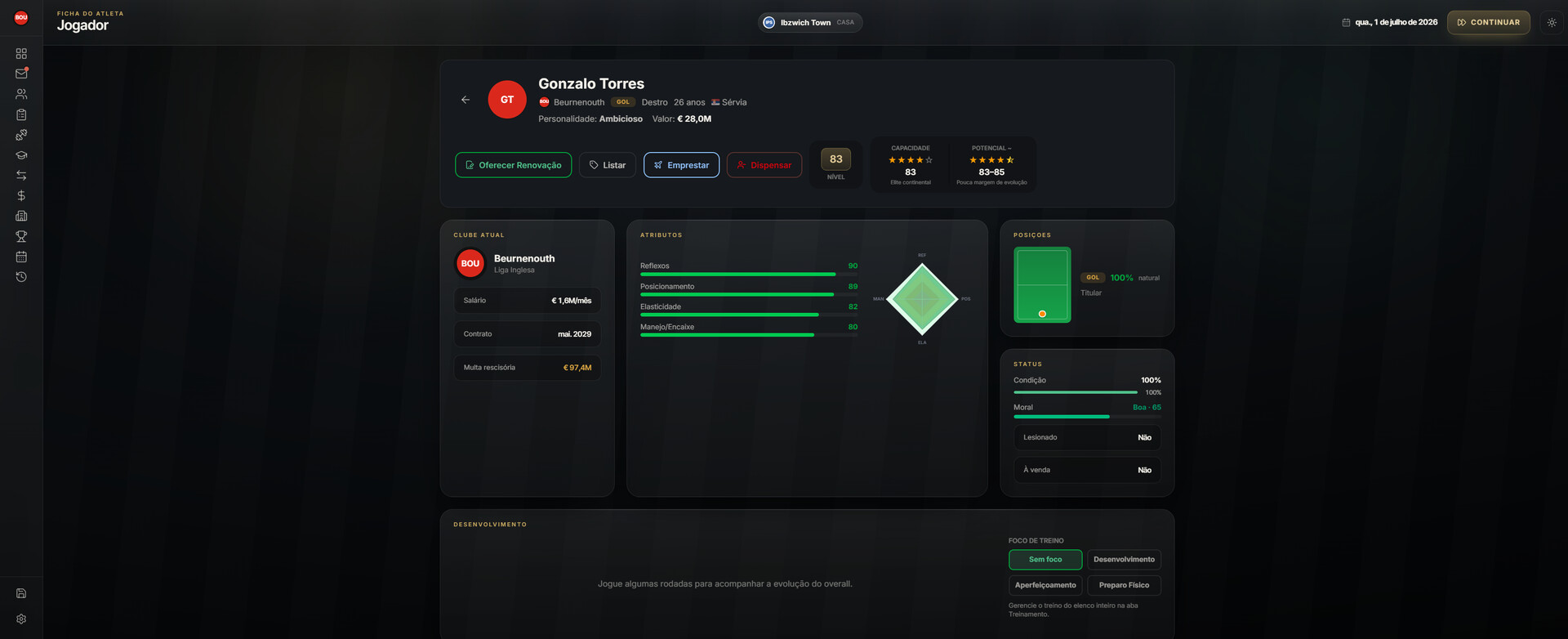
Every player has morale, form and a specific role. A centre-back shoved out to full-back plays
worse the engine knows, even when the team sheet looks right on paper.
Fifty-seven formations, and the pitch view shows what each one does.
The market is a negotiation, not a button
You make the bid. The other club takes days to answer, and can come back asking for more. Meanwhile
another team joins the race for the same player and whoever offers the better project, not just
the bigger fee, gets him.
Once the clubs agree, you still have to convince the player. Wage, signing-on fee, contract length.
He can turn you down and hold out for a move that matches his ambition.
When the cash won't stretch, there are ways round it:
- Pay in instalments - take the signing now and pay over time, with interest. Miss a payment
date and the debt grows, and the board hears about it.
- Pay the release clause - the club can't refuse. But it costs, and the player still has to
want to come.
- Loan - split the wage, negotiate an option to buy, and bar him from playing against you.
- Give up a sell-on percentage - cheaper today, and you sign away part of tomorrow's profit.
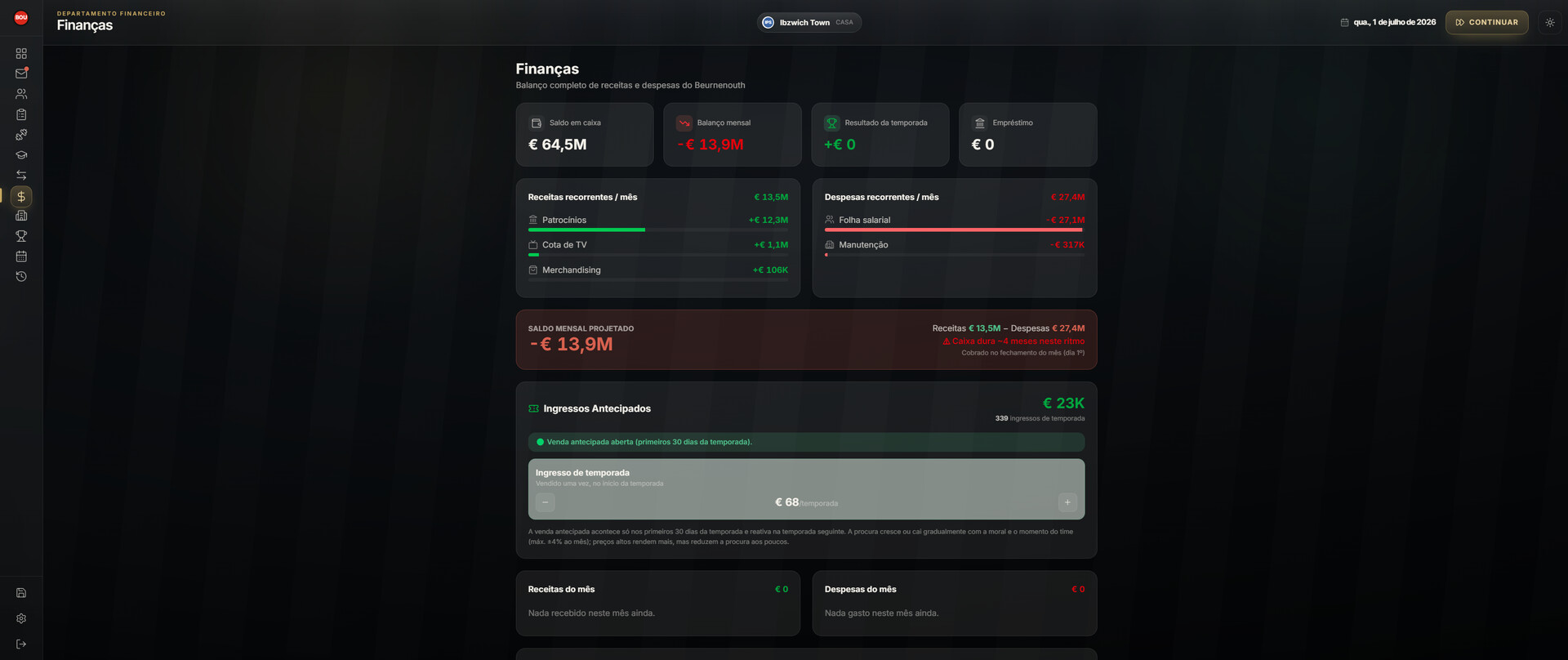
The books close at the end of the month
Sponsorship, TV money, gate receipts and the store on one side. Wages, upkeep and the instalments
you took on the other. On the first of every month the balance lands and it is the ruler for
everything you can do in the market.
A small club doesn't buy a star. But it can make one.
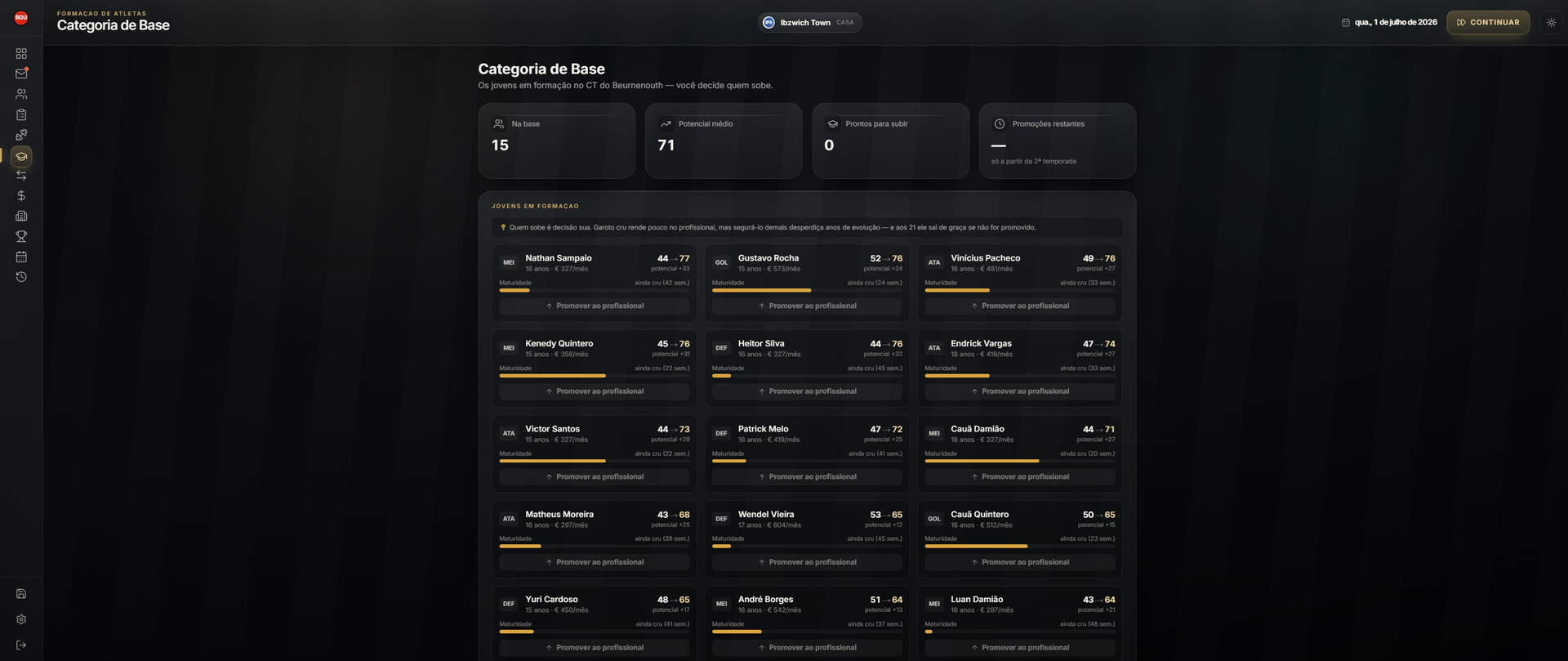
The academy takes years, and it's yours
The kids develop slowly. Promote too early and you hand a raw player to the first team; hold on too
long and you waste his best years. And at 21, anyone not promoted walks away for nothing.
You get a promotion quota each season. Choose well.
27 countries. A world that plays without you.
Brazil, England, Spain, Italy, Germany, France, Portugal, Argentina and more 693 clubs and
almost 16,000 players contesting their own leagues, domestic cups and continental competitions.
Clubs sign from each other, go up, go down and change coaches while you look after yours. Want a
lighter world? Choose which leagues the game simulates.
Your way
A full database editor ships with the game: names, squads, attributes, stadiums and images.
Whatever you build can become a file and be shared with other players in comunity.
Full interface in English, Spanish and Portuguese (Brazil and Portugal).