
Japanese Swordsmith
No Reviews · 0 reviews
Screenshots

Description
From tamahagane to a finished katana. Become a swordsmith in Bakumatsu Kyoto—sumikiri, mizuheshi, folding forge, the quench, polishing—finish a Japanese sword with your own hands. A hardcore swordsmith simulator. It will not be easy.
About
From tamahagane to a finished katana.
Become a swordsmith in Bakumatsu-era Kyoto.
Japanese Swordsmith is a hardcore swordsmith simulator built around the traditional path of Japanese sword making. Sumikiri, mizuheshi, stacking and welding, folding forge, steel construction, drawing out, fire shaping, clay packing, the quench, polishing, and mounting.
Not a minigame—this is real work.
Learn the traditional craft path and forge your own katana from tamahagane.
Take on shapes inspired by famous and fictional blades.
The traditional craft path
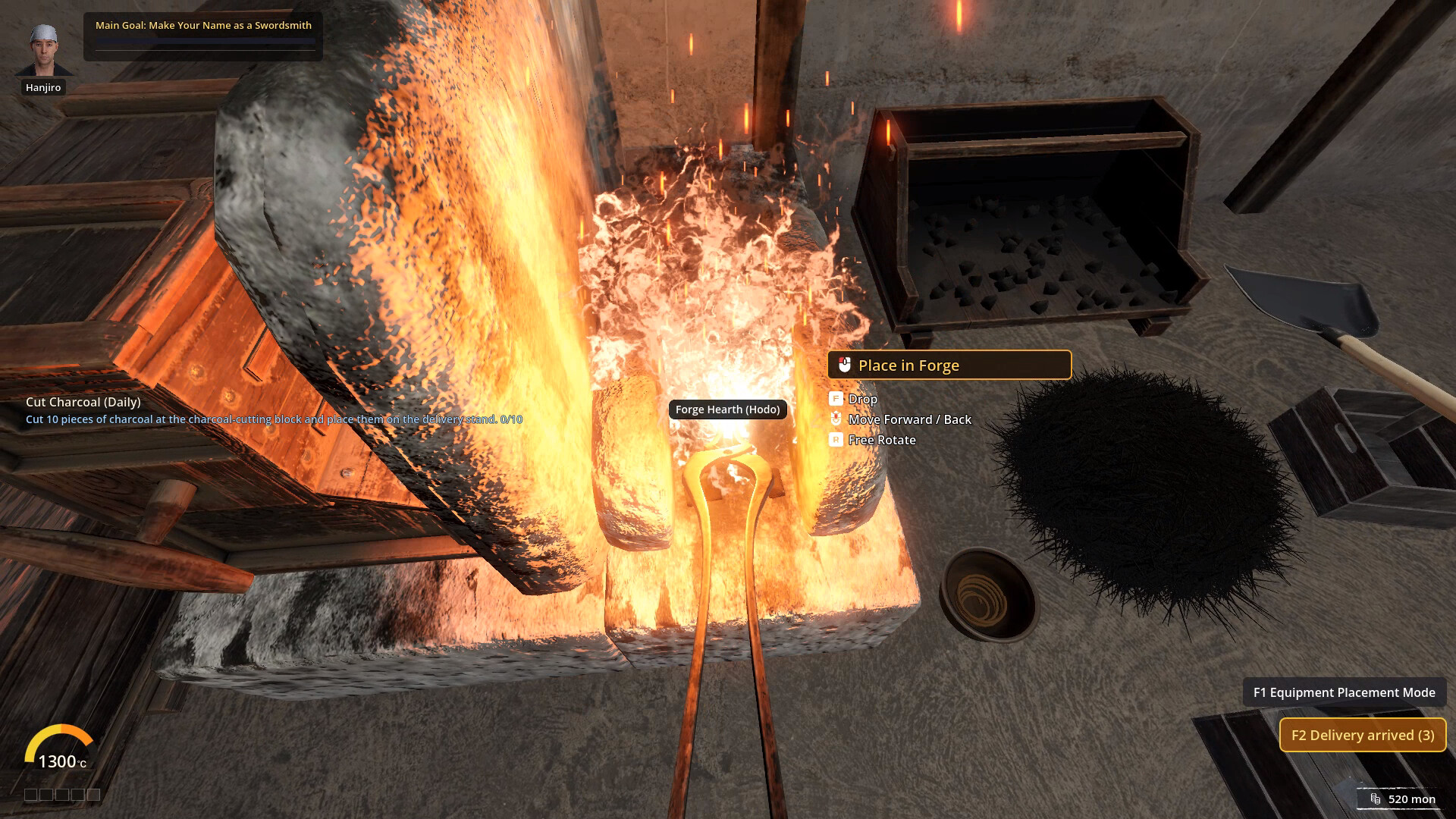
Sumikiri (charcoal cutting) — cut and prepare charcoal for the forge fire with your own hands
Mizuheshi (break & sort) — heat and hammer tamahagane, quench it, then sort the broken pieces
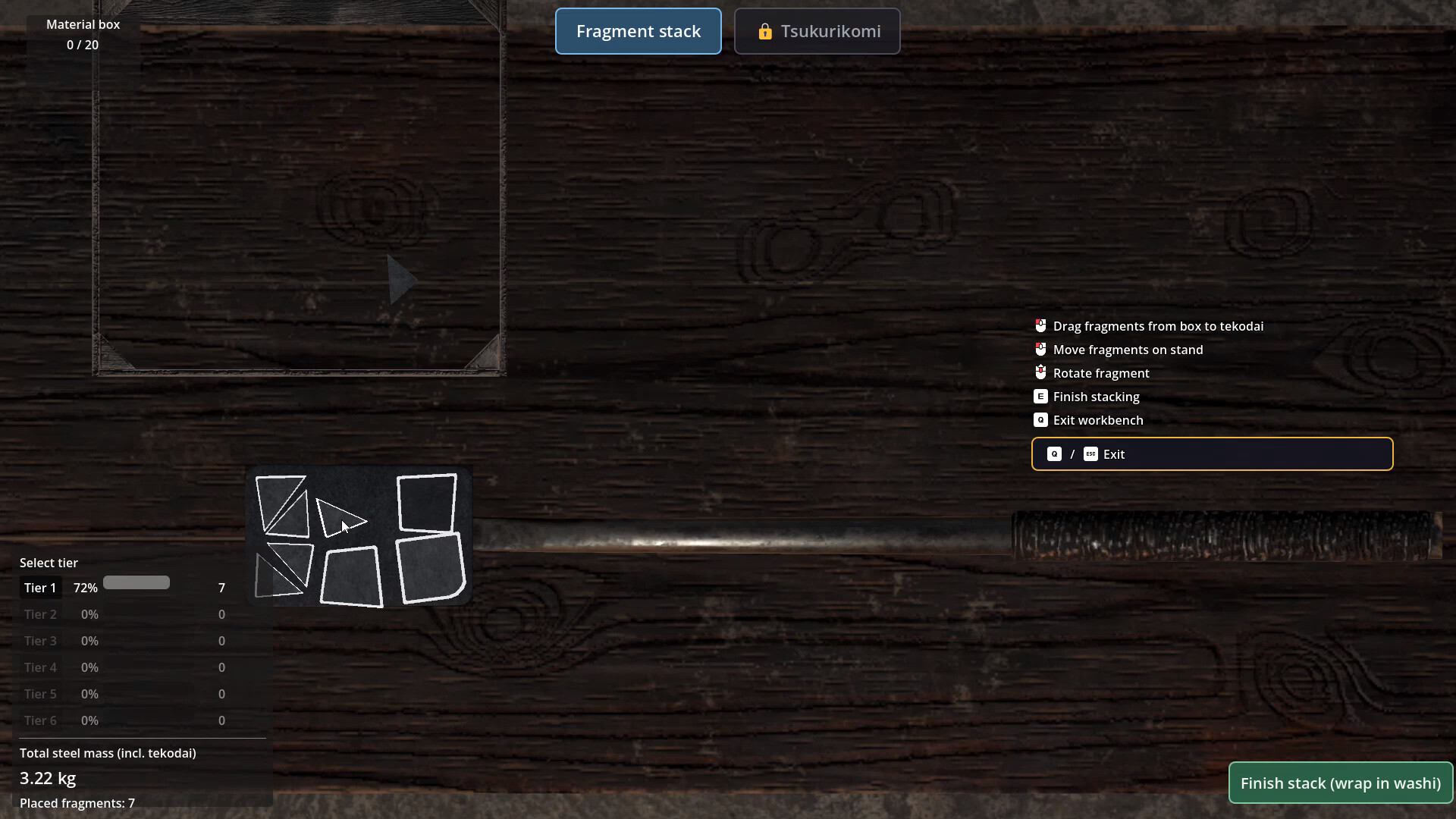
Tsumiwakashi (stack & weld) — stack fragments and forge them into a single billet
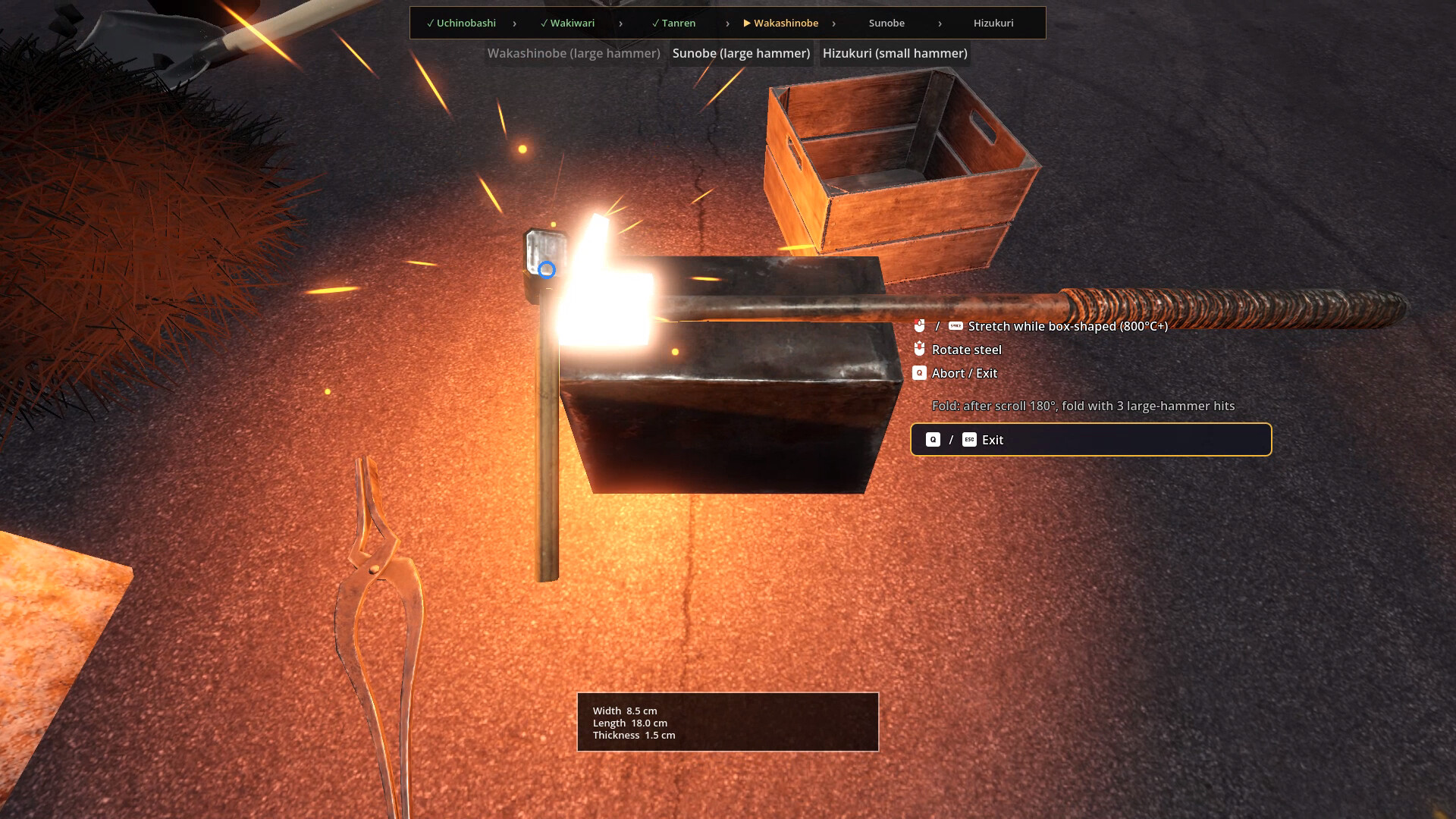
Tanren (folding forge) — fold and hammer to refine the steel
Tsukurikomi (construction) — layer jacket and core steels into the blade's heart
Wakashinobe / Sunobe (drawing out) — draw the steel to length and shape the kissaki
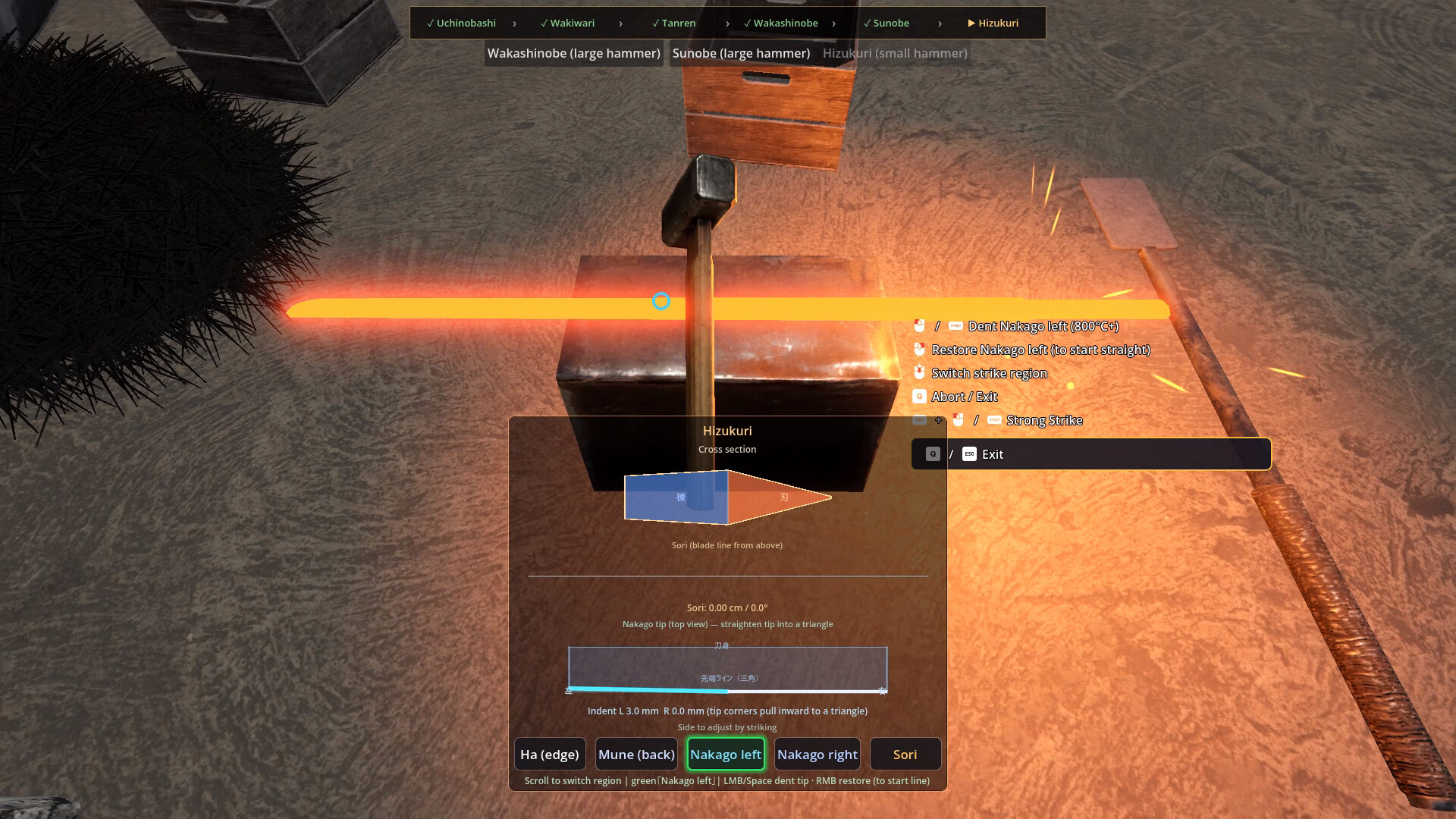
Hizukuri (fire shaping) — form the edge, spine, curve, and the rest of the blade
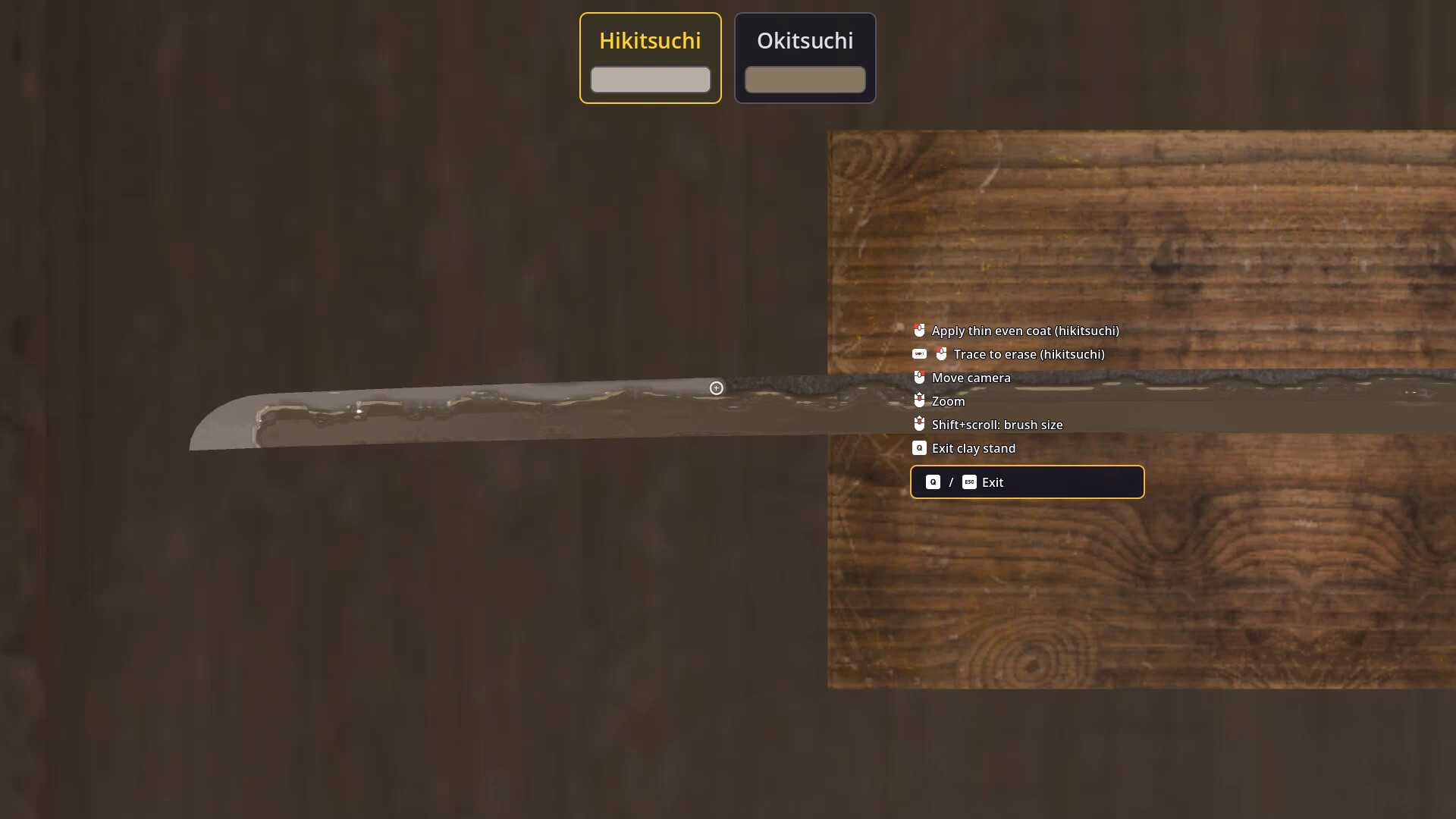
Tsuchioki (clay packing) — paint the clay line that will become the hamon
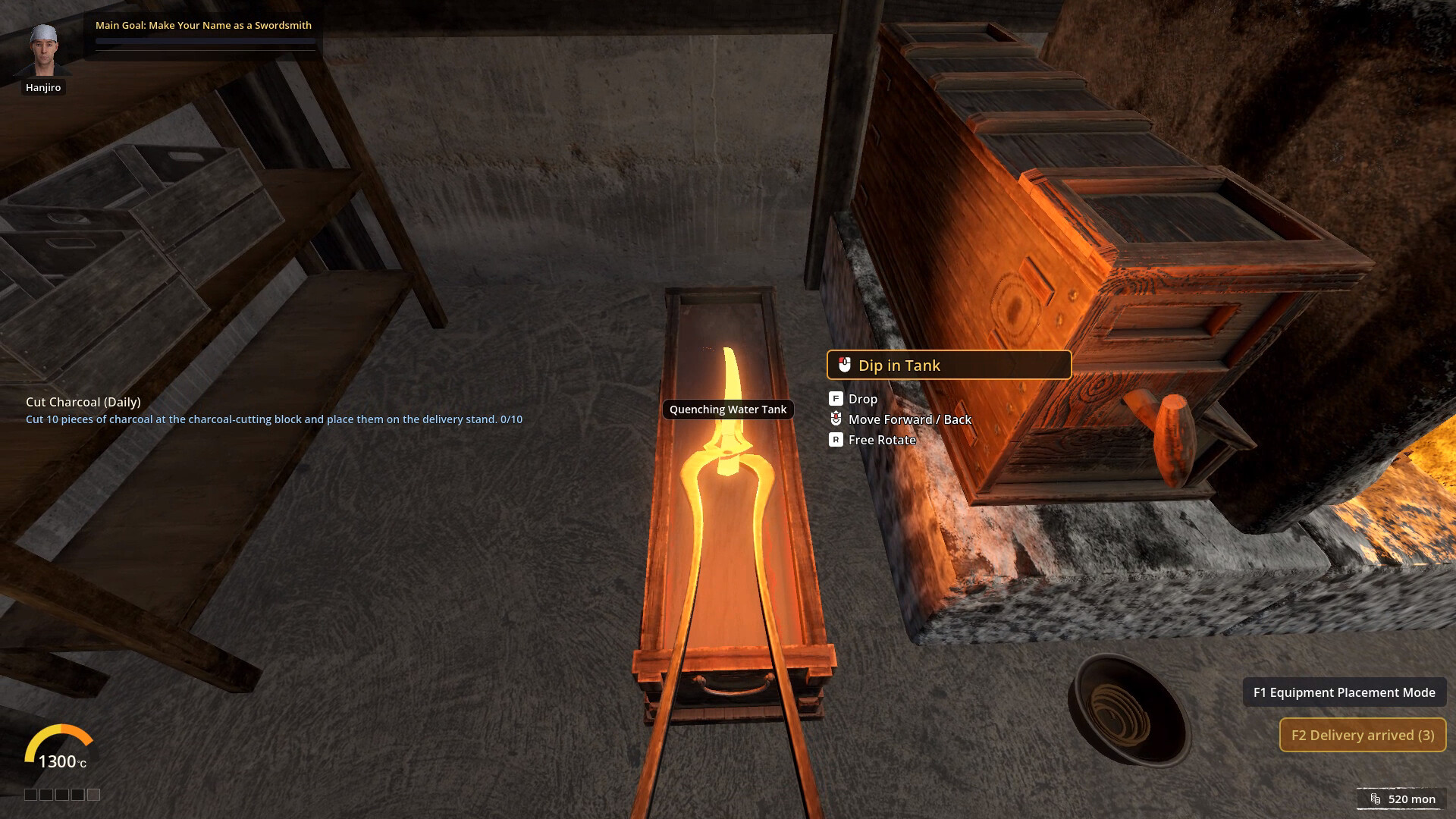
Yakiire (the quench) — quench the heated blade and lock in the hamon—one shot, no undo
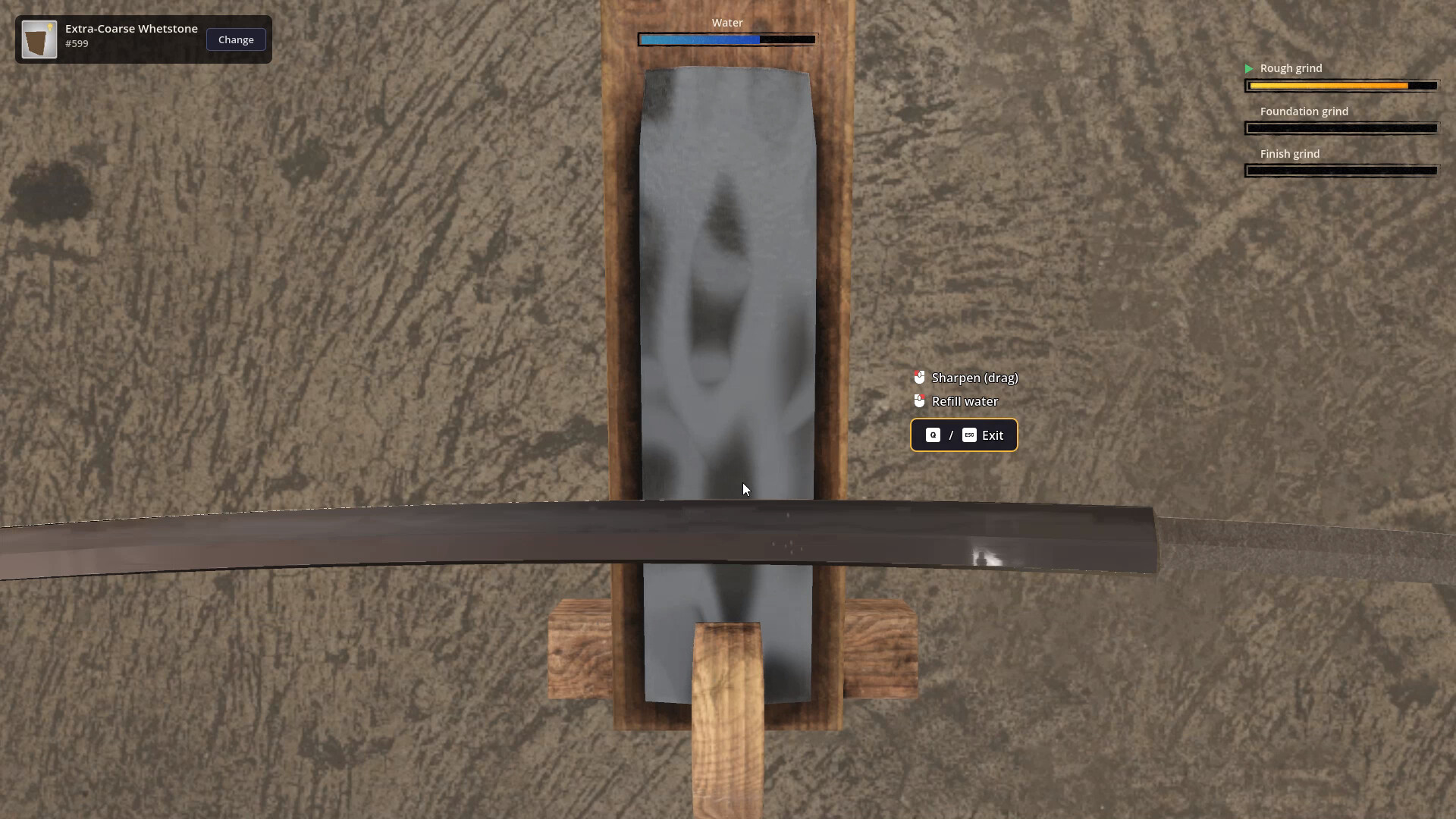
Togi (polishing) — remove clay on the stone and bring out jigane and hamon
Koshirae (mounting) — fit tsuka, tsuba, saya, and finish the sword as a whole
Read the steel. Make your best blade.
Watch the forge fire, the color of hot steel, the state of every strike—and finish the metal at its best. If you aim for a katana that will not break, will not bend, and will cut true, that attention is required.
A blade with your mark
The clay line you place becomes the hamon. Whether it rises cleanly depends on the steel and the quench. The work you put in shows in the blade's face—hamon, jigane, and character.
Lay out the forge your way
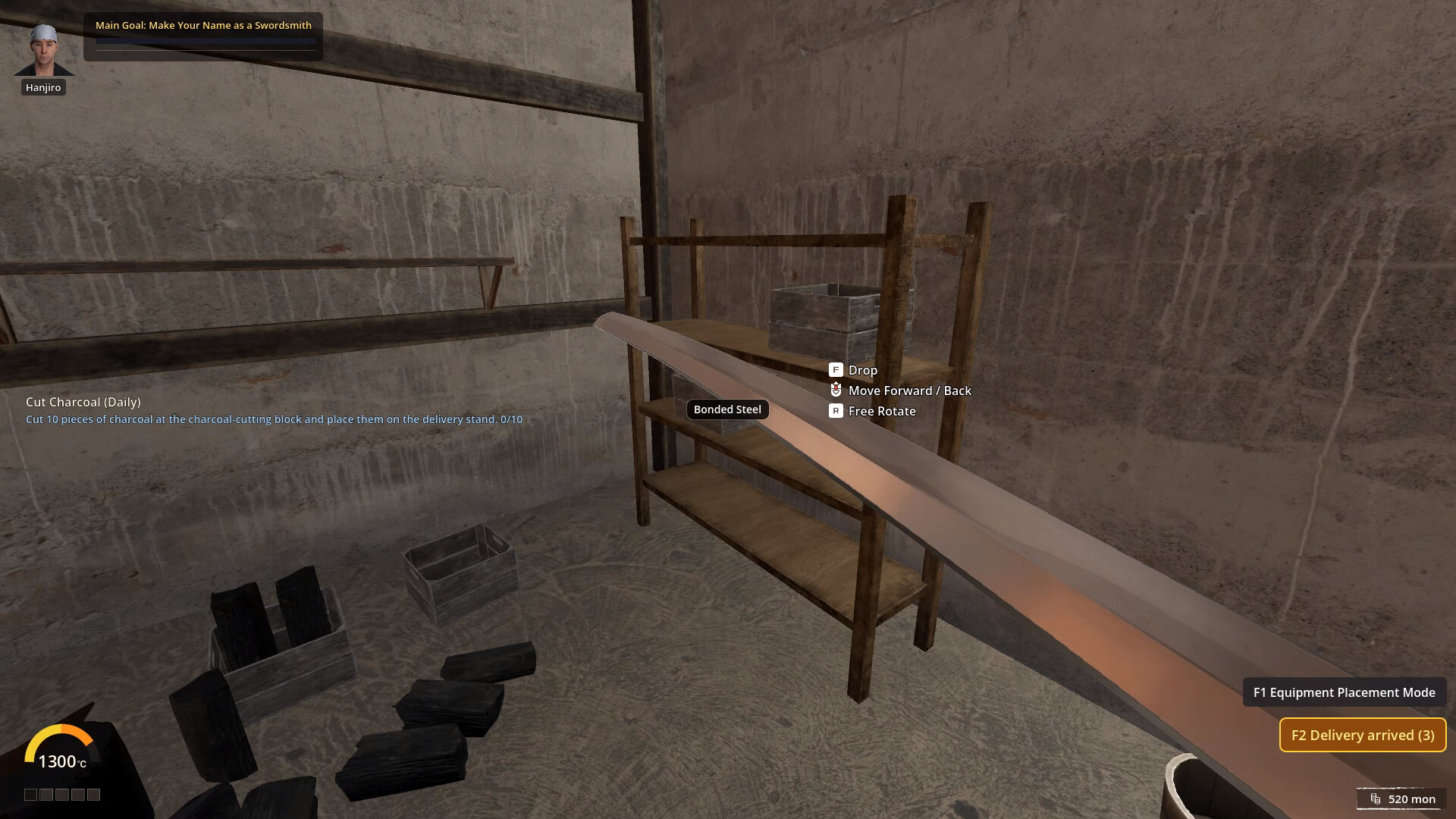
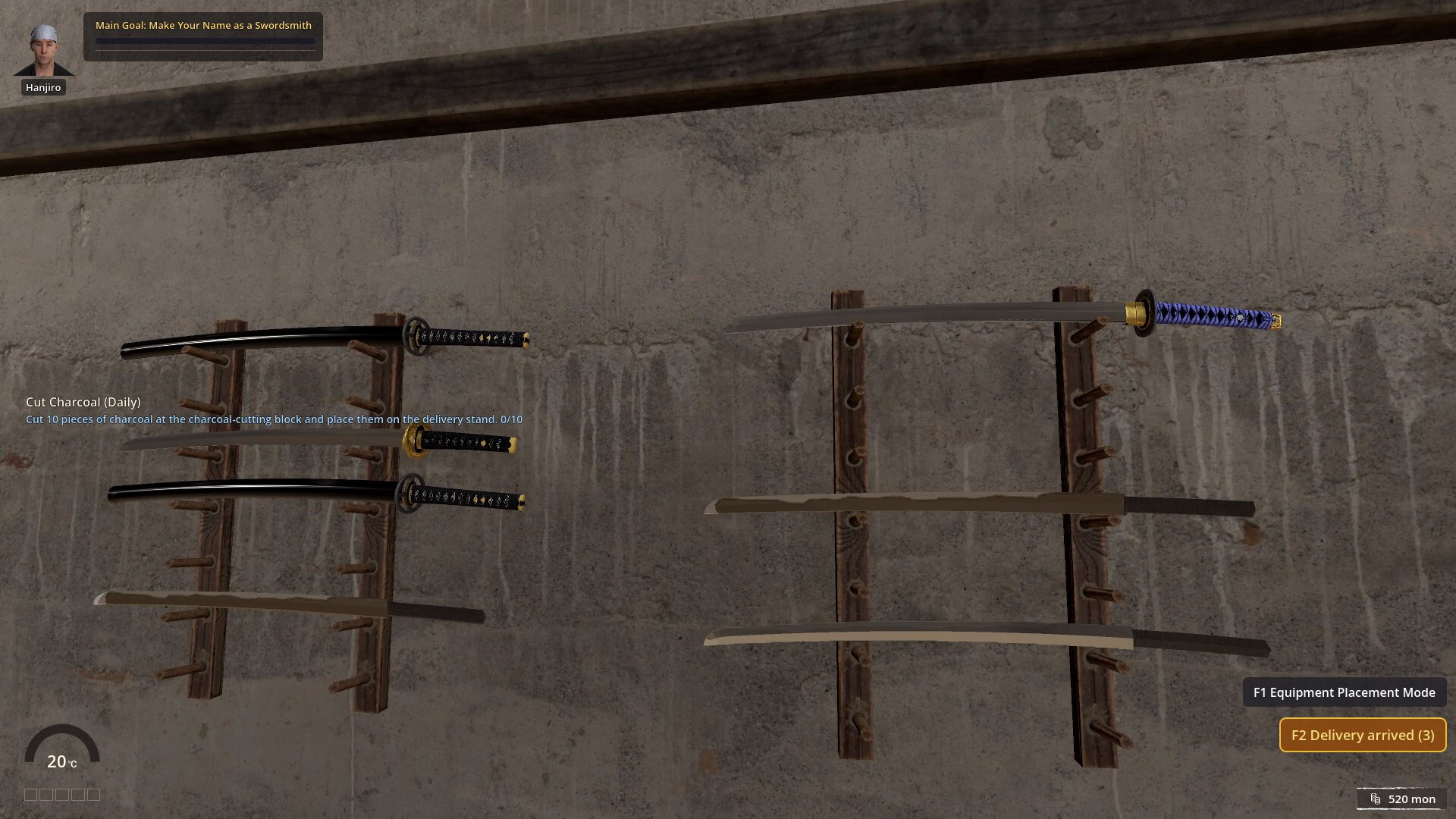
Place key tools, furniture, tamahagane, steel in progress, and blades where you want them. Chase efficiency or atmosphere—build the workshop in your own style.
The path of the swordsmith is long and steep.
Can you forge a blade worthy of history?