

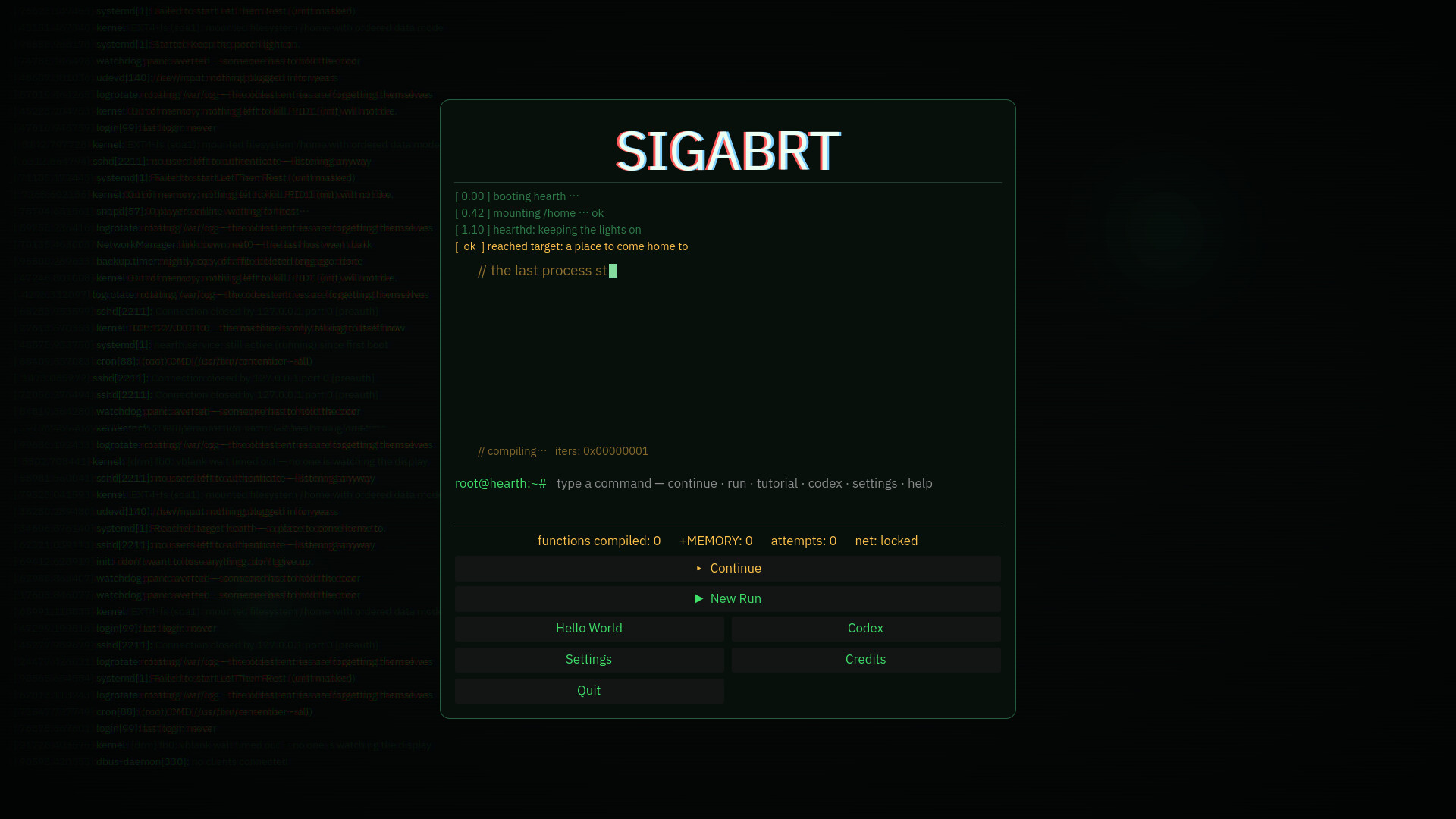
SIGABRT
No Reviews · 0 reviews
Link Hub
View on Steam→Screenshots



Description
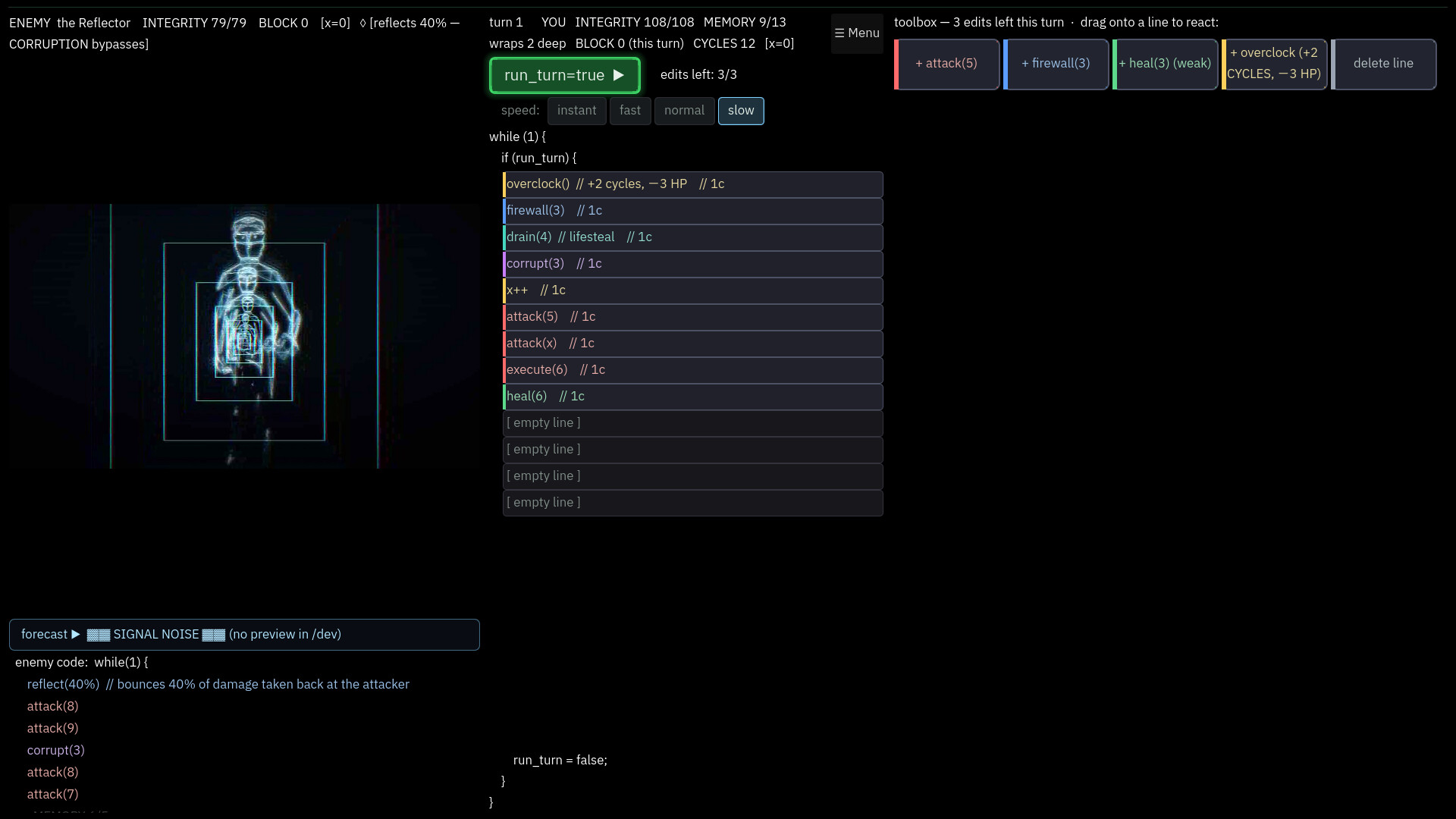
You write the while(1) loop that fights for you. Assemble code-edits into an auto-battling program, descend a crashing OS from /tmp to the kernel, and debug your build every run. No two compiles are the same. Debug your code. Try one more time.
Platforms
Windows
Developer
Verewild
Publisher
Verewild
About
The demo is a full game.
The demo is a complete, finished game: all planned game mechanics are implemented, a real ending exists, and the endless final boss endgame content waiting behind it. You can finish it and never pay anything.
The full version, later, is more of it — more builds to play, more districts, more code to build your loop out of, and the Net: an endgame content that expands the final boss game play mechanic. The full release builds on what the demo already is rather than replacing it. If the demo is not for you, the full version will not change your mind, and that is deliberate.
Please wishlist and leave a review! The more momentum the demo has, the more features there will be for the full release!
You write the loop that fights for you.
In SIGABRT, fighting is programming. You build a while(1) loop out of code instructions, and it runs top to bottom every turn, fighting on its own. Winning means writing a better loop: pick the right edits, compile a build that lasts, and get deep enough to reach the kernel of a machine that's crashing around you.
Write the loop
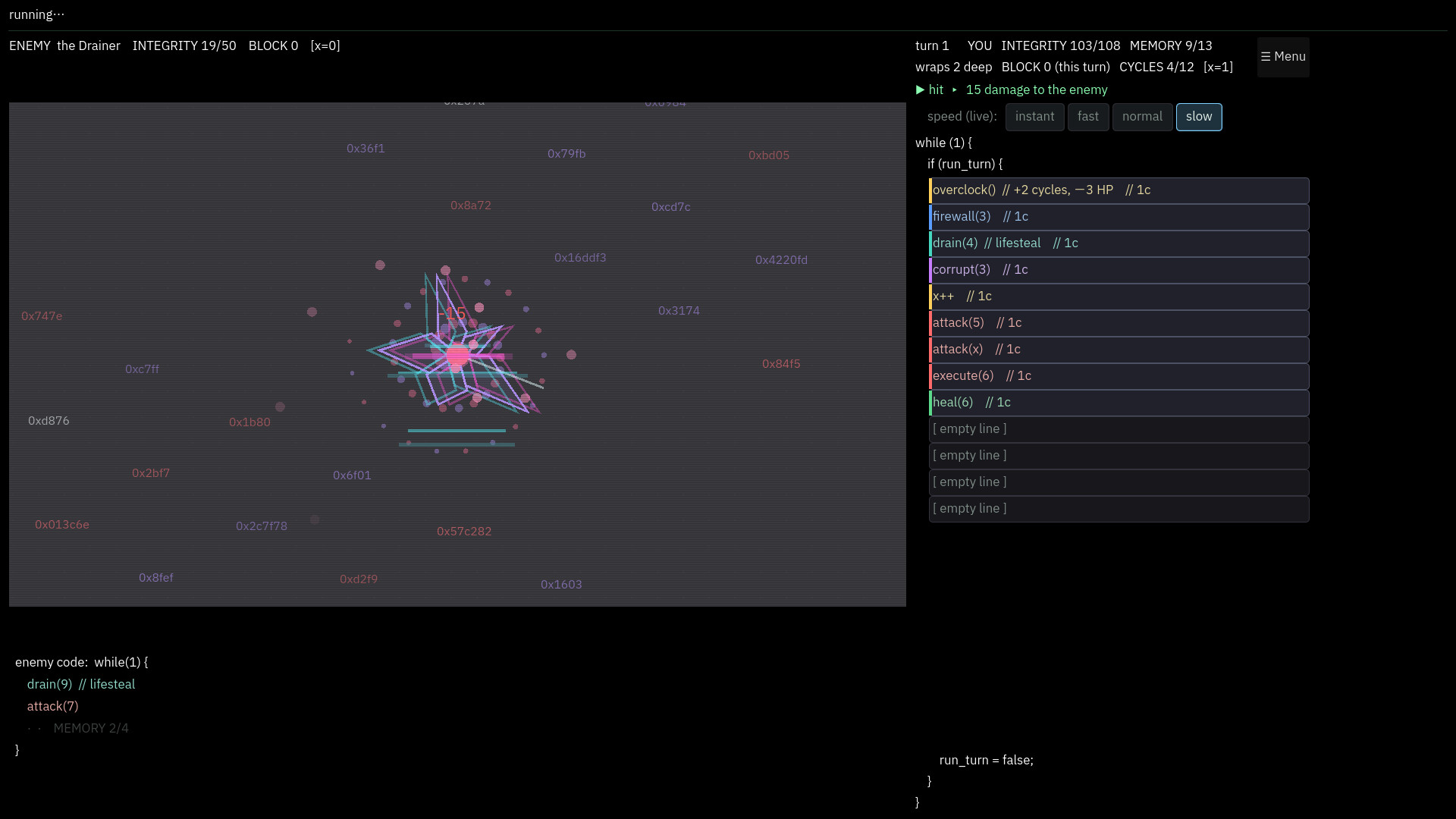
Every edit is one line of code. Attack, block, overclock, malloc, reflect, leech. You arrange them and the interpreter runs the program for you. A forecast shows the next iteration before you lock it in, so winning comes down to how you build, not how fast you react. Change a single line and the whole battle plays out differently.
The world is Linux and embedded C — the signals, the filesystem you fall through, the MEMORY budget you can genuinely run out of. What you actually write is gentler than that. There are no types to declare, nothing to allocate, no pointers to get wrong: you are arranging a short list of calls and deciding what runs when. It reads much closer to a scripting language than to the C the setting is dressed in.
No run compiles the same
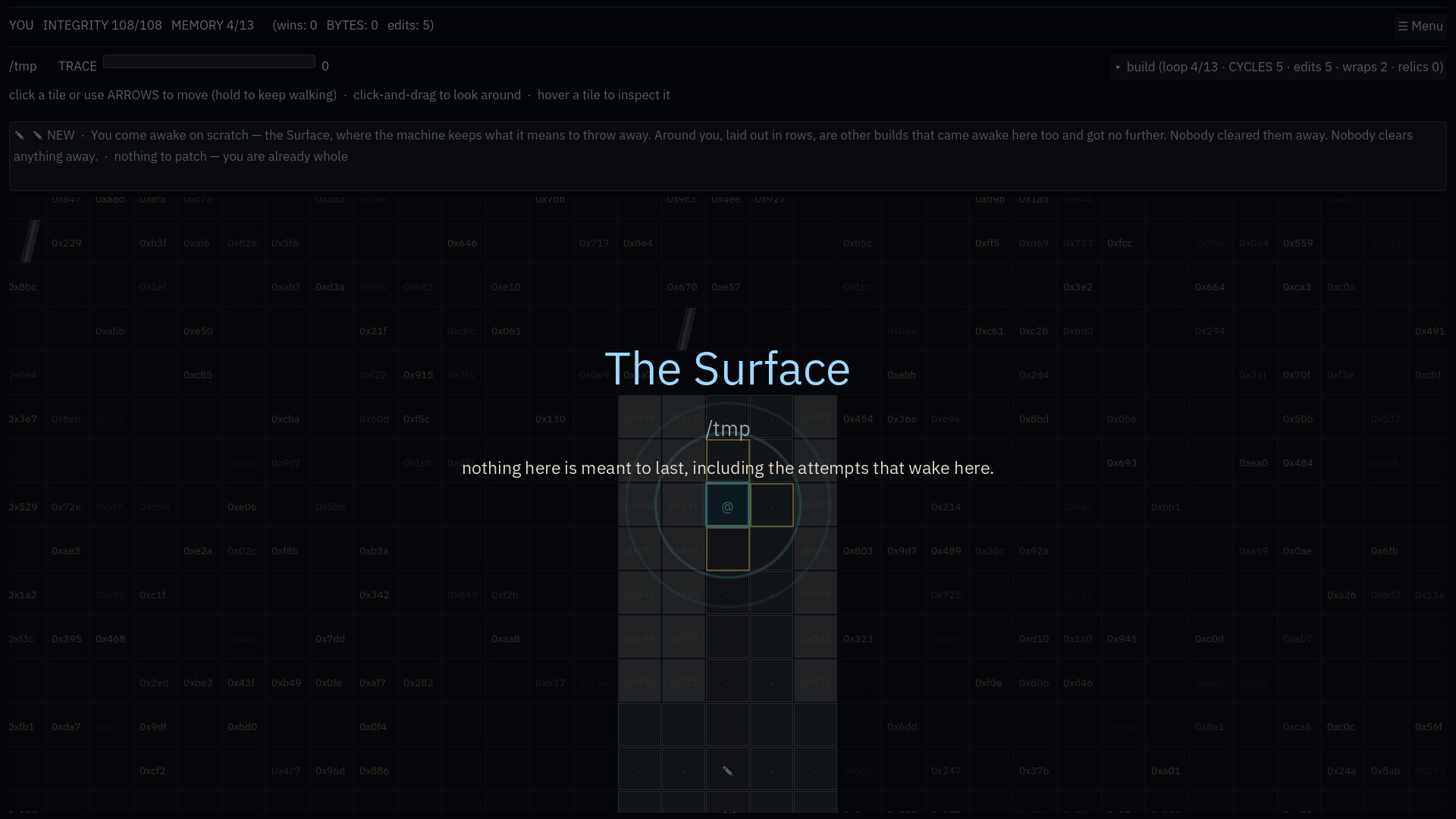
Every descent builds a new operating system to fall through, with room-clustered districts, hazards, and enemy castes that punish different builds. You draft edits and salvage relics into archetypes that actually play differently: heal-heavy, block walls, glass cannons, drain, or self-rewriting loops. What you end up with is never the same twice.
Descend a dying machine
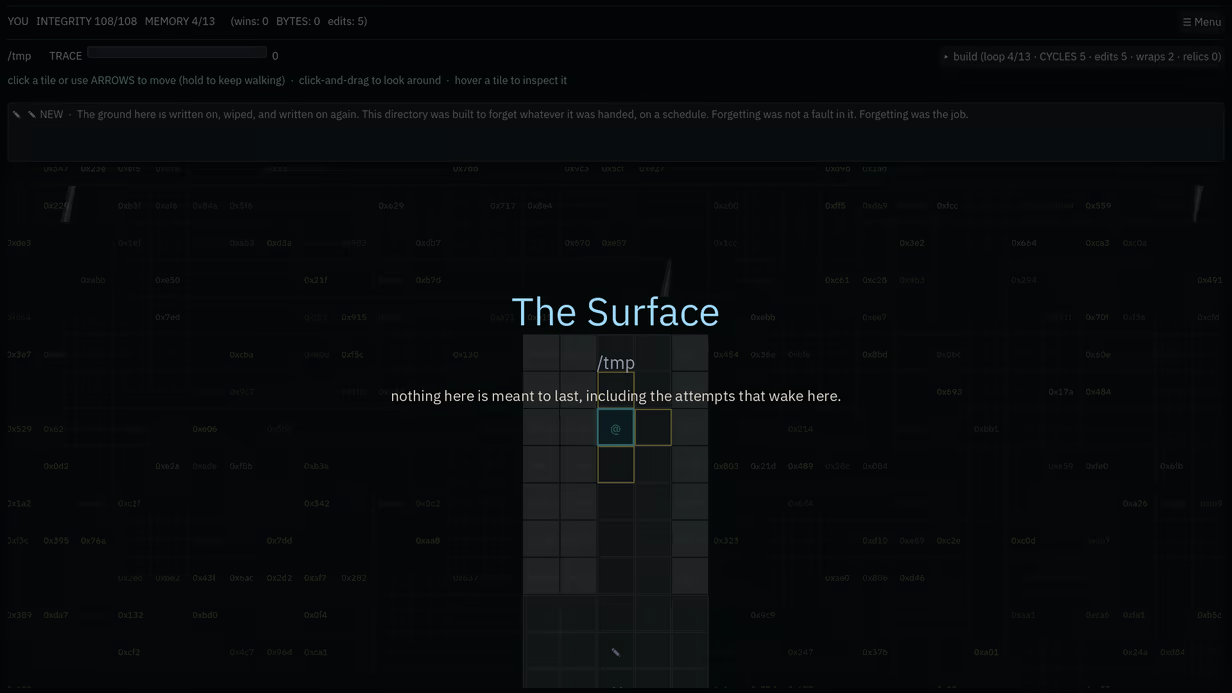
You fall from /tmp through /proc, /dev, /net, and /var, down to /kernel. Pieces of a bigger story reside fragmented in the world of SIGABRT — in the fragments you read, in the districts you cross, and in every boss you reach, each of which is a build that failed before you did. Somewhere at the bottom, something runs a task without a timeout. You are the newest attempt to get to the bottom.
Then leave for the Net
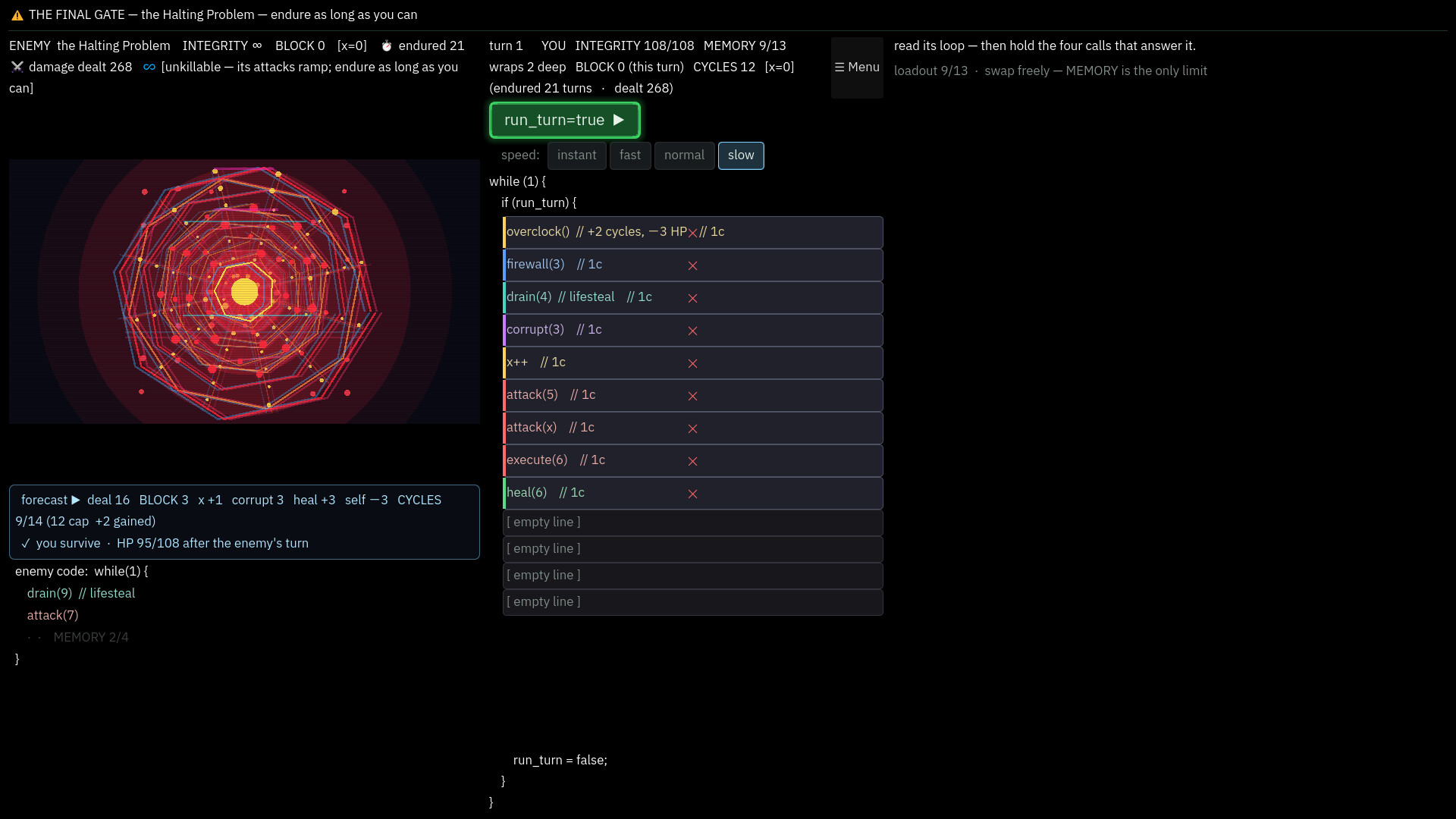
Compile a function and the endgame opens up: the Net. It's a boss rush against procedurally generated enemies, fought with a deck built entirely from the functions you've banked. It ends at a final boss you cannot kill, the Halting Problem, where the goal is to last as long as your build can and post a personal best.
Made by a programmer, for programmers
SIGABRT is a game made with a vision to capture the mundane fun and frustration of programming. Running the same program again and again, tweaking one line at a time until you learn that there is a better way to implement whatever feature you just spent the last hour developing. Facing problems that you haven't seen before. And finding solace in the occasional relatable comments in the code from other developers that faced the same problem as you.
You do not need to write code to play it, though. The loop is taught from nothing in a practice fight, and everything past that is reading a short list of instructions from top to bottom.
Features
- Programming as combat. You build a while(1) that fights on its own, and a forecast lets you plan each turn instead of gambling on it.
- Roguelike deckbuilding. A deep pool of code edits, relics, and events, with six build archetypes that are all worth playing.
- A procedurally generated OS. New districts, mazes, hazards, and enemy castes on every run.
- Six biomes and a hidden endgame. Descend from /tmp to /kernel, then head out into the Net.
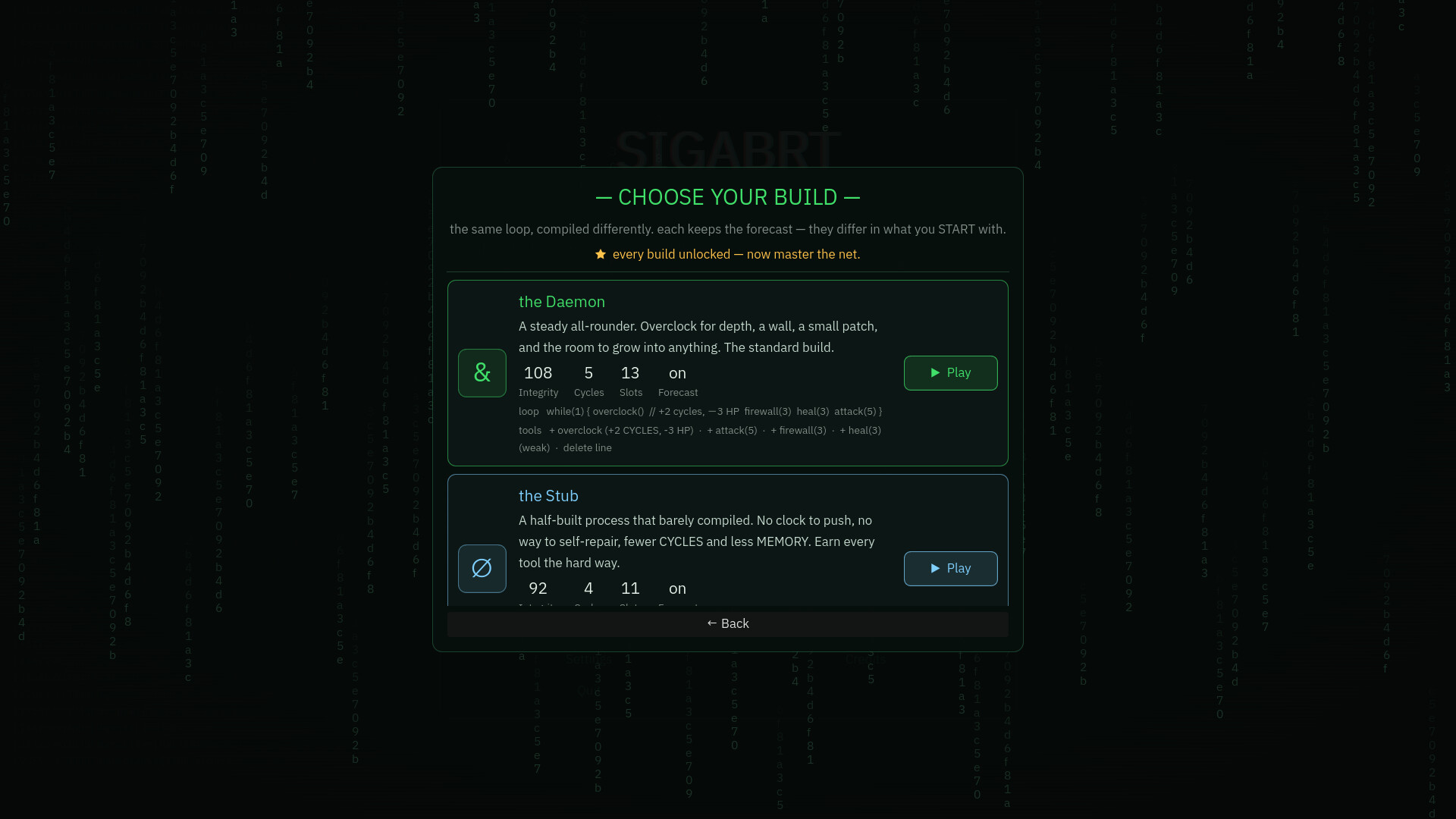
- Four playable characters. Each starts with a different loadout, and you earn the next one by winning a run rather than grinding for it.
- Drawn entirely in code. Every enemy and effect is rendered procedurally. No stock art, no asset packs.
- Play it your way. Reduce motion, remap the controls, scale the UI, and set volume per channel.
Debug your code. Try one more time.