

Topological Board Game
No Reviews · 0 reviews
Screenshots
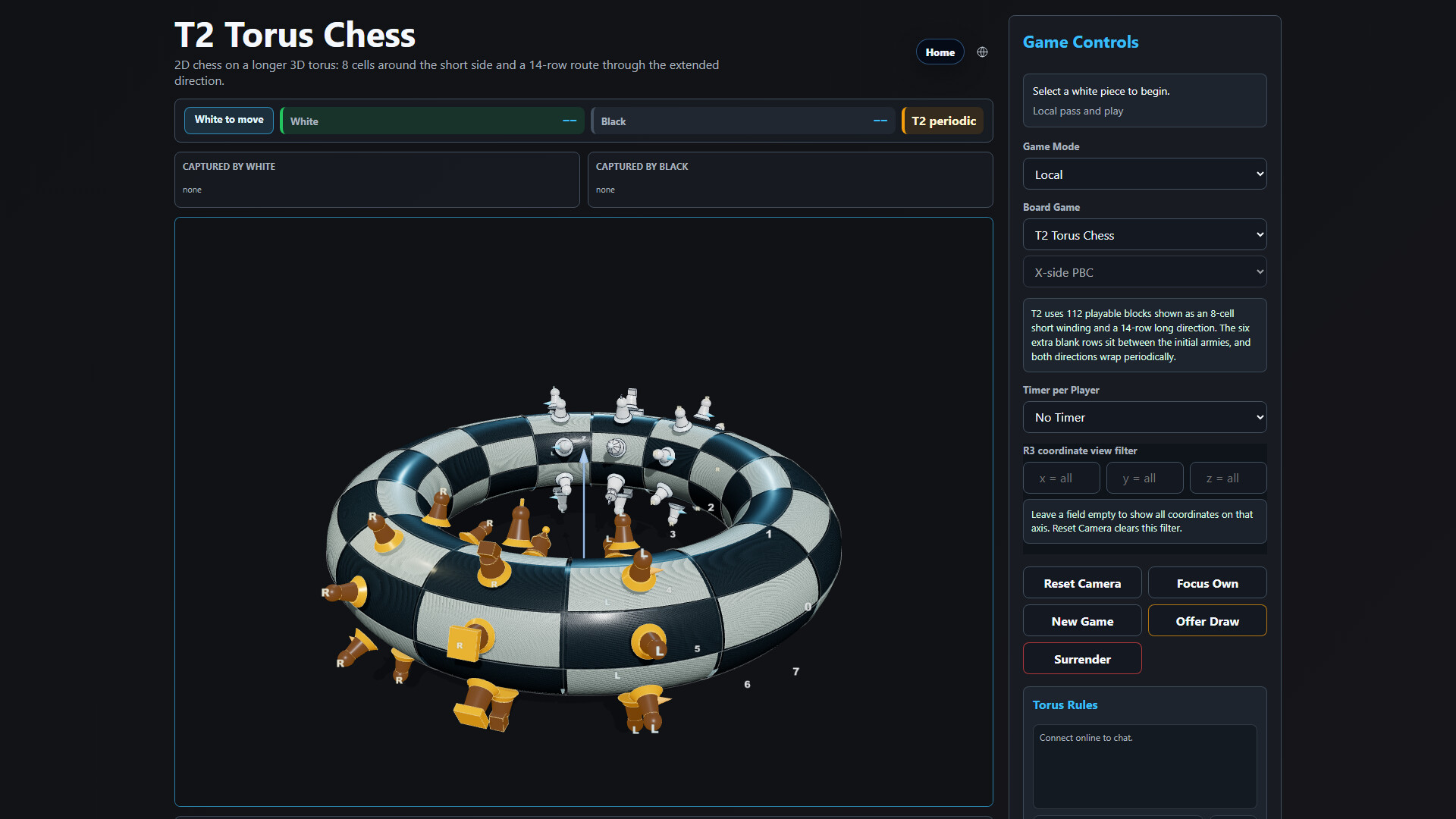
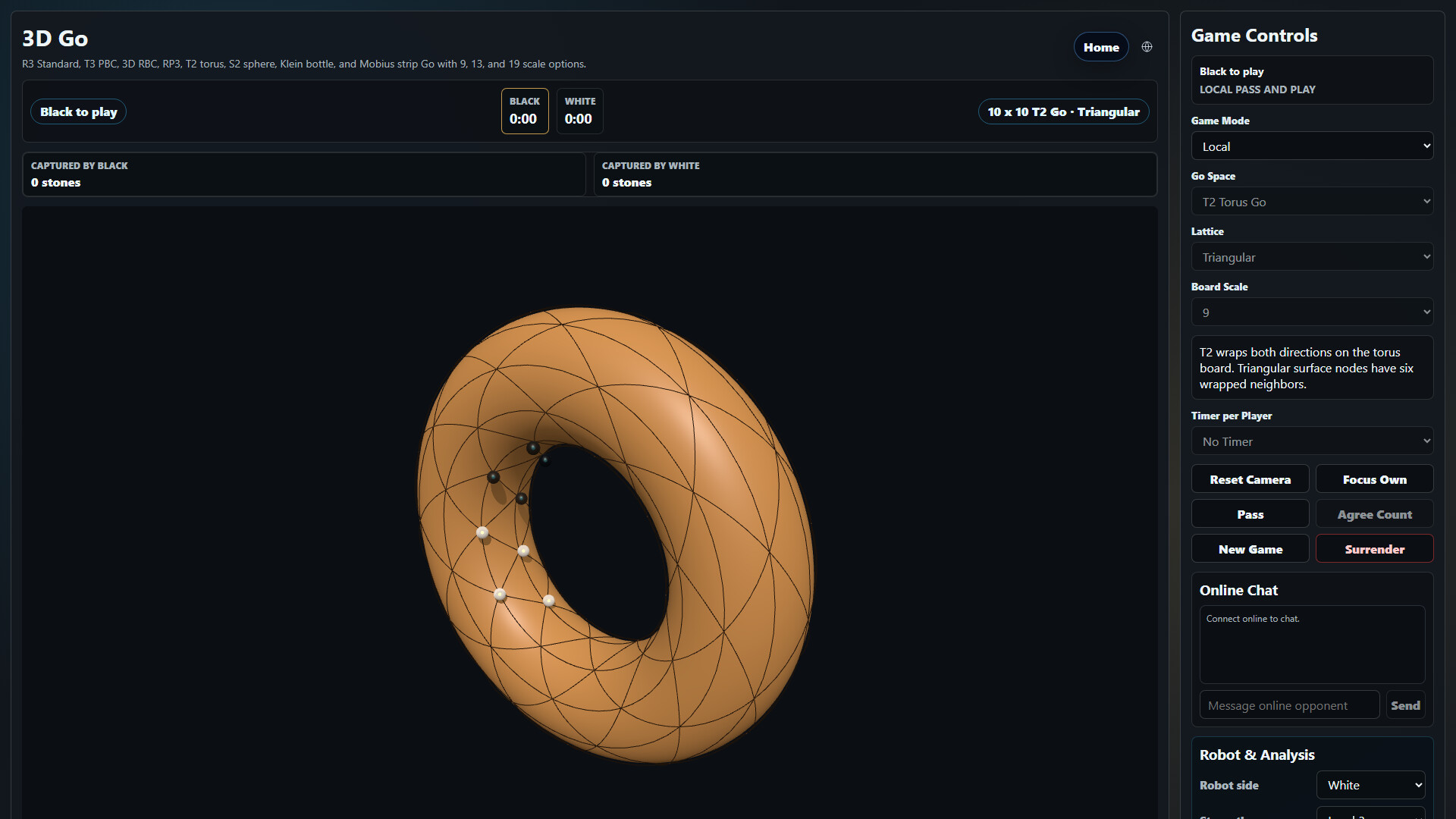
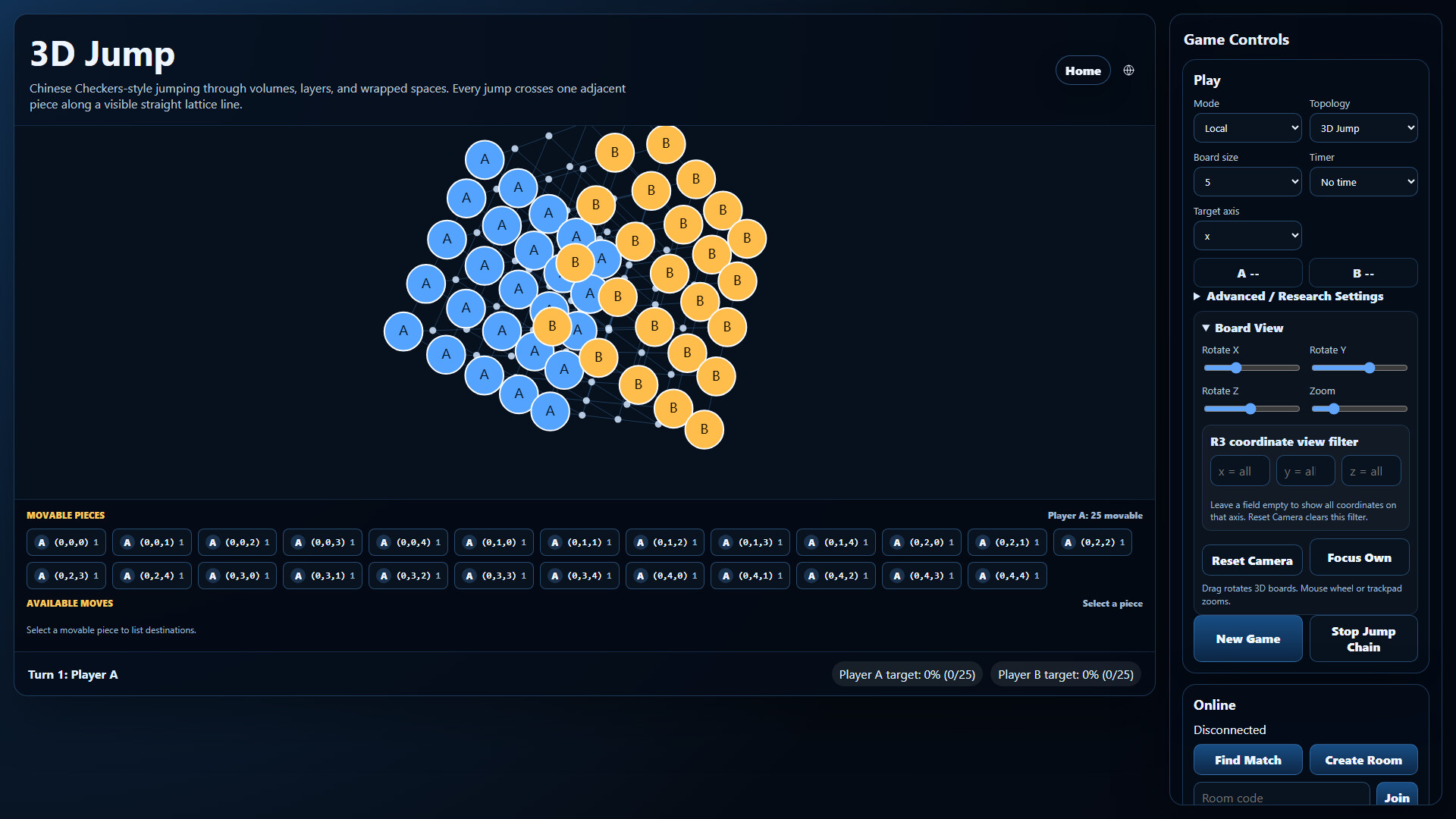
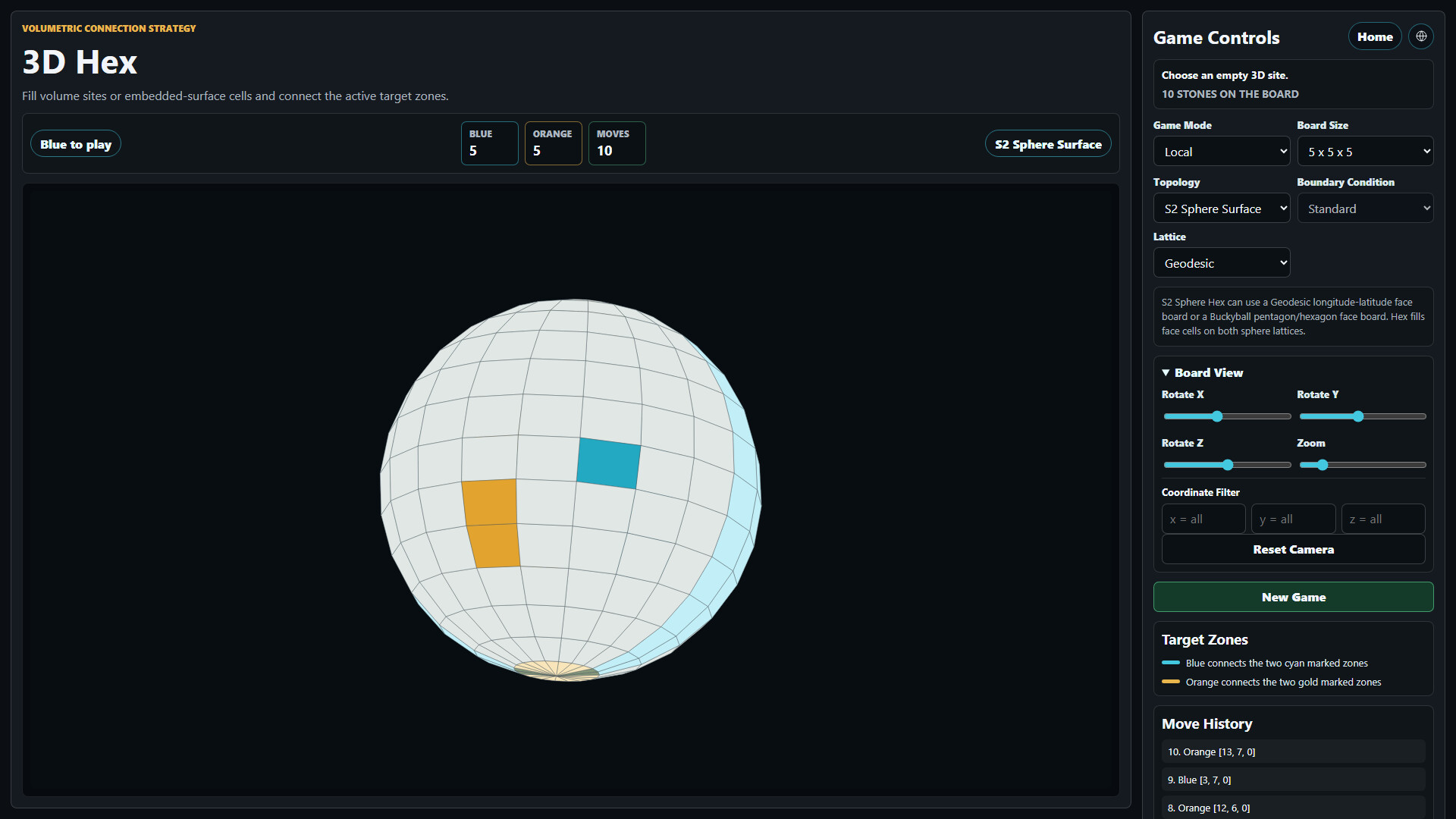

Description
An experimental strategy sandbox where classic board games become scientific laboratories across different lattices, dimensions, boundaries, and topologies, with customizable rules inspired by mathematics, physics, biology, and computer science.
Price
Platforms
Windows
Developer
You-Xun Zhang
Publisher
You-Xun Zhang
About
A Growing Scientific Playground for Strategy Games
Topological Board Game is more than a collection of classic board games. It is an expandable laboratory for exploring strategy, mathematics, topology, physics, biology, and computer science through playable rule systems.
Different lattices, dimensions, boundaries, and topologies change how pieces move, interact, compete, cooperate, and transform. Instead of treating the board as a fixed grid, the game turns the board itself into a programmable scientific playground where familiar games and experimental Labs can become new kinds of strategic simulations.
The project is designed to grow over time with new boards, topologies, scientific Labs, rule systems, and game modes, giving players a space to experiment with increasingly diverse mathematical, physical, biological, and computational ideas.
About the Game
Topological Board Game is an abstract-strategy board game and an experimental strategy sandbox where board games become laboratories for mathematics, physics, biology, topology, and complex systems.
Instead of limiting board games to ordinary square grids, Topological Board Game explores what happens when the board itself changes. Play with spaces, lattices, dimensions, boundaries, and topology-inspired structures that reshape movement, locality, capture, influence, and strategy.
The game includes familiar board-game foundations such as Chess, Go, Reversi, and Jump-style(Chinese checkers) movement, but expands them into unusual geometric and mathematical spaces. Boards may behave like open spaces, wrapped spaces, reflected spaces, higher-dimensional grids, or topology-inspired playgrounds.
Life mode explores biological systems as playable strategy games. Instead of treating pieces as static game objects, Life modes model living systems and evolving populations. Depending on the selected mode, cells, organisms, genes, resources, signals, or ecosystems interact according to biological principles rather than traditional board-game rules. Each board, lattice, boundary, topology, and dimension changes how life develops, allowing players to explore how geometry and topology influence biological systems.
Labs mode goes further by treating the board as a space for physical and mathematical manipulation. Pieces may act like particles, operators, excitations, domains, fields, worldlines, or topological objects. Instead of forcing every mode to follow traditional board-game rules, Labs modes are designed around the physical or mathematical relations of the problem itself.