#Animation&Modeling #Design&Illustration #Education
VR Model Viewer
VR Model Viewer allows you to import a variety of model formats for viewing and curation in VR.
View game
$2.99
No Reviews · 0 reviews

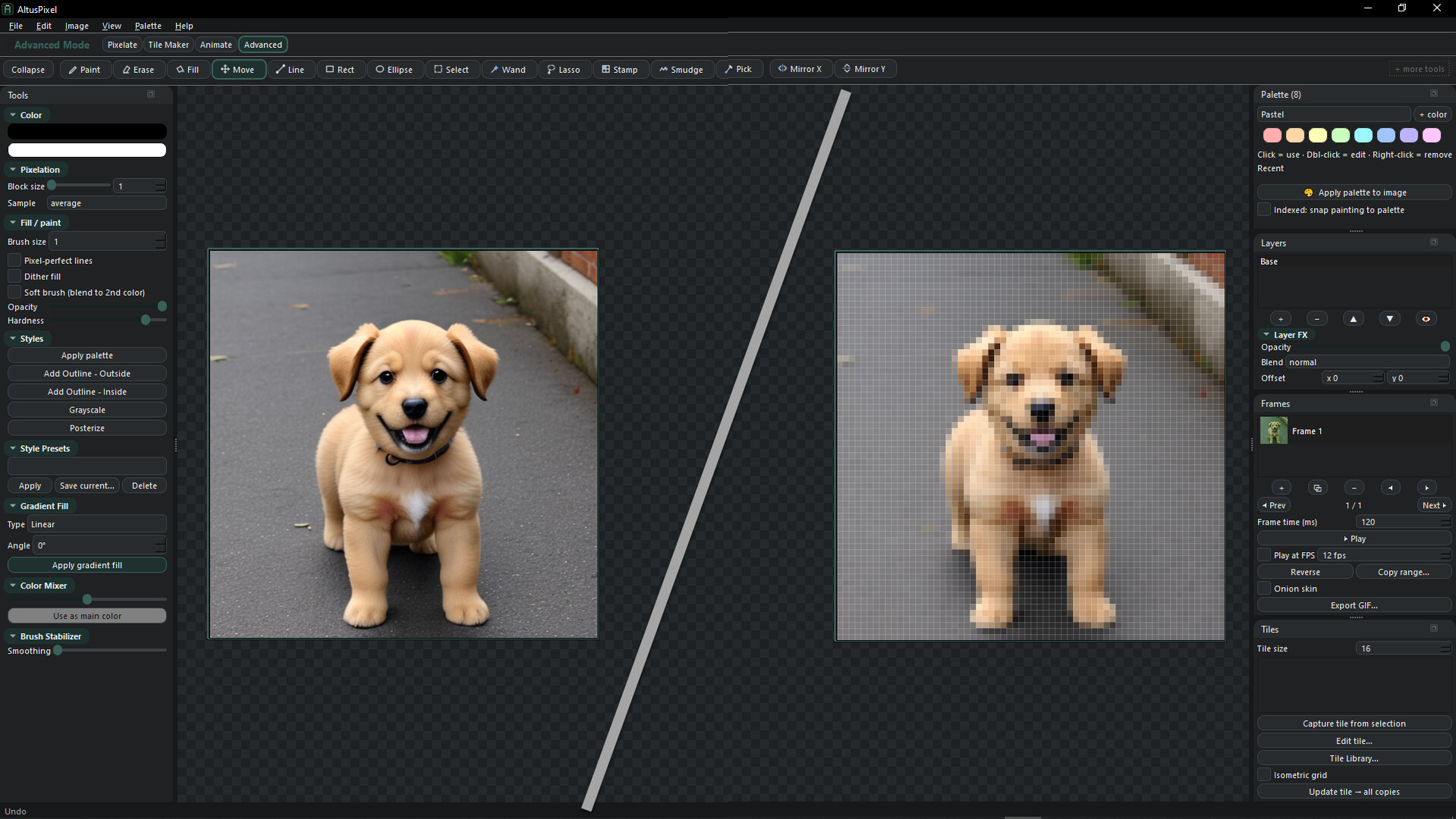

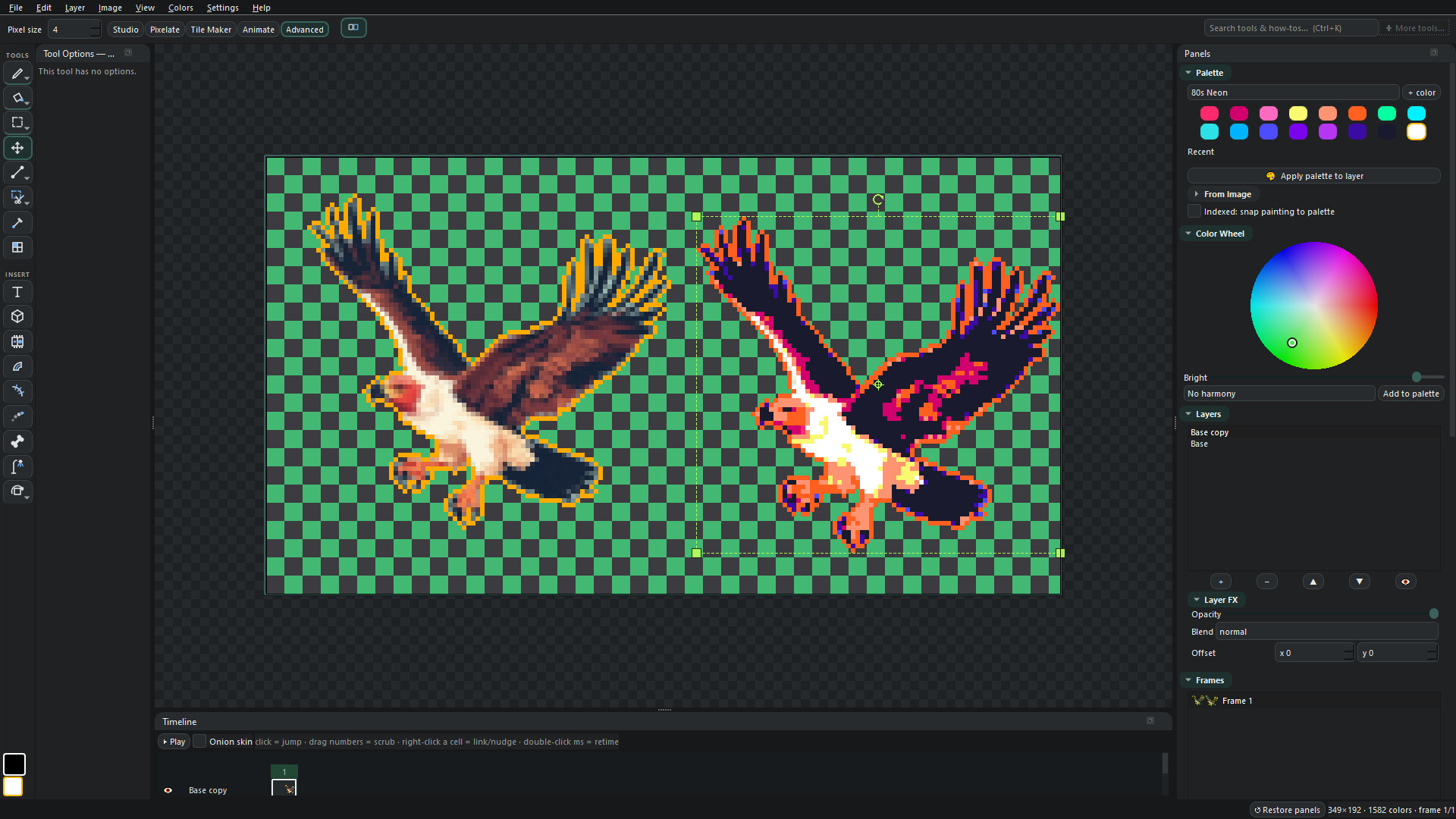
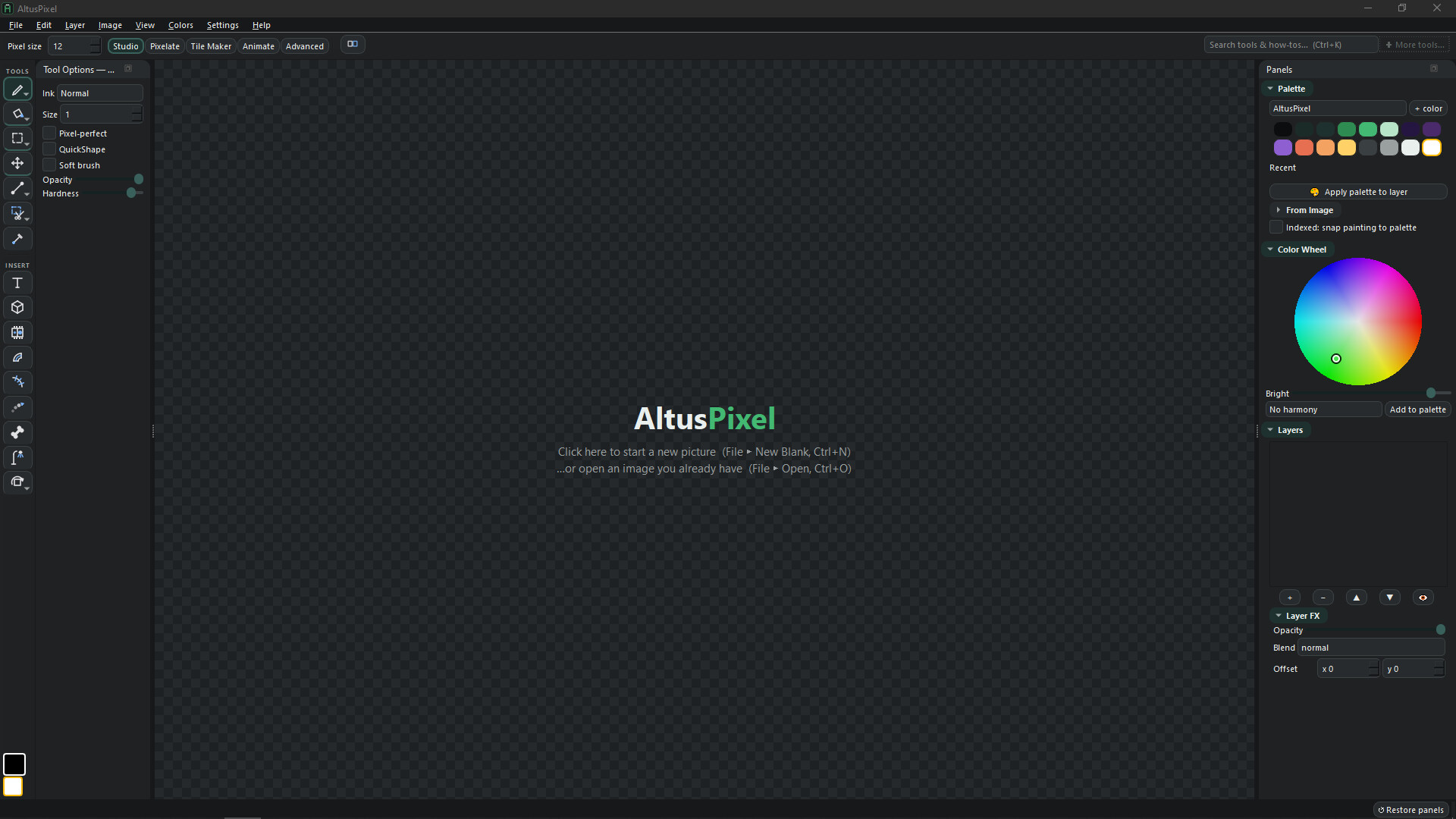
Pixel art that lands in your engine. Draw a sprite, a tile or an isometric room; save it as a Godot TileSet, a complete GameMaker project, a Tiled map or a Unity sheet. Rig, stage and animate on the same canvas. Windows and Linux.
Released
July 14, 2026
Price
Platforms
Linux · Windows
Developer
Publisher
Last sync
September 30, 2026
Draw a sprite, a tile, a whole isometric room. Save it. It is already what your engine reads. Godot gets the SpriteFrames and the TileSet. GameMaker gets a whole project: the sprite, the tile set with its auto-tile slots, a room laid out. Tiled gets the map. Unity gets the sheet with its data. Nothing to convert. No second tool in the middle.
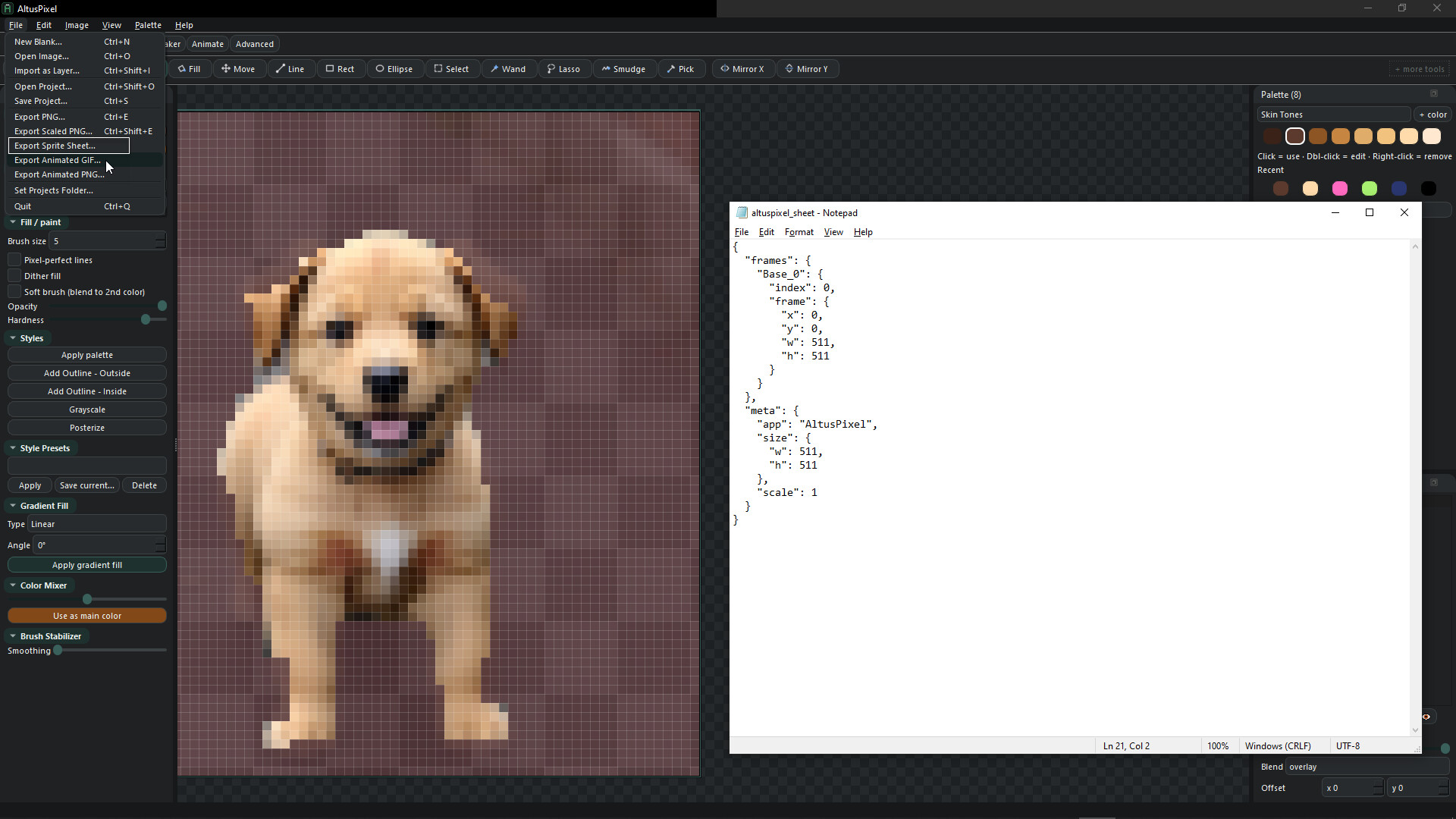
Every export is a real file the engine opens. A Godot TileSet, or a whole map scene. A GameMaker project you double click. A Tiled map with its tile set beside it. A packed atlas with its data file, and Godot SpriteFrames from the same dialog. An .ase, a Photoshop or an OpenRaster file for the studio next door. Animated GIF, PNG and WebP for the post you are writing. A sprite sheet. Every layer as its own PNG. Even a mouse cursor. Link a Godot or Unity project, and every save rewrites the files in its art folder.
Lines snap to the isometric slopes. Drag a box, pull it up, click. It lands shaded: light top, darker sides. Boxes side by side share their edges, so a room grows out of the drawing. Cones, pyramids, stairs and ramps come the same way.
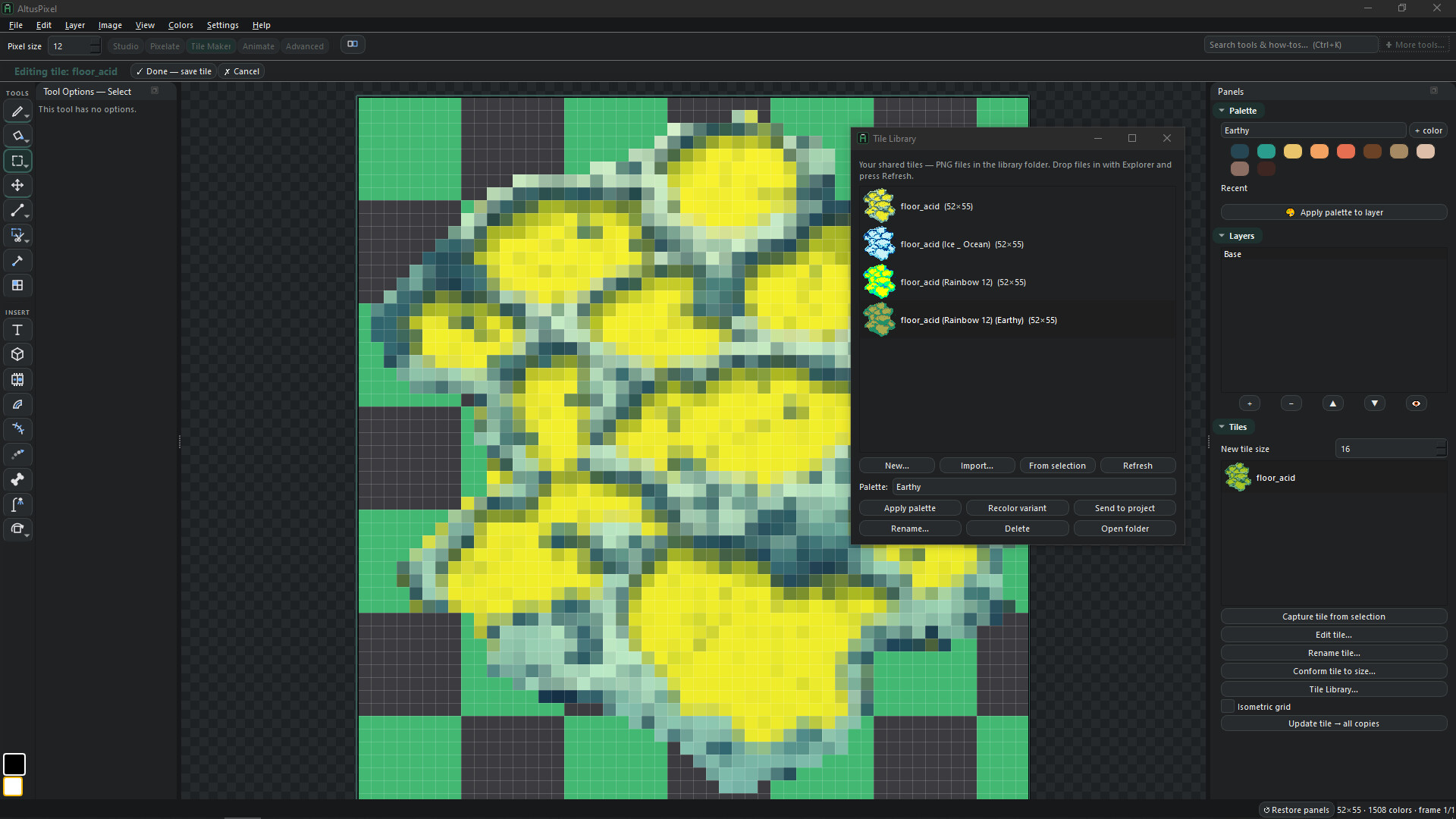
Paint terrain and the edges pick themselves. Draw five pieces and the whole auto-tile set generates itself. Export it as a Godot TileSet, a GameMaker tileset or a Tiled tile set. Turn any selection into a reusable tile. Every placed copy updates when the tile does.
Brick, stone, sand, grass, leaves, wood, water. Drawn in your color, and the edges line up every time. Chameleon mode keeps the shading underneath, so a wall stays lit after it becomes brick.
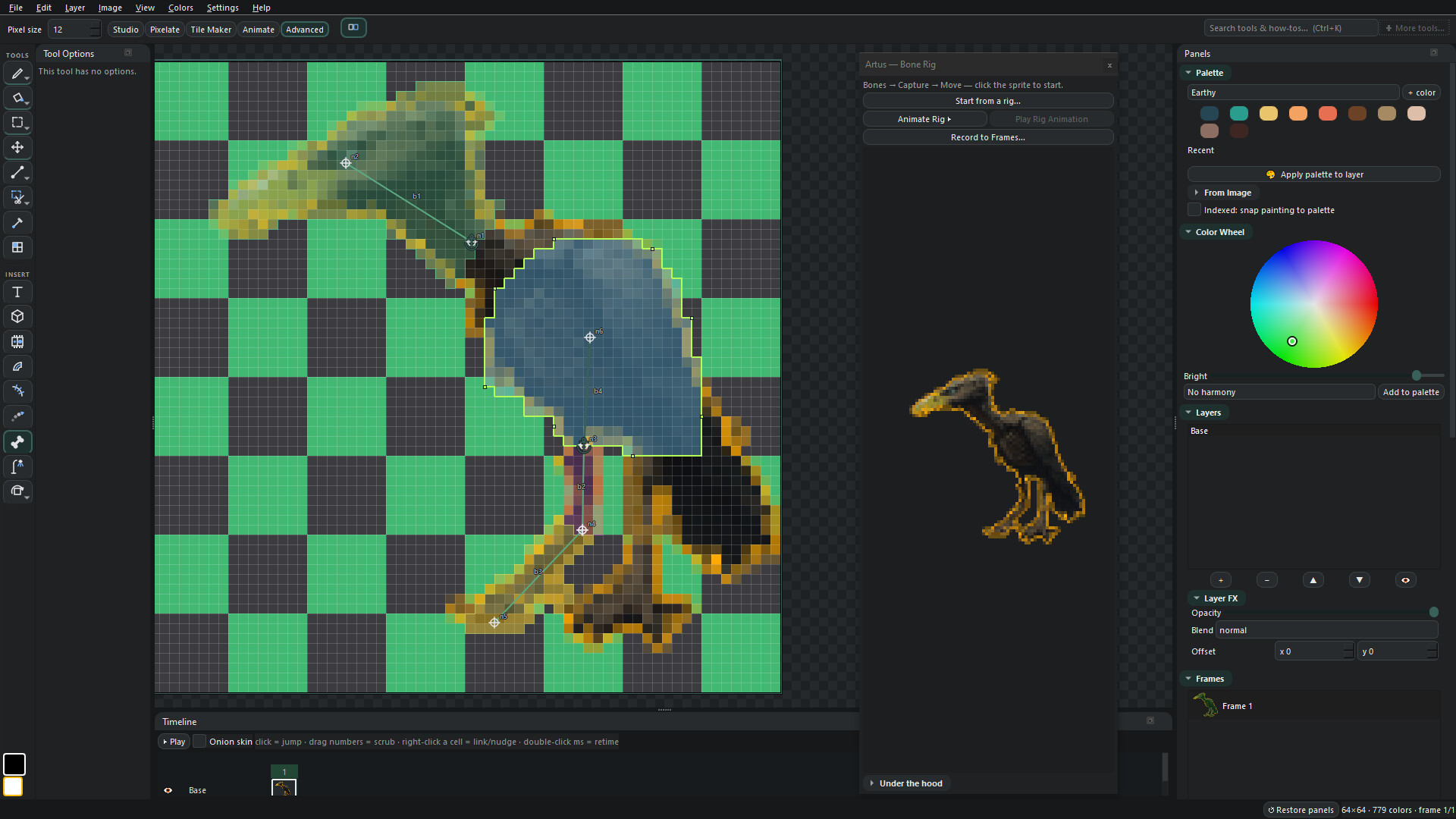
Click your sprite to place a joint. Hold, and a bone grows along the arm. It captures the pixels near it, so dragging the limb moves the drawing. Pose, then record the poses as frames. Then stand your finished drawings on a stage and run them on one clock. Each gets a row. Say when it walks on, drag it into place, and play.
Frames, onion skin, playback, a preview that plays while you draw. Pin a layer on one frame. Pin it again later. Every frame between fills itself in. A curve shapes how it moves. Tags name a run of frames, and every export knows them. A layer can keep its own speed and loop on its own clock. A GIF, an animated PNG or an animated WebP opens as all of its frames, timed as the file says.
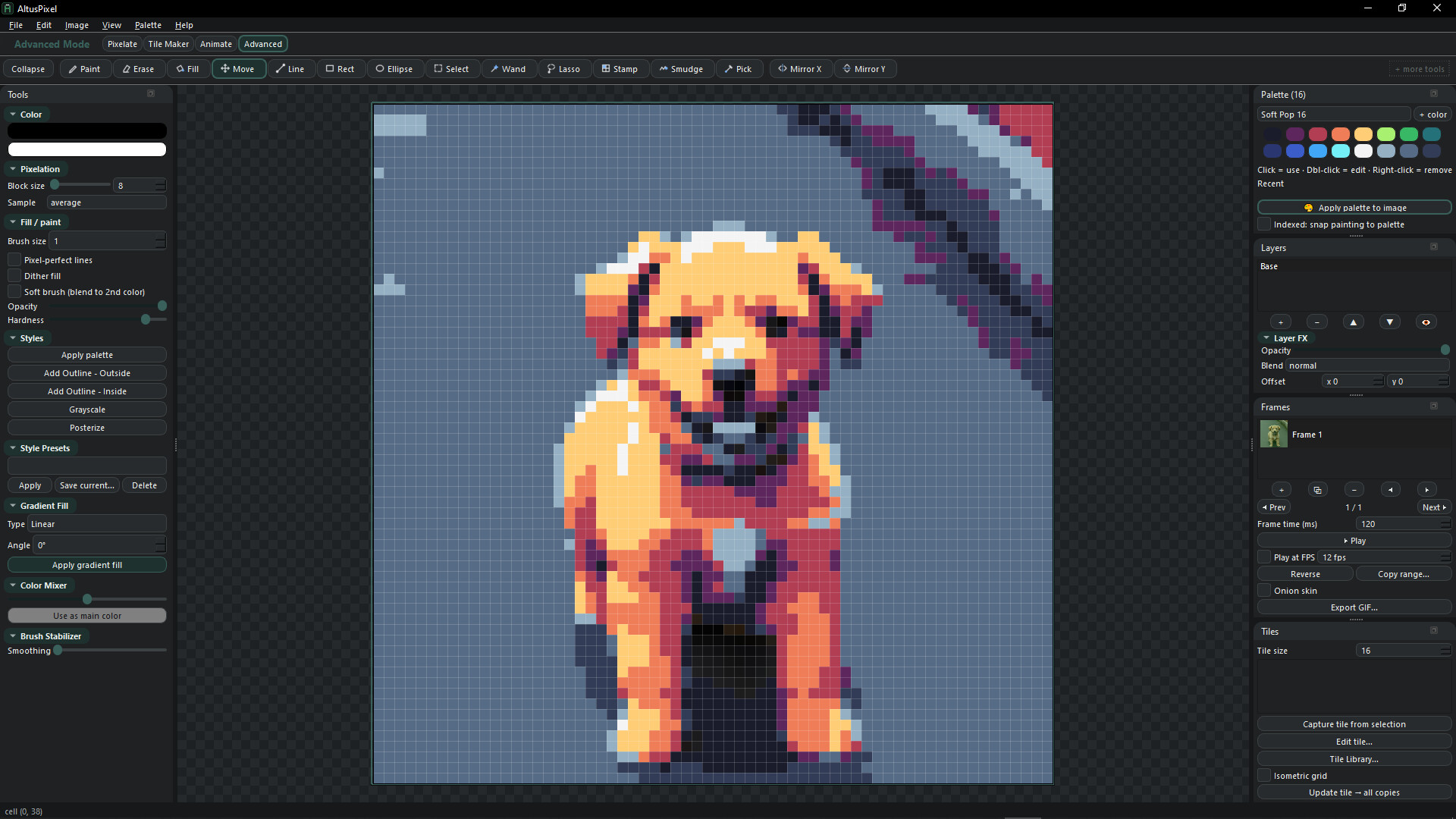
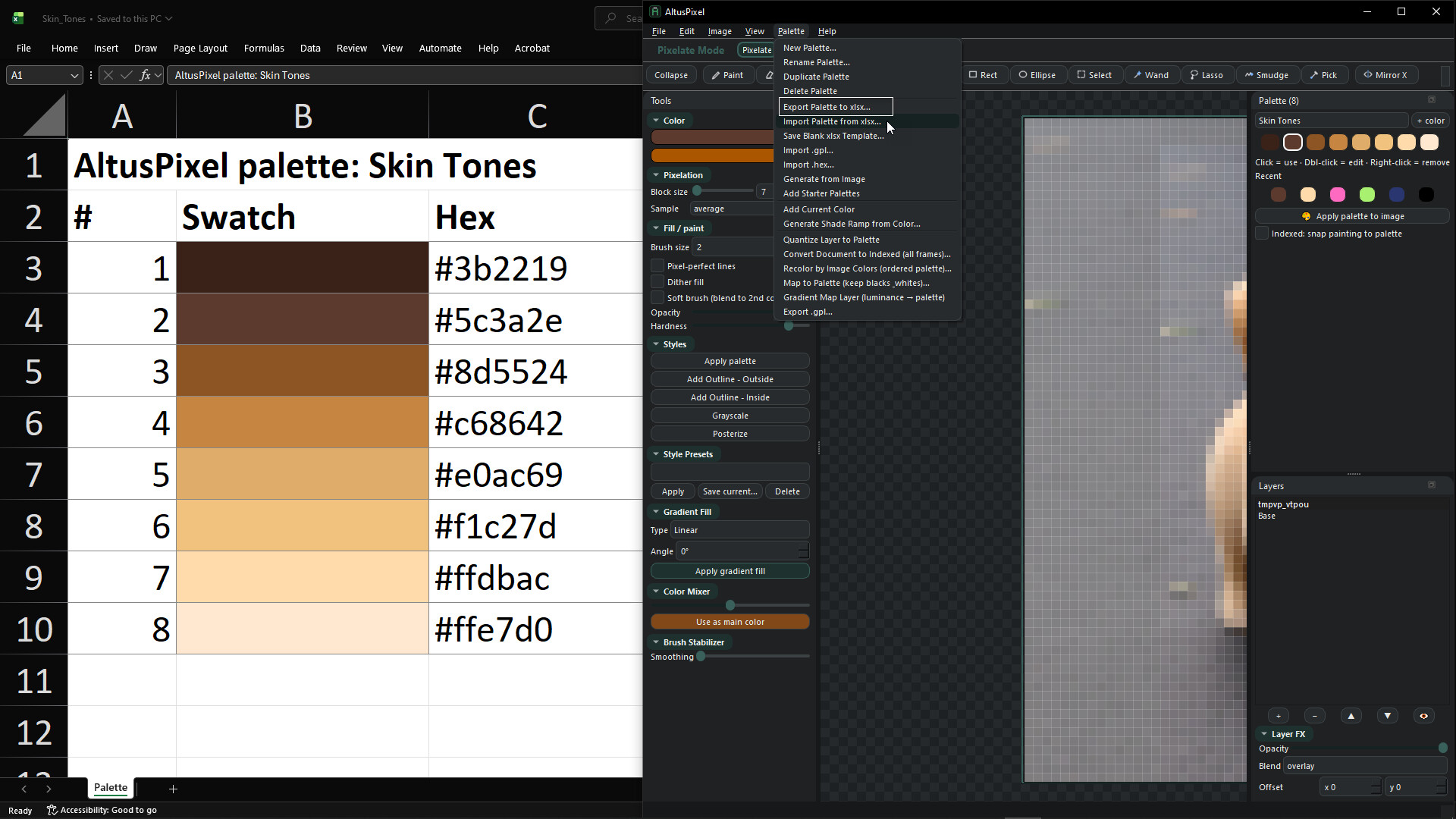
Palettes to start, skin complexions among them. Pick a color and its whole range lands in your palette. Light to dark, shadows cool, highlights warm. Sliders move a color without leaving the palette. Lock the picture to a palette and it stays there.
Pick a palette and the app wears it. Panels, text and highlights take its colors. Looks come ready, and any look you make saves as a file to share. The checker, the grid and the space around the picture are yours to set.
Spectaculum writes game feel into your frames. Flash, shake, squash, smears, debris, a death dissolve. New frames beside your own, never over them. Auto Shade lights a sprite from one side. Pixel Doctor finds the mistakes that are hard to see, and mends the ones it can.
On open you see the everyday tools, your layers and your palette. Everything else stays tucked away until you want it. Right-click any tool and pick "What's this?". A search box finds the tool you cannot name, and explains it in plain words. A captured brush scales in whole pixels, turns and flips, and can carry every frame of an animation. The brush can follow a pen's pressure, how fast the hand moves, or how far the stroke has traveled, and a stroke can thin out at both ends.
A font you draw yourself on a board of letters, exported for your engine. A stitch pattern at real size, for embroidery and cross-stitch. A time lapse of your own session. A wallpaper at your screen's size, and a post-ready image for social. A batch exporter that runs one recipe over a folder. Windows and Linux.
MADE FOR: indie game developers, beginners who find other tools overwhelming, and anyone tired of renting their software by the month.