
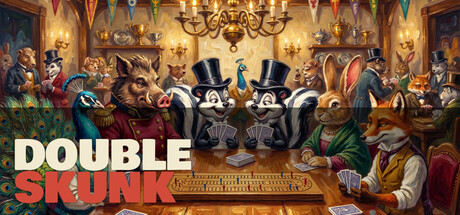
Double Skunk
No Reviews · 0 reviews
Link Hub
View on Steam→Screenshots

Description
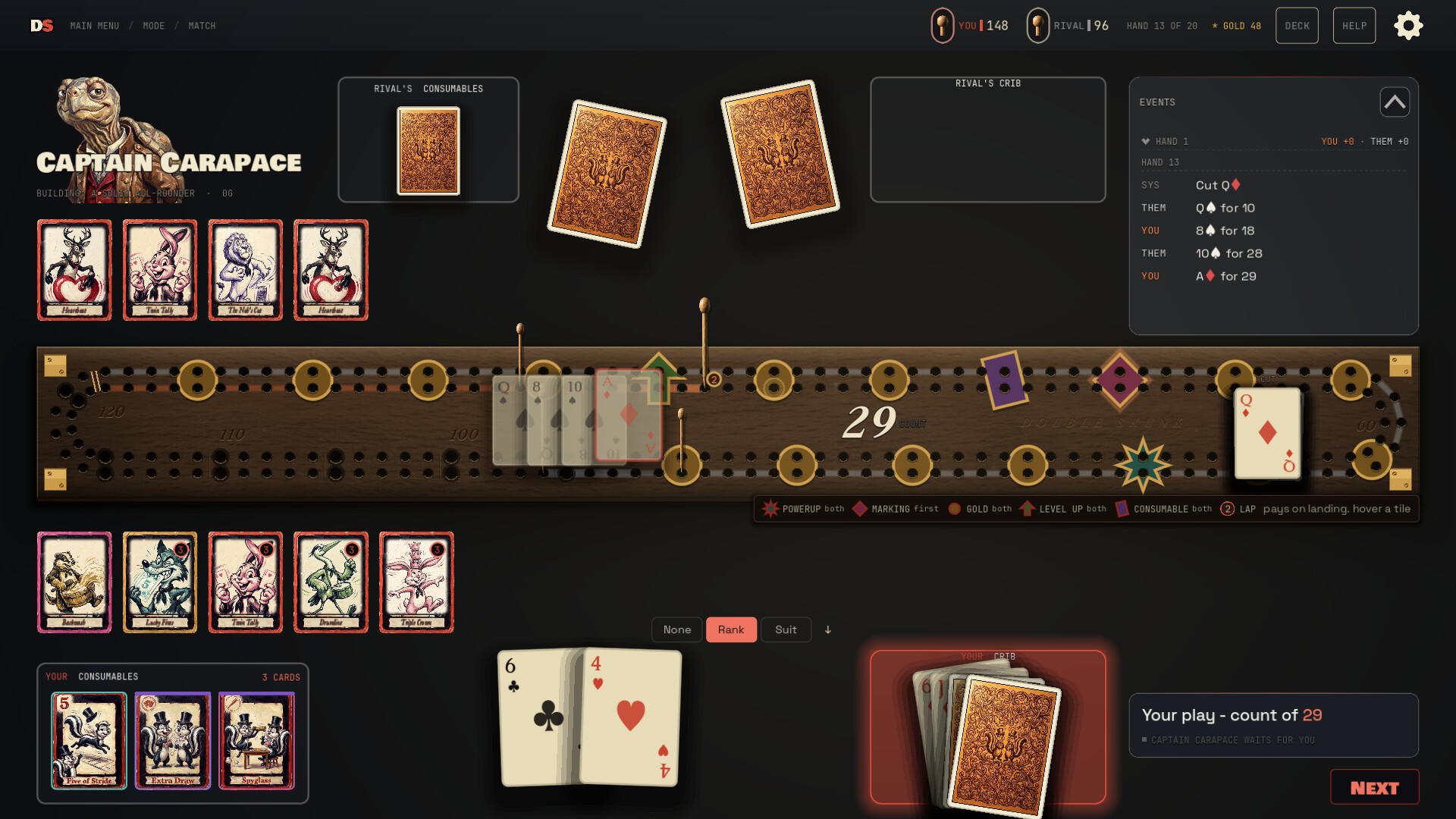
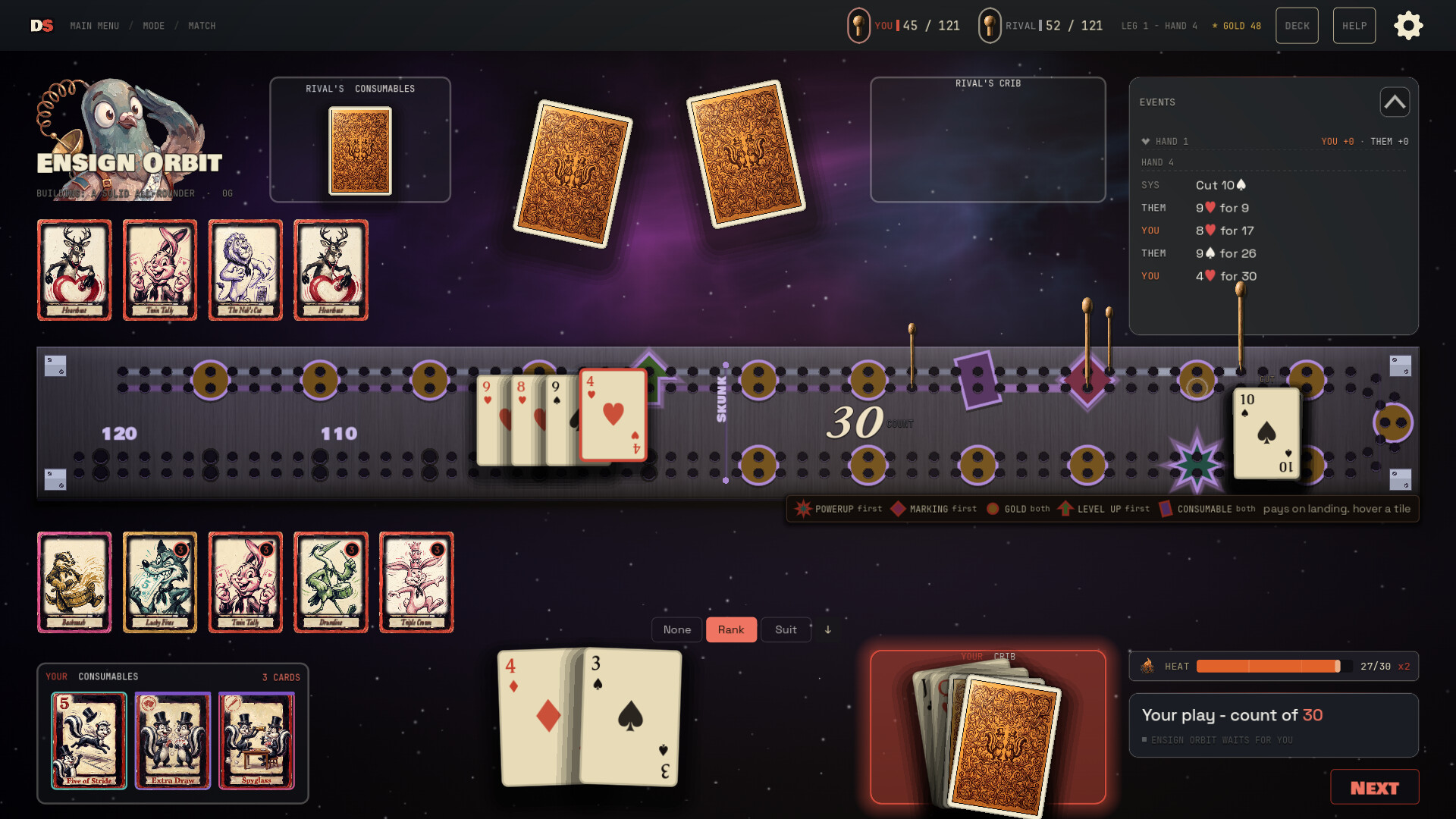
Cribbage played straight, with a roguelite engine on top: 57 powerups, 26 rank-card consumables, 10 pegs that rewrite the run. Game modes to spice things up. Take on a 21+rival campaign, enjoy offline at four skill tiers, or play online with ranked matches and a weekly challenge on one shared deal.
Platforms
macOS · Linux · Windows
Developer
Kerrberry Systems
Publisher
Kerrberry Systems
About
Cribbage, played straight
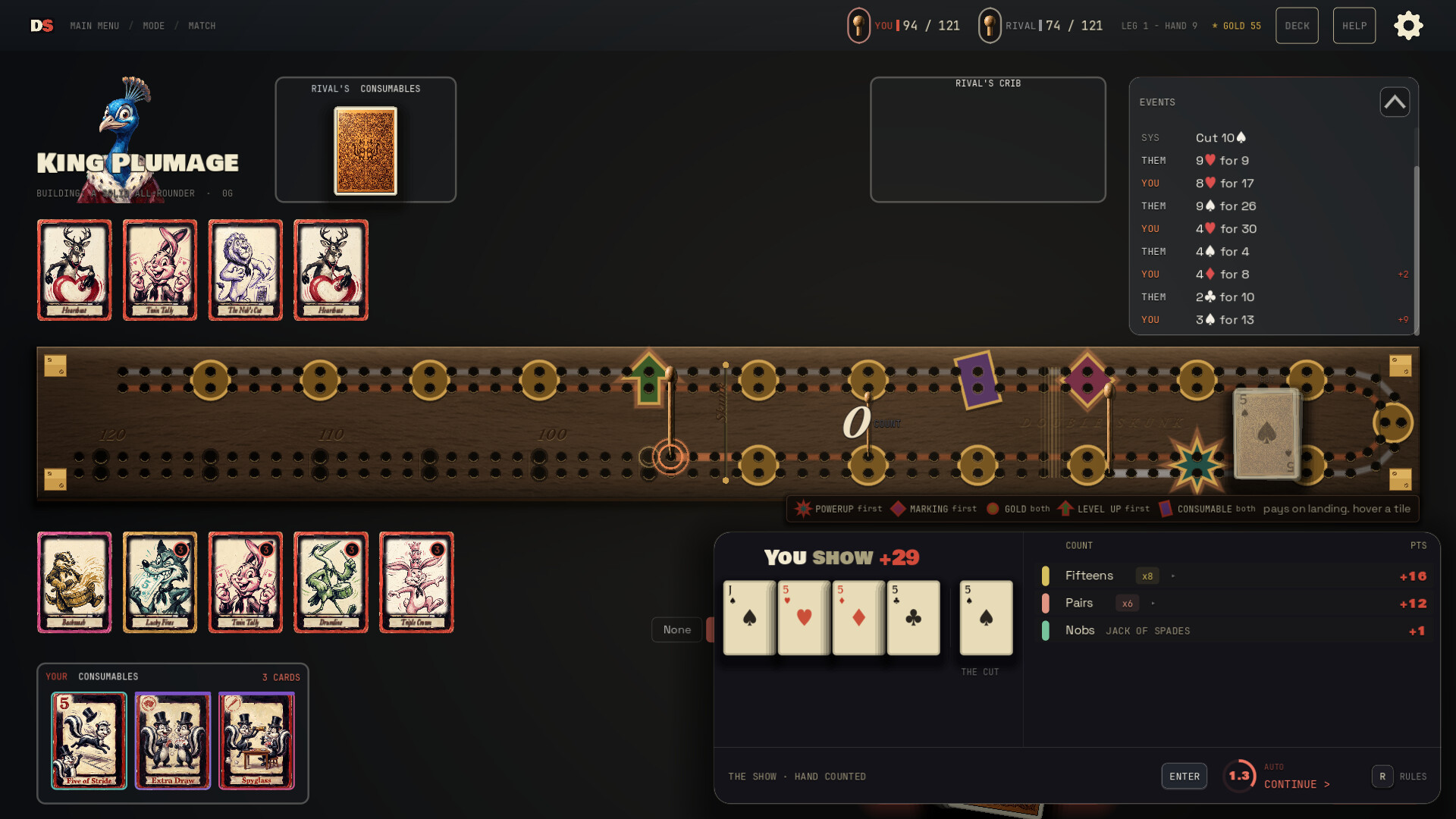
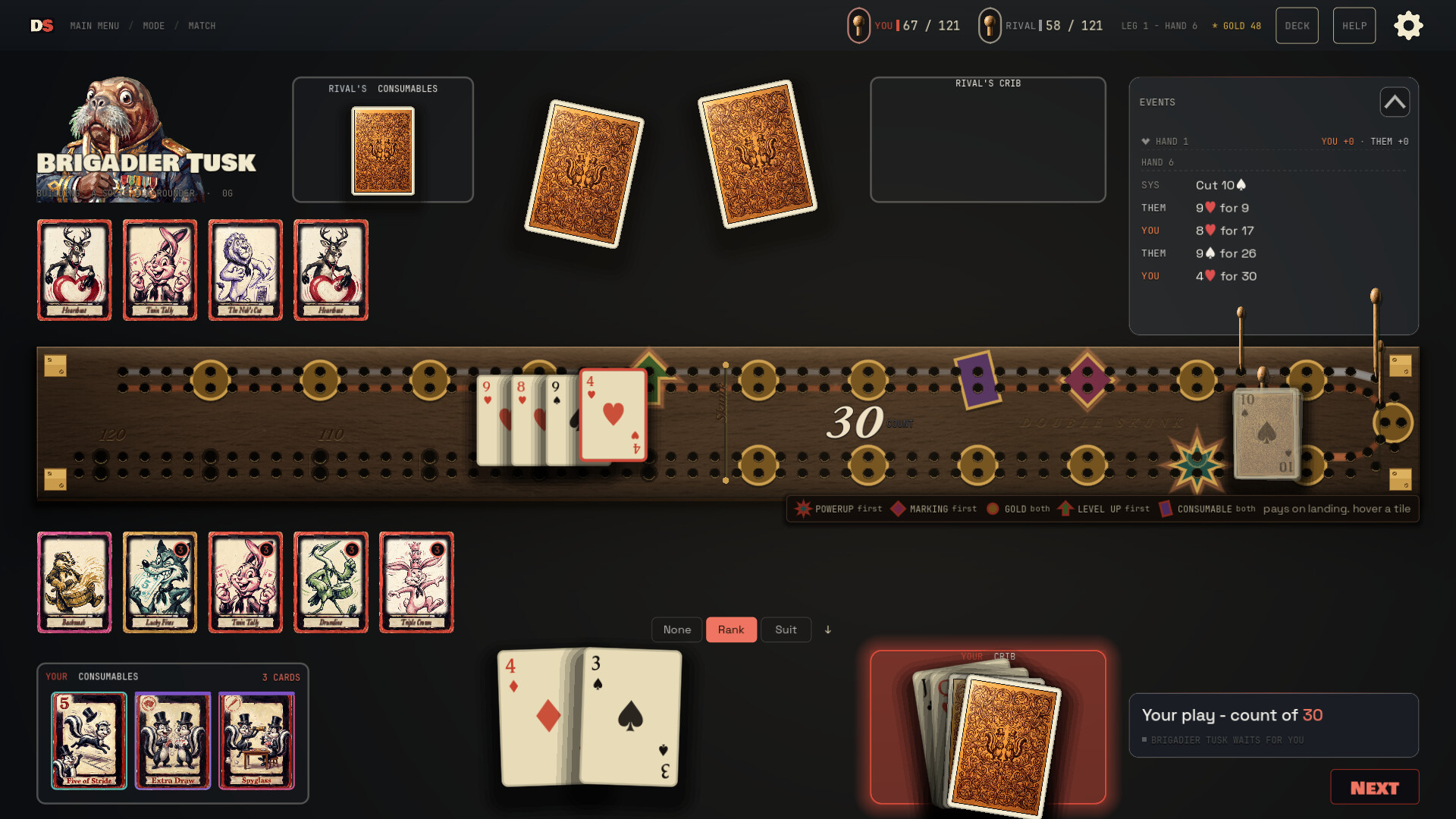
Six cards dealt, two to the crib, cut for the starter, peg to thirty-one, then count the show. Fifteens, pairs, runs, flushes, nobs, his heels. Nothing about the base game is invented, and the rival counts as hard as you do.
Muggins is on the table
Undercount your own show and the rival is welcome to whatever you left behind. Catch the rival short, and those points cross to your side of the board. Most digital cribbage drops this rule because it punishes carelessness. It stays here because it is correct cribbage, and it means you count every hand twice.
57 powerups, 26 consumables, 10 pegs
Three build systems sit on top of the cards, and each does a different job.
Powerups install permanently in your rail. They change what the count is worth: what a pair pays, what a run does to the rival's position on the board, how much a card earns while the running total sits low. They carry levels, and you can upgrade one or sell it back when a run outgrows it.
Consumables are rank cards, not spell cards. Throw one into a pegging round and it counts as a real card of that rank, closing a run, making a pair, forcing a thirty-one that was not in your hand a moment ago. Lay one before the discard instead and it bends a single hand: an extra draw, a card swap, a re-cut starter, a look at the rival's hand.
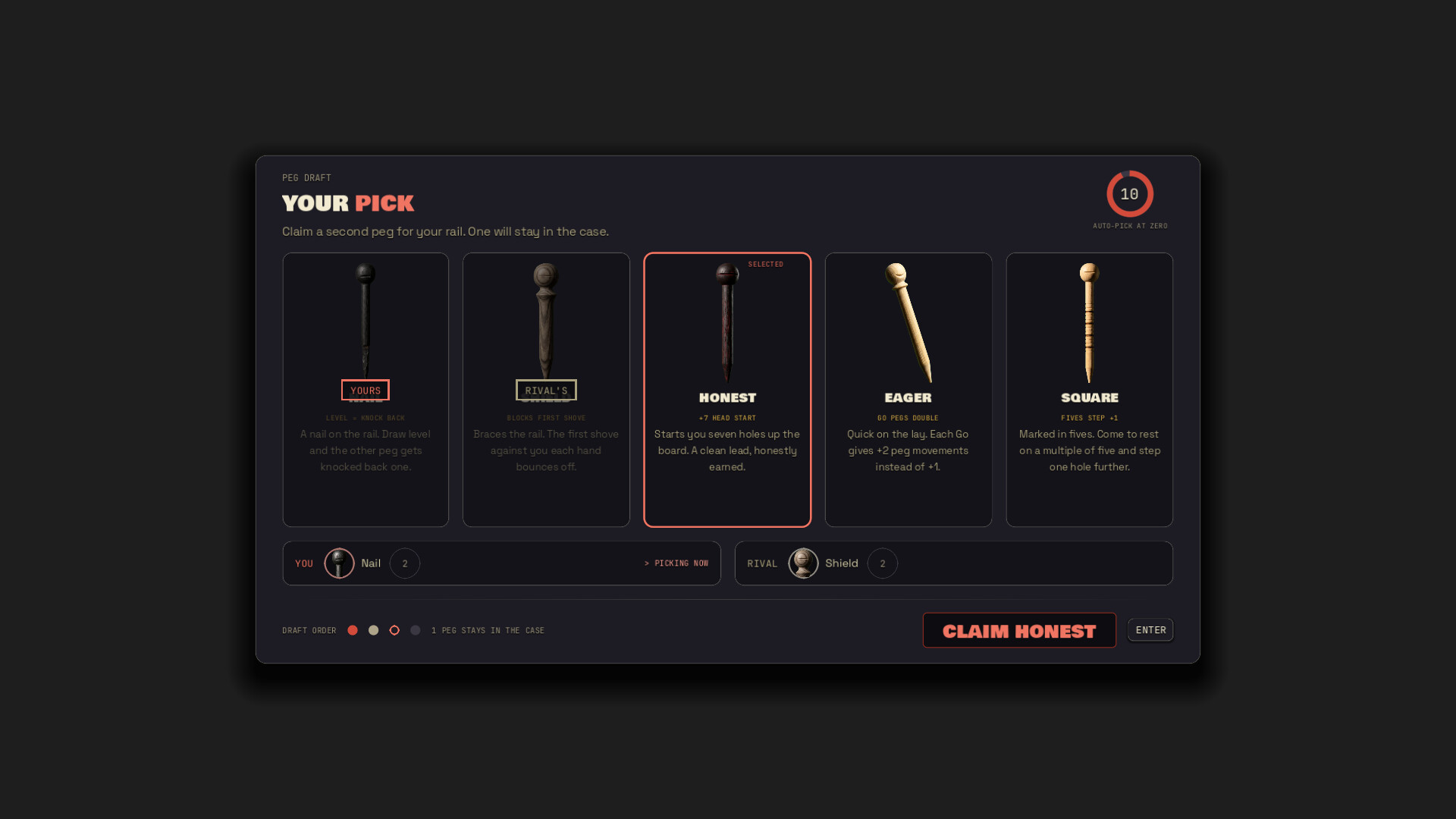
Pegs sit under the whole run and rewrite its rules rather than one hand's arithmetic. Start seven holes up the board. Deal seven cards instead of six. Sell your own Muggins rights for gold if you would rather not be caught. See the rival's discards before you make yours. Double your points for Go.
Land on the tile or it does not pay
The board between hands is a prize track, not scenery. Tiles pay gold, hand out card markings, level a powerup, or drop a rank card in your pocket, and a tile pays only for the peg that lands on it exactly. Counting your move becomes route planning. Six venues carry it: a candlelit parlor, jungle, desert, tundra, mountain, and open space. Between boards, a shop opens, run by the Pedlar, who buys back what you have outgrown and has opinions about how you spend.
The Long Tally, and what waits past it
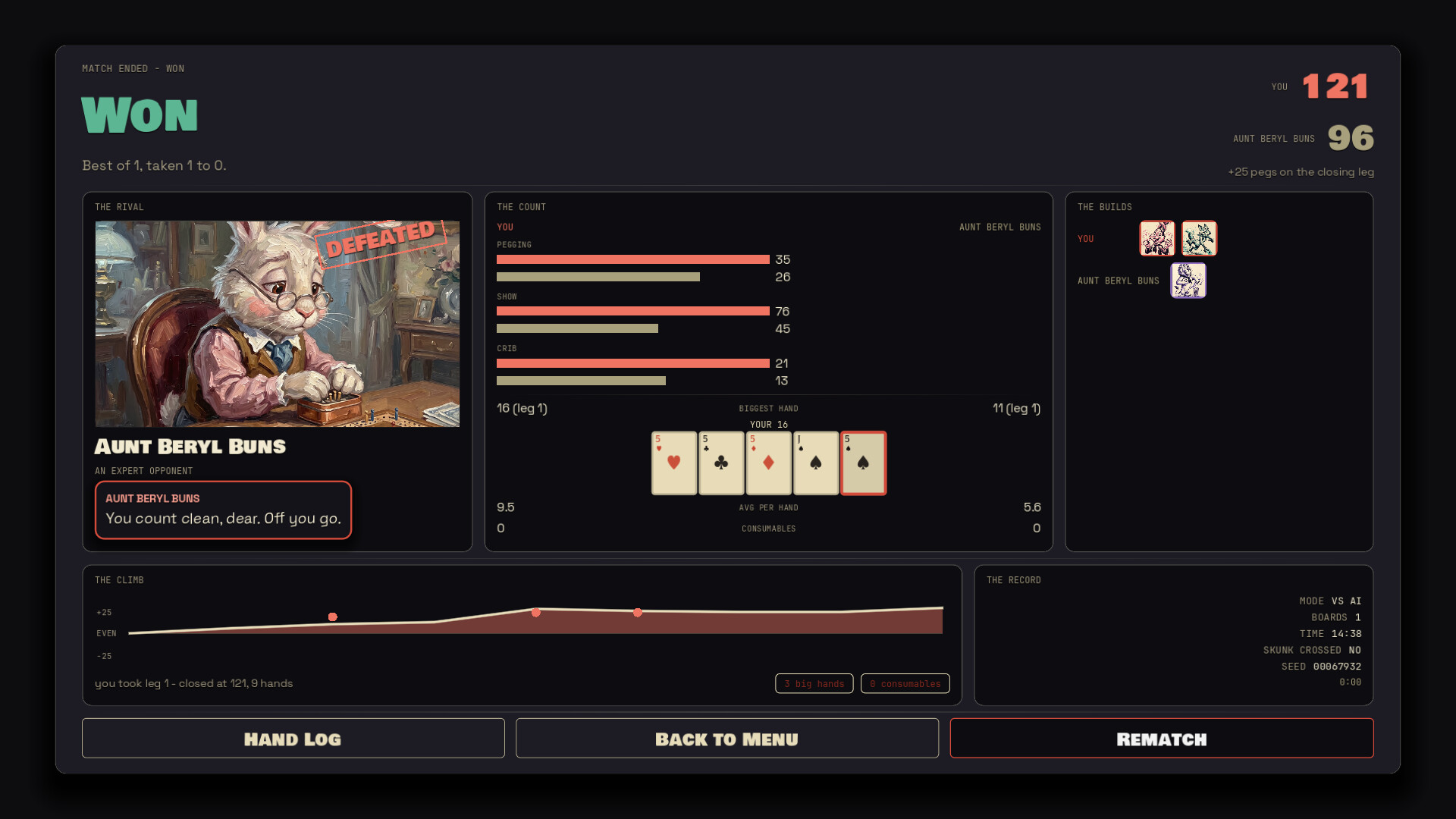
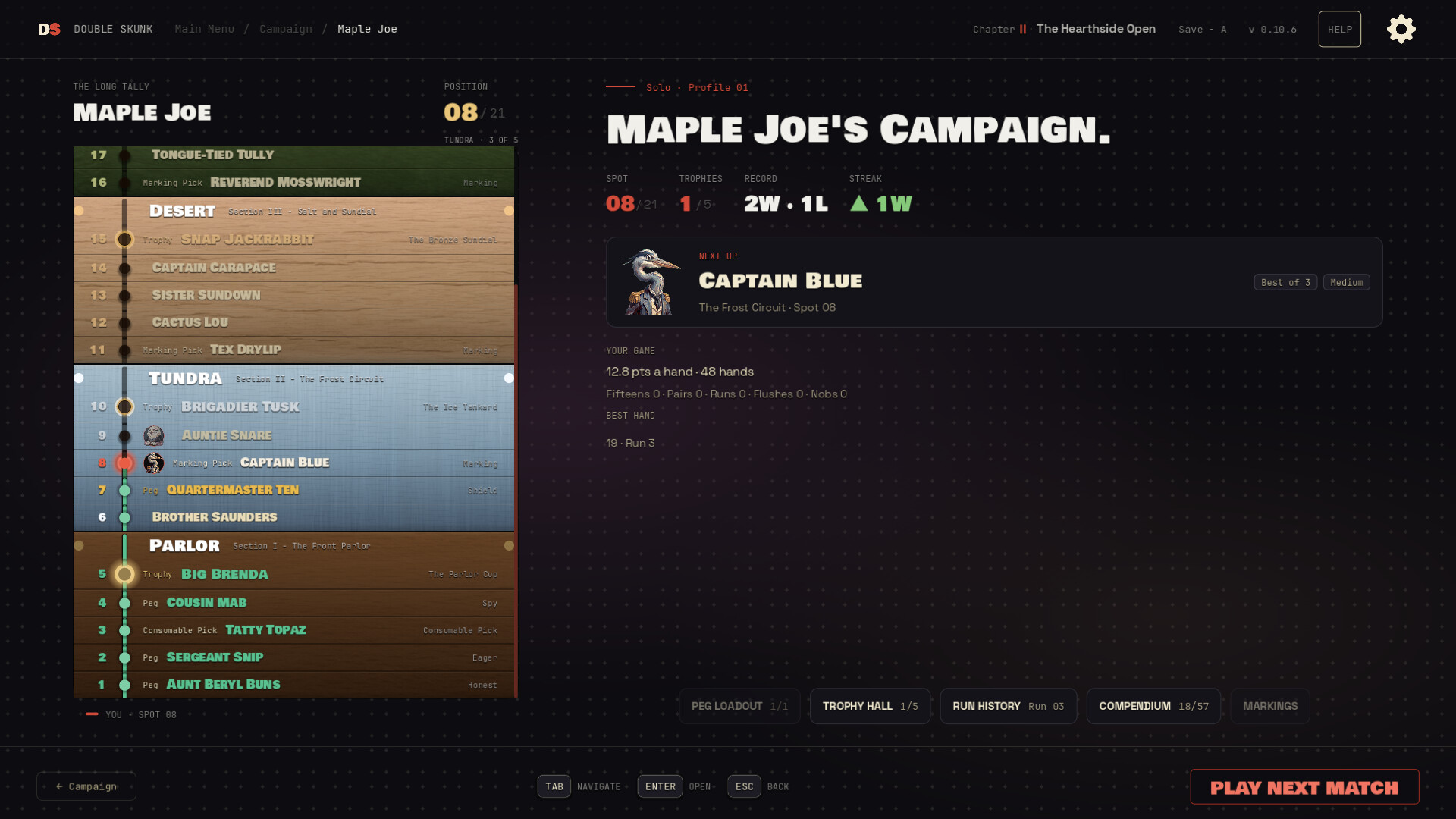
The campaign is a climb toward a championship. Twenty-one stops, each a named rival with a face, a voice, and a habit you can learn to read. Trophies mark the section lines. A loss costs you ground and never the run, and you choose which going in: hold your position and take the rematch, or slide back one spot and win the trophy back later.
Beat the rival at the top and the climb does not end. The Beyond runs past the summit with a cast of its own, no ceiling, and a heat meter that leans harder on you every rung. The format changes up there too, to a single forty-hand duplicate match instead of a race to 121.
One challenge a week, the same deal for everyone
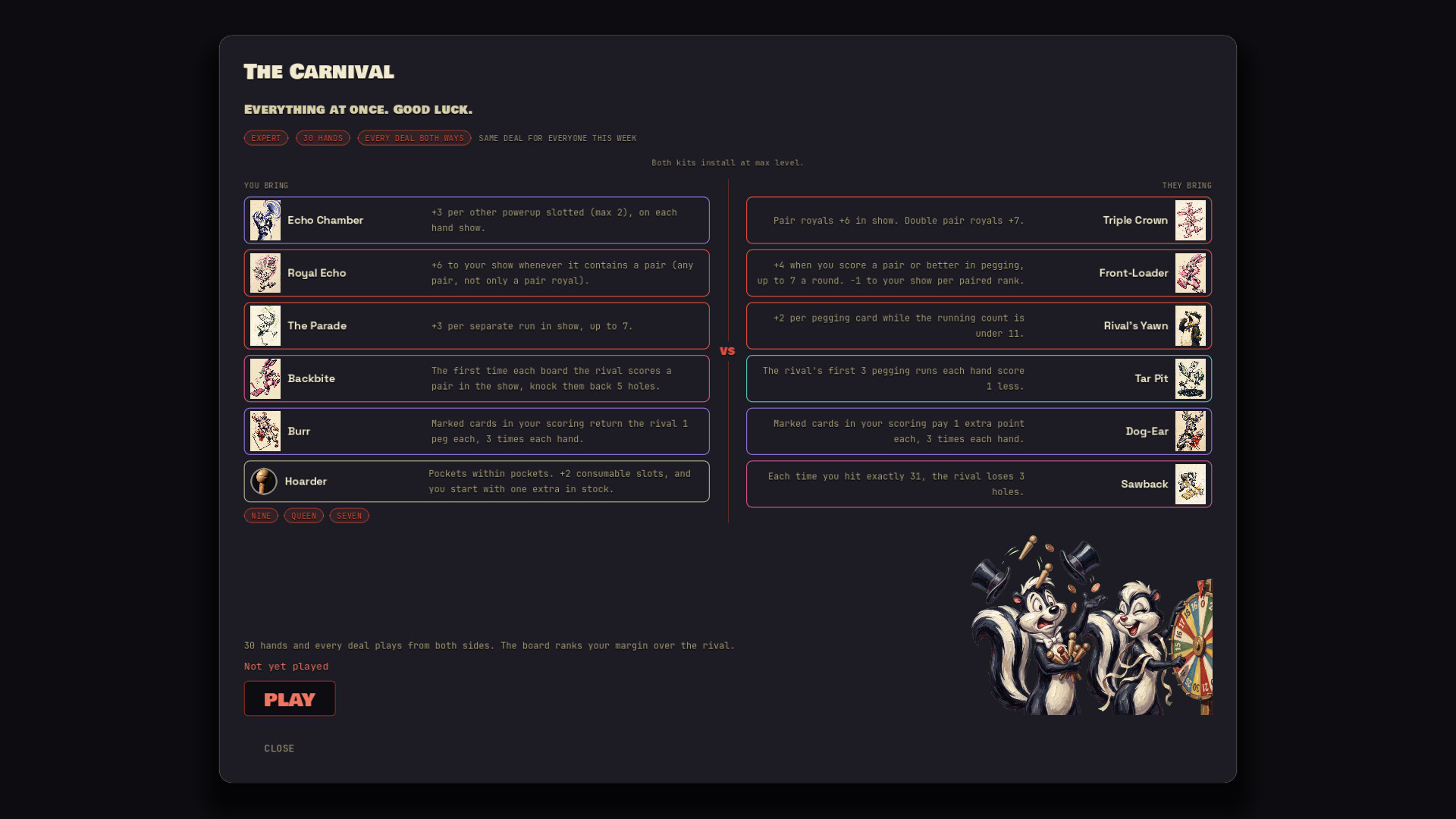
Thirty hands of duplicate cribbage, which means every hand is dealt twice, once from each side, so the cards even out instead of deciding the week. Both kits are fixed and already installed at full level; the rival plays at Expert, and the leaderboard ranks the margin you pulled out of a deal everyone else played too. Ten challenges rotate through the slot, among them The Long Walk, The Reader, and The Carnival.
Online, ranked and casual
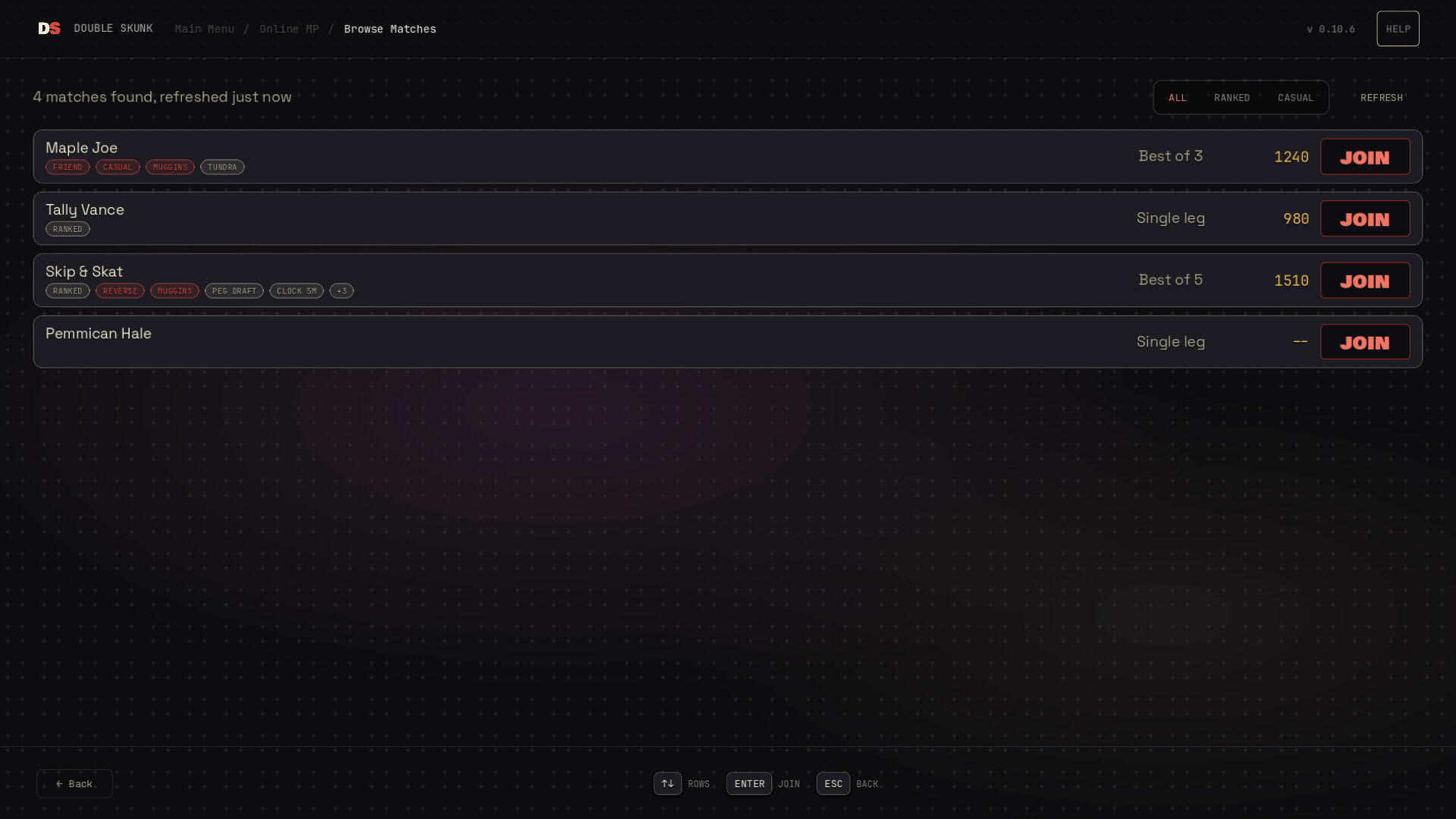
Real matchmaking, a match browser with ranked and casual lobbies, and a rating that moves with your results. If a game drops mid-match, crash recovery re-pairs both players at the same hand. Windows, macOS, and Linux players share one pool.
Your table, your rules
Offline, sit the rival down at four skill tiers from Easy to Expert. Expert runs a deeper pegging search and does not miscount.
Set the house rules before the deal, offline or online: best-of-N legs or a fixed duplicate count of 20, 30 or 40 hands, Muggins (count your own) on or off, the peg draft, powerups, consumables, undo, a chess clock, a visible skunk line, who deals first, and reverse cribbage, which flips what you are trying to do to the rival. Turn all build systems off, and you get pure, traditional cribbage with nothing on top. That is a supported way to play, not a downgrade.
Made by one person
The character art, the music, and the spoken voice lines were generated with AI tools, then selected, edited, and assembled by hand, one at a time. Nothing is generated while you play. The cribbage rules, the scoring engine, and the balance are ours.