Command a Fleet, Not Just a Ship.
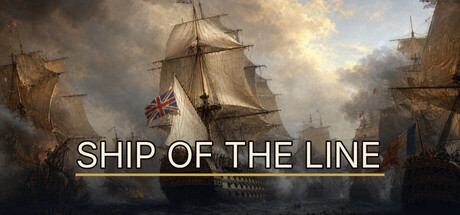
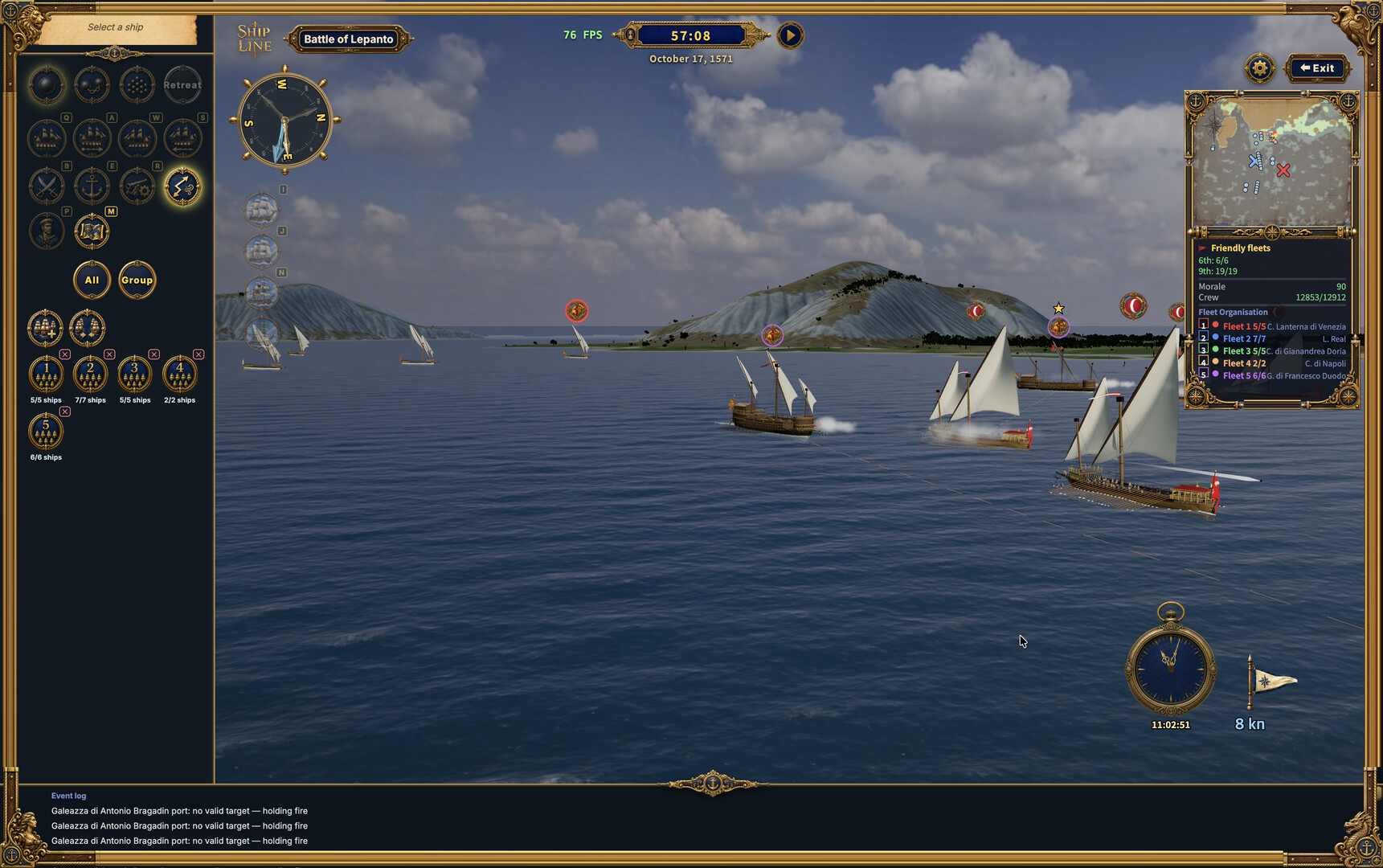
From the galleys of Lepanto in 1571 to the ironclads of Lissa in 1866, Ship of the Line is a historical naval strategy simulation spanning nearly 300 years of warfare at sea.
Command fleets through the Age of Sail and into the era of steam engines, iron armour, and early self-propelled torpedoes.
Read the wind. Form the line of battle. Concentrate your broadsides. Break the enemy fleet.
Now in Early Access, featuring historical battles, a strategic campaign, custom scenarios, and online multiplayer. The game continues to evolve through regular updates and community feedback.
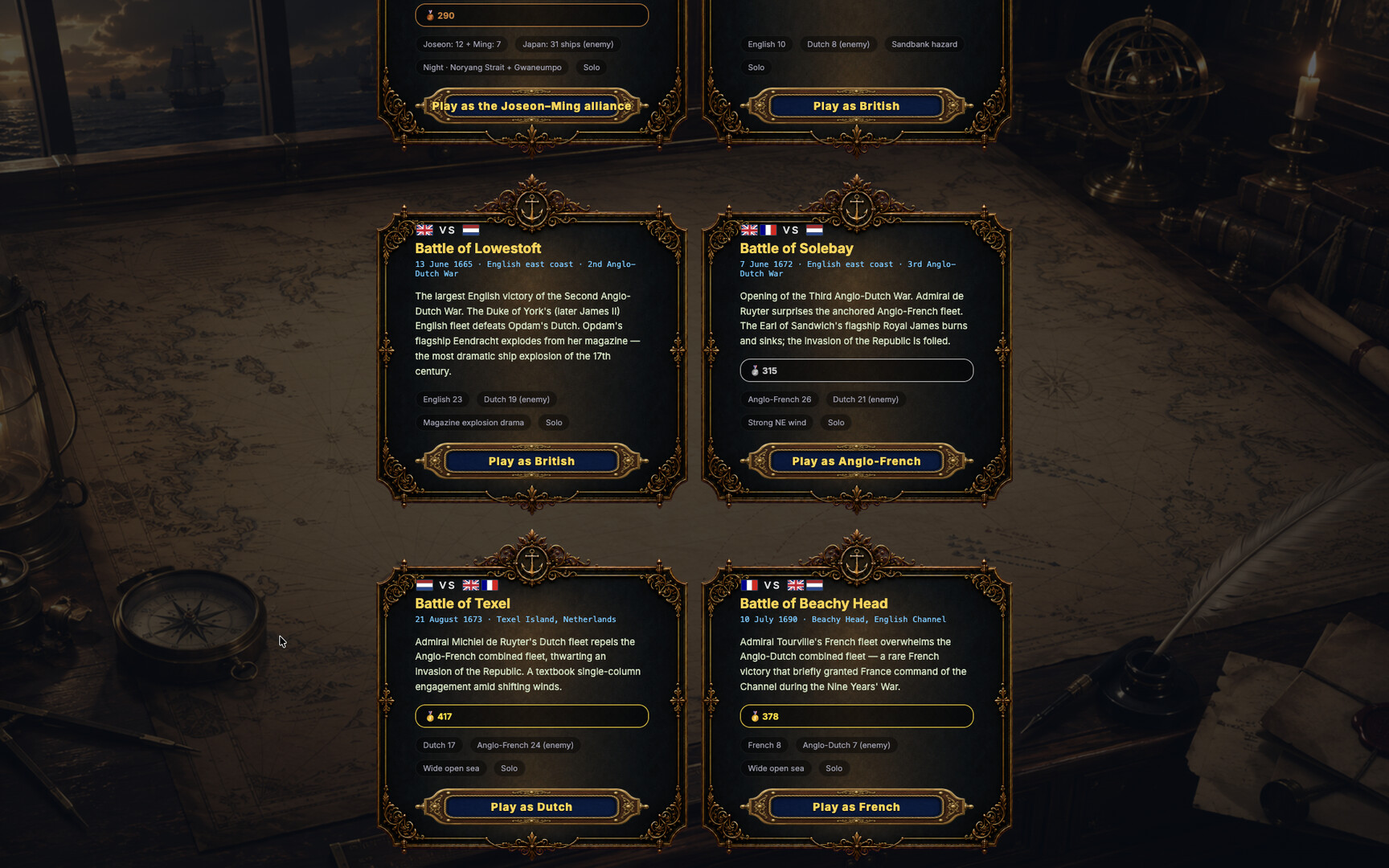
65 Historical Scenarios
Recreate famous naval engagements with historically researched ships, admirals, and battlefield conditions.
53 Historical Battles
Fight across three centuries of naval history, including:
- 16th–17th Centuries: Lepanto, the Spanish Armada, Hansando, Myeongnyang, Noryang, the Downs, the Kentish Knock, Lowestoft, the Medway, Solebay, Texel, and Beachy Head.
- 18th Century: Gangut, Minorca, Havana, Quiberon Bay, Chesma, Flamborough Head, Chesapeake, the Saintes, the Glorious First of June, Camperdown, Cape St. Vincent, and the Nile.
- 19th Century: Copenhagen, Algeciras, Trafalgar, Grand Port, Lissa (1811), the Bombardment of Algiers, Navarino, Sinop, Heligoland, Jasmund, and Lissa (1866).
12 Large-Scale Reconstructions
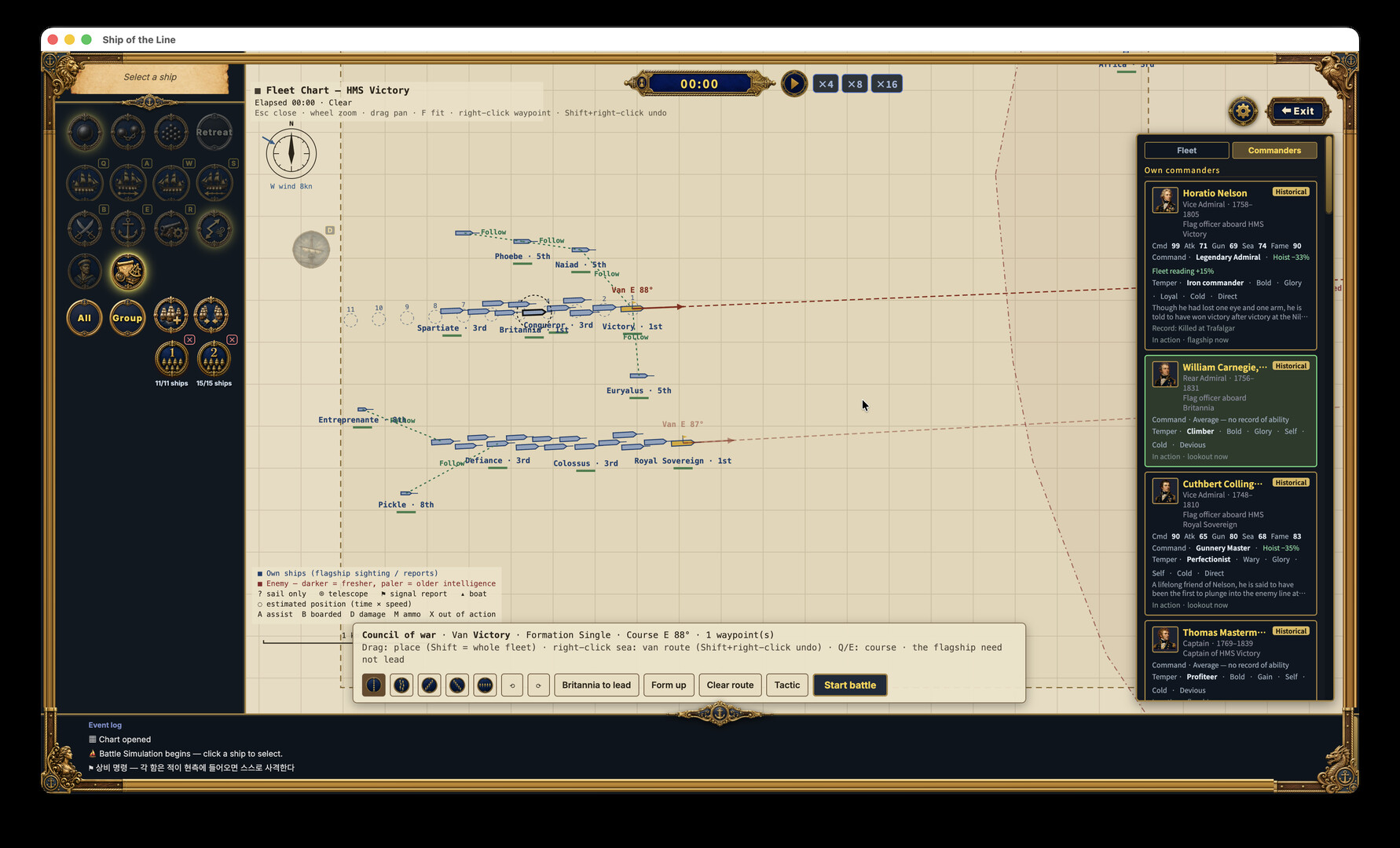
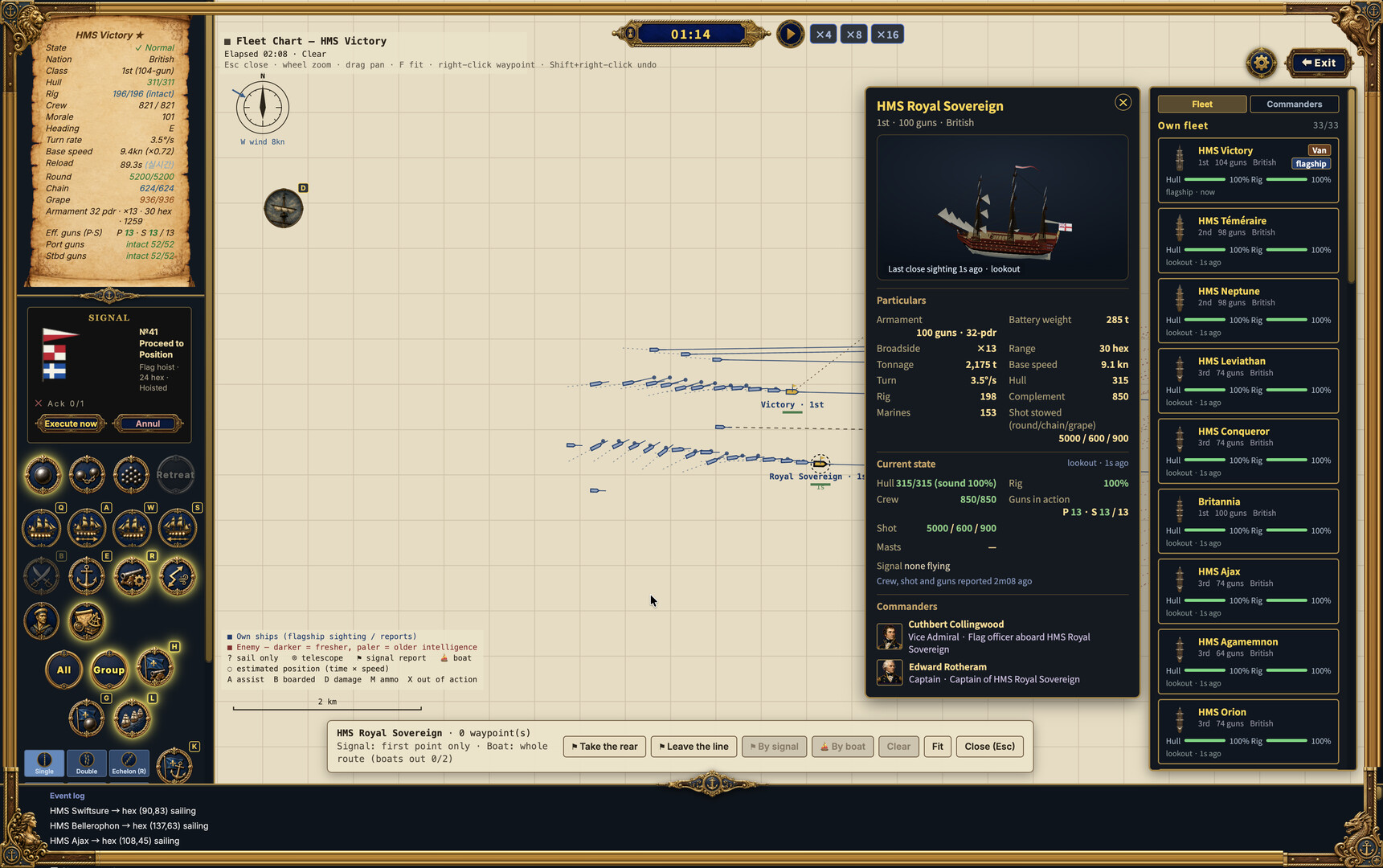
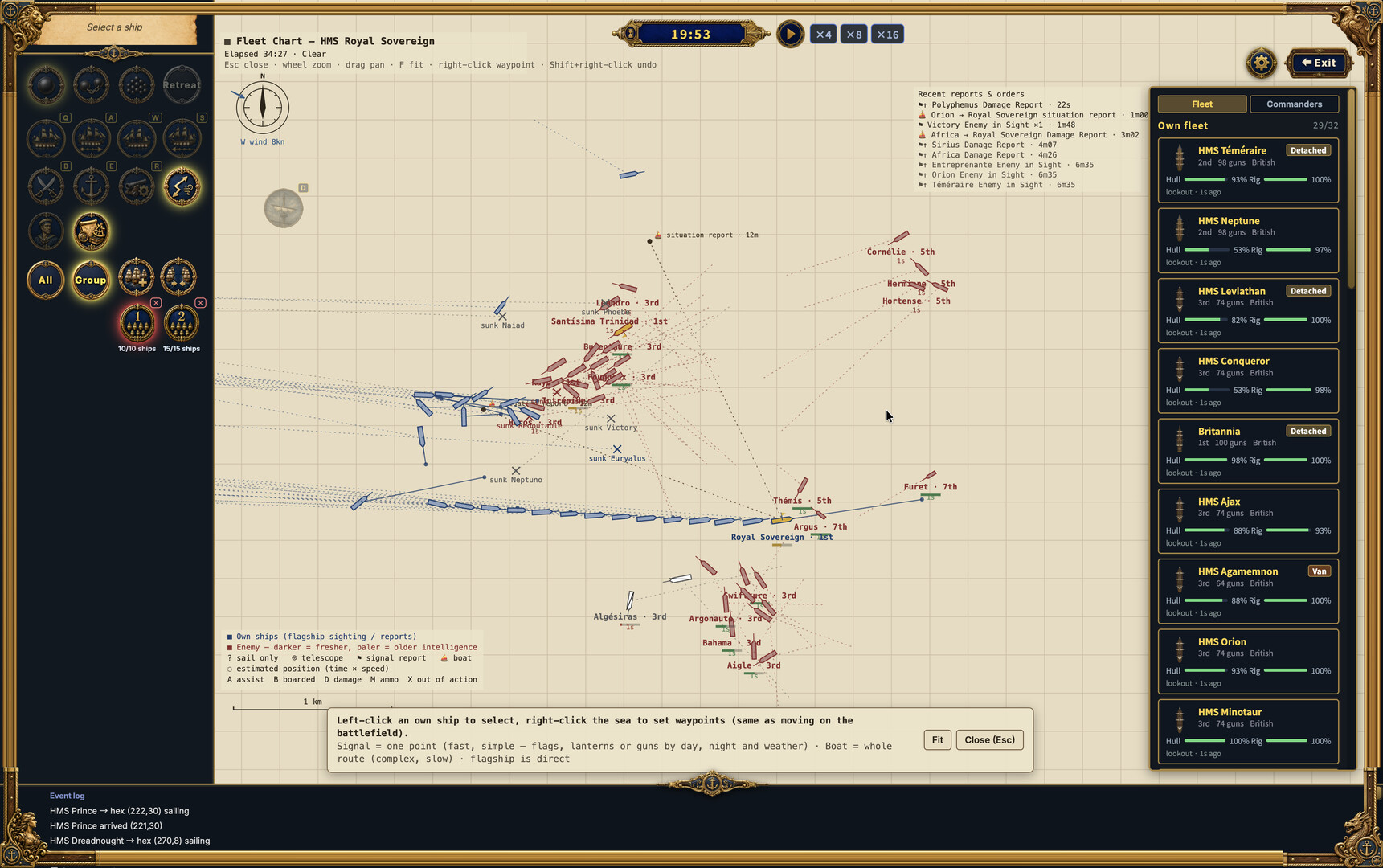
Experience major fleet engagements at a larger historical scale, commanding from your flagship through period communication systems.
These include:
- Trafalgar — 73 ships
- The Battle of the Nile — a night battle in a reconstructed Aboukir Bay
- Cape St. Vincent, Copenhagen, Chesapeake, Hansando, Noryang, and the Medway
- An introductory Dogger Bank engagement — 7 ships of the line against 6
These reconstructions are separate playable scenarios, offering a different command experience from conventional historical battles.
From Sail to Steam and Iron
Experience the technological transformation that brought the Age of Sail to an end.
Steam Propulsion
Raise steam, manage coal and boiler output, and operate paddle wheels, screw propellers, and lifting-screw systems. Ships equipped with both sails and engines can combine the two methods of propulsion.
Ironclad Warships
Armour belts, armoured casemates, central batteries, open barbettes, revolving gun turrets, and naval rams introduce new tactical possibilities.
Changing Naval Artillery
Smoothbore cannons, rifled muzzle-loaders, early breech-loading guns, and rapid-fire artillery differ in range, projectile weight, penetration, accuracy, and rate of fire.
Early Torpedoes
The first self-propelled naval torpedoes bring underwater attacks into late-19th-century combat.
The Final Sail-Rigged Warships
Beyond the main historical scenario timeline, custom battles allow players to experiment with later vessels, including sail-rigged ironclads and armoured cruisers from the final decades of the 19th century.
Campaign — 1778: The American War of Independence
Choose Great Britain, France, Spain, the Netherlands, or the United States and take command of a national navy.
The campaign connects strategic planning with the same tactical combat system used in historical battles.
- A Connected Atlantic Theater: Navigate from the North American coast across the Atlantic to the English Channel, North Sea, Gibraltar, Caribbean, and western Mediterranean.
- Fleet Management: Construct and repair ships, recruit and train crews, manage officers, and develop naval technology.
- Economy and Logistics: Manage national finances, trade, shipyard production, resources, and maritime transport.
- Naval Operations: Assign fleets to blockade, escort, reconnaissance, commerce raiding, and patrol missions.
- Seamless Tactical Battles: When hostile fleets encounter one another, enter a tactical engagement or choose automatic resolution.
- Strategic Victory: National objectives, territory, fleet strength, trade, war exhaustion, and national survival contribute to the outcome of the war.
Your losses matter. Captured vessels can join your fleet, damaged ships require repairs, and experienced officers carry their history into future battles.
The campaign remains under active development, with ongoing improvements to AI decision-making, economy, logistics, balance, and stability.
A Serious Naval Wargame
Naval combat is shaped by the physical and tactical realities of each era.
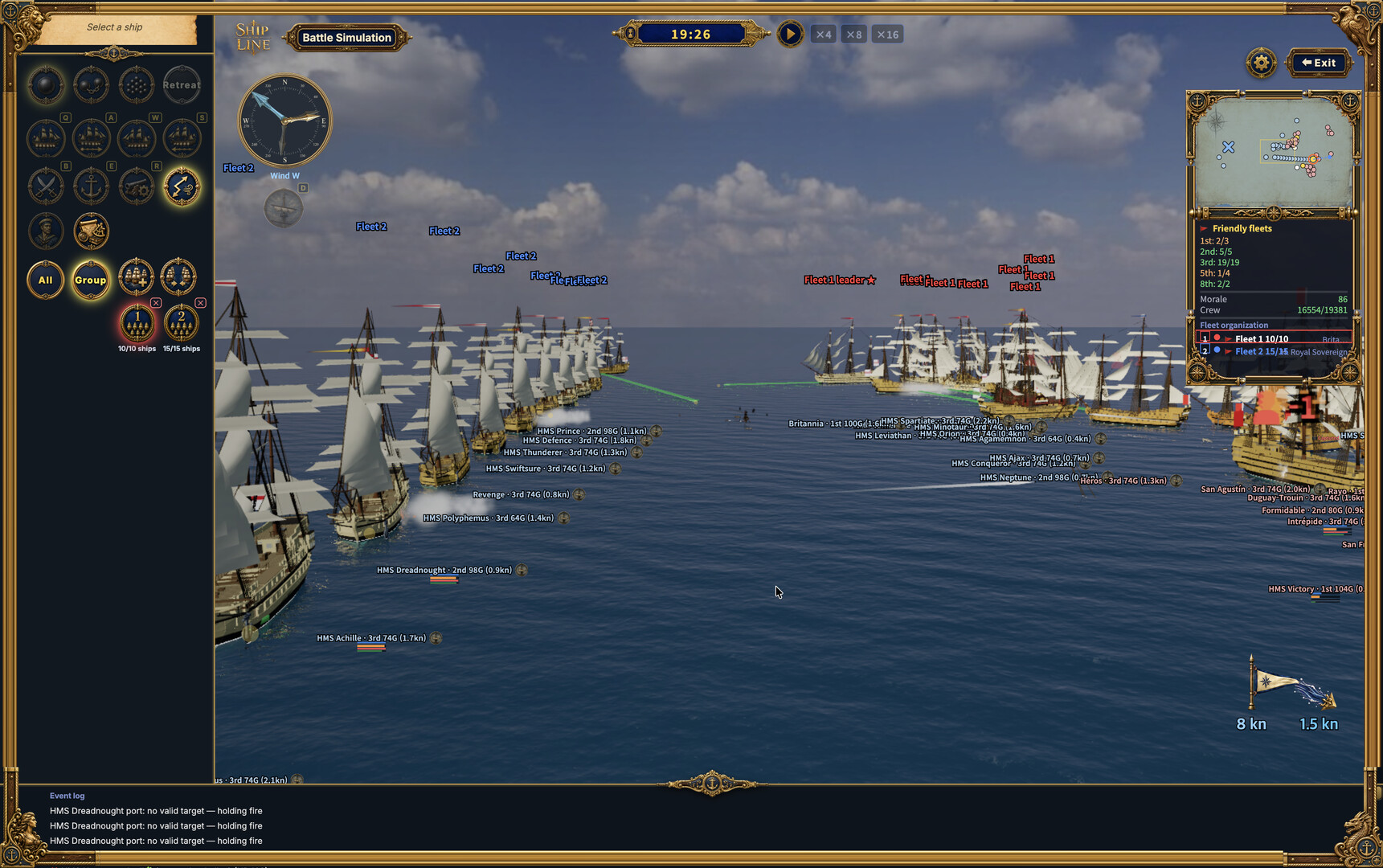
Wind and the Weather Gauge
Square-rigged ships cannot sail directly into the wind. Position your fleet to gain the weather gauge and control the engagement.
Line of Battle
Organise ships into formations, maintain your battle line, and concentrate broadside fire against the enemy.
Raking Fire
Cross an enemy's bow or stern and fire along the length of the ship to inflict devastating damage.
Historical Ammunition
Round shot damages hulls, chain shot destroys rigging, and grapeshot targets exposed crews. Later weapons introduce new projectile types and armour penetration.
Boarding Actions
Approach enemy ships, secure grappling lines, board their decks, and attempt to capture them.
Damage Control
Masts break, sails tear, fires spread, and flooding threatens stability. Assign crews to repairs, firefighting, and pumping to keep damaged ships afloat.
Anchoring and Emergency Departure
Fight at anchor, hold a defensive position, or cut the cable when rapid movement becomes essential.
50 Ship Classes
Command ships of the line, frigates, sloops, galleys, steam frigates, ironclads, and other historical vessel types, each with distinct handling and combat characteristics.
Command Mode — Lead Through Orders
In major fleet engagements, you do not directly control every ship.
You command your flagship while subordinate captains receive instructions through flags, sound signals, lights, and dispatches.
Communication has limitations.
- Signals require time to reach their recipients.
- Distant squadrons may fail to receive orders.
- Officers interpret commands according to their abilities and temperament.
- Captains may react independently when situations change.
- Information that has not been reported remains unknown.
Your task is not to control everything.
It is to make decisions despite what you cannot control.
The Coastline Is Part of the Battlefield
The sea is not an empty arena.
Coastal Fortifications
Attack stone forts, coastal gun batteries, defensive earthworks, and East Asian fortifications with naval artillery.
Amphibious Operations
Land troops by boat, support assaults with naval gunfire, and conduct attacks against fortified coastal positions.
Navigation Hazards
Shoals, reefs, currents, shallow water, darkness, and changing weather influence movement and combat.
Limited Visibility
Fog, rain, darkness, and the horizon restrict what your fleet can observe. An unidentified contact may initially be reported only as distant sails.
Scenario Editor & Steam Workshop
Create naval engagements using the built-in scenario editor.
- Configure terrain, fleets, starting positions, wind, weather, and victory conditions.
- Publish your scenarios through Steam Workshop.
- Download and play battles created by other commanders.
Custom Battles & Multiplayer
Custom Battles
Create your own engagements using a catalogue of more than 3,000 historical ship entries.
Experiment with different national fleets, ship generations, weapons, and battle conditions — including encounters that never happened in history.
Single-Player
Challenge tactical AI that responds to formations, positioning, battlefield conditions, and naval doctrine. Single-player battles are playable offline.
Online Multiplayer
Compete against other commanders in real-time PvP naval battles and points-based skirmishes.
Learn to Command
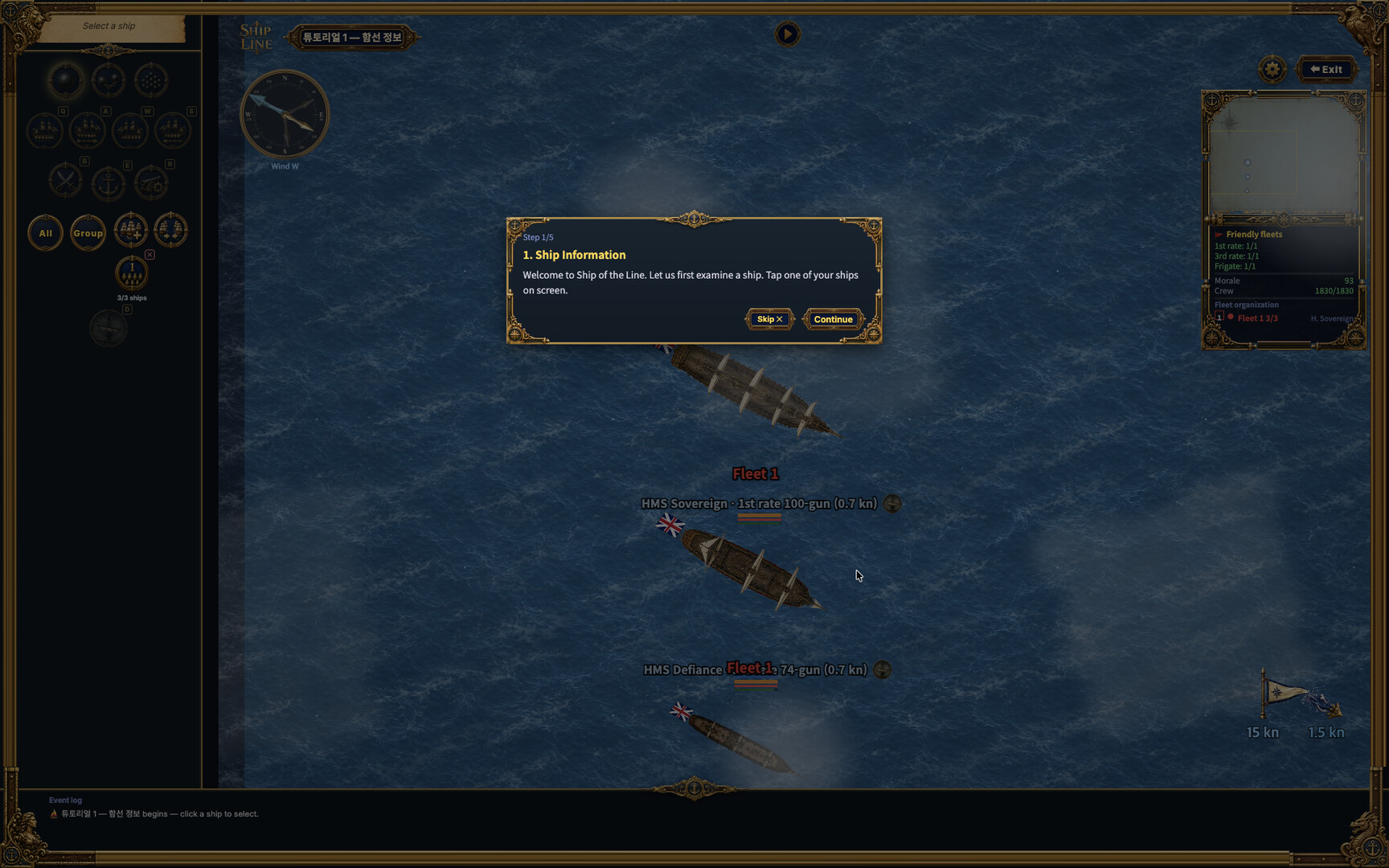
A step-by-step tutorial introduces the fundamentals of naval command.
Learn ship information, sailing and tacking, naval gunnery, fleet organisation, line-of-battle combat, boarding, navigating hazards, and managing a complete engagement.
About Early Access
Ship of the Line is an actively developed naval simulation.
Following the expansion into the final generation of sail-equipped warships, development is increasingly focused on improving the systems that bring these ships and battles to life.
Our main priorities include:
- Campaign mechanics, AI strategy, and long-term balance
- Tactical AI and fleet behaviour
- Naval combat and damage simulation
- Performance optimisation and stability
- Bug fixes, usability, and multiplayer improvements
Community feedback plays an important role in identifying issues and guiding development priorities.
Players who purchase during Early Access will receive future updates and content additions included with the game at no additional cost.
Thank you for helping us build Ship of the Line.
Join the Community
Share feedback, report bugs, discuss naval history, and follow new developments in our shipyard.
Official Discord: