[h1]The whole basketball world, running at once.[/h1]
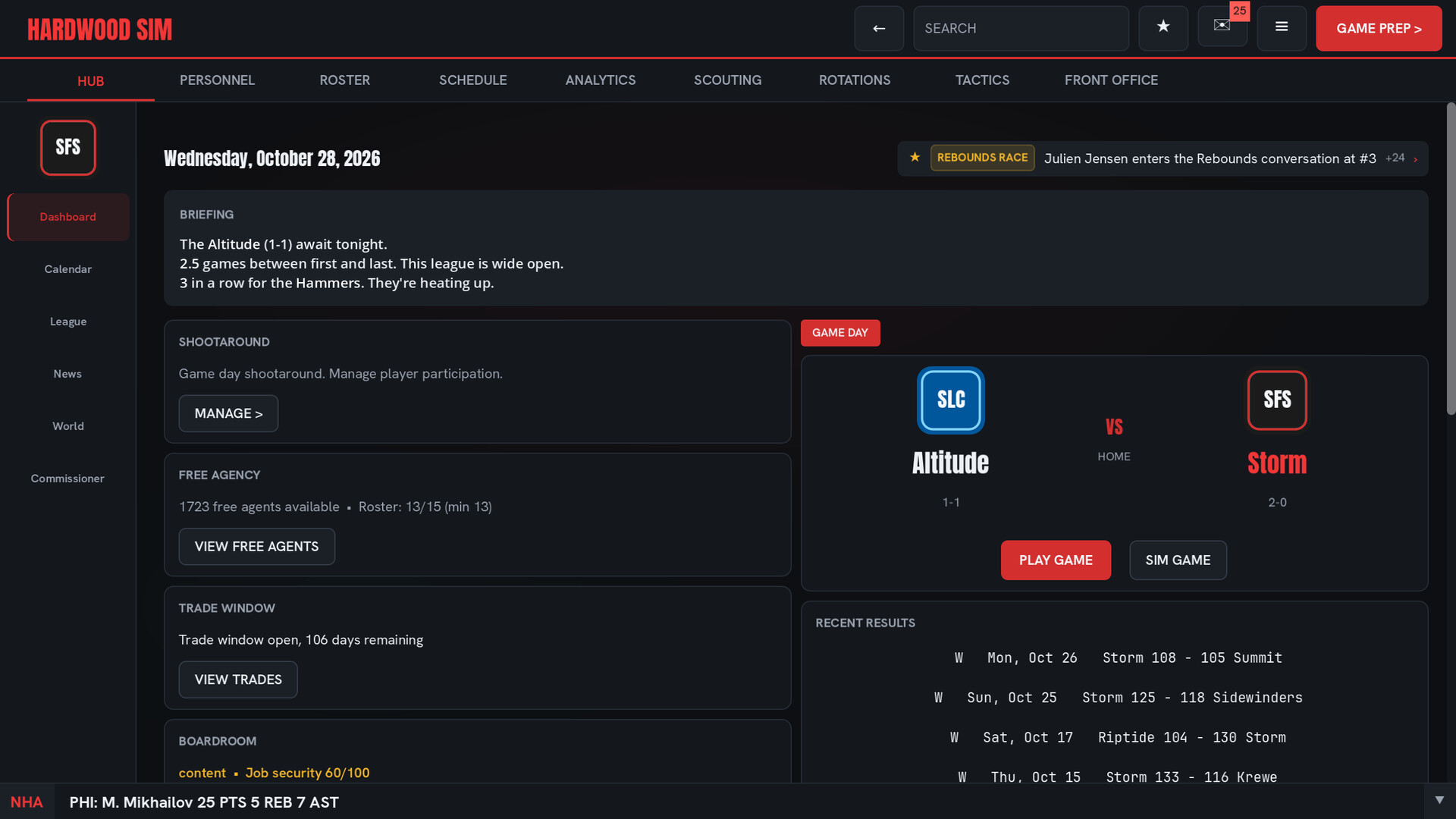
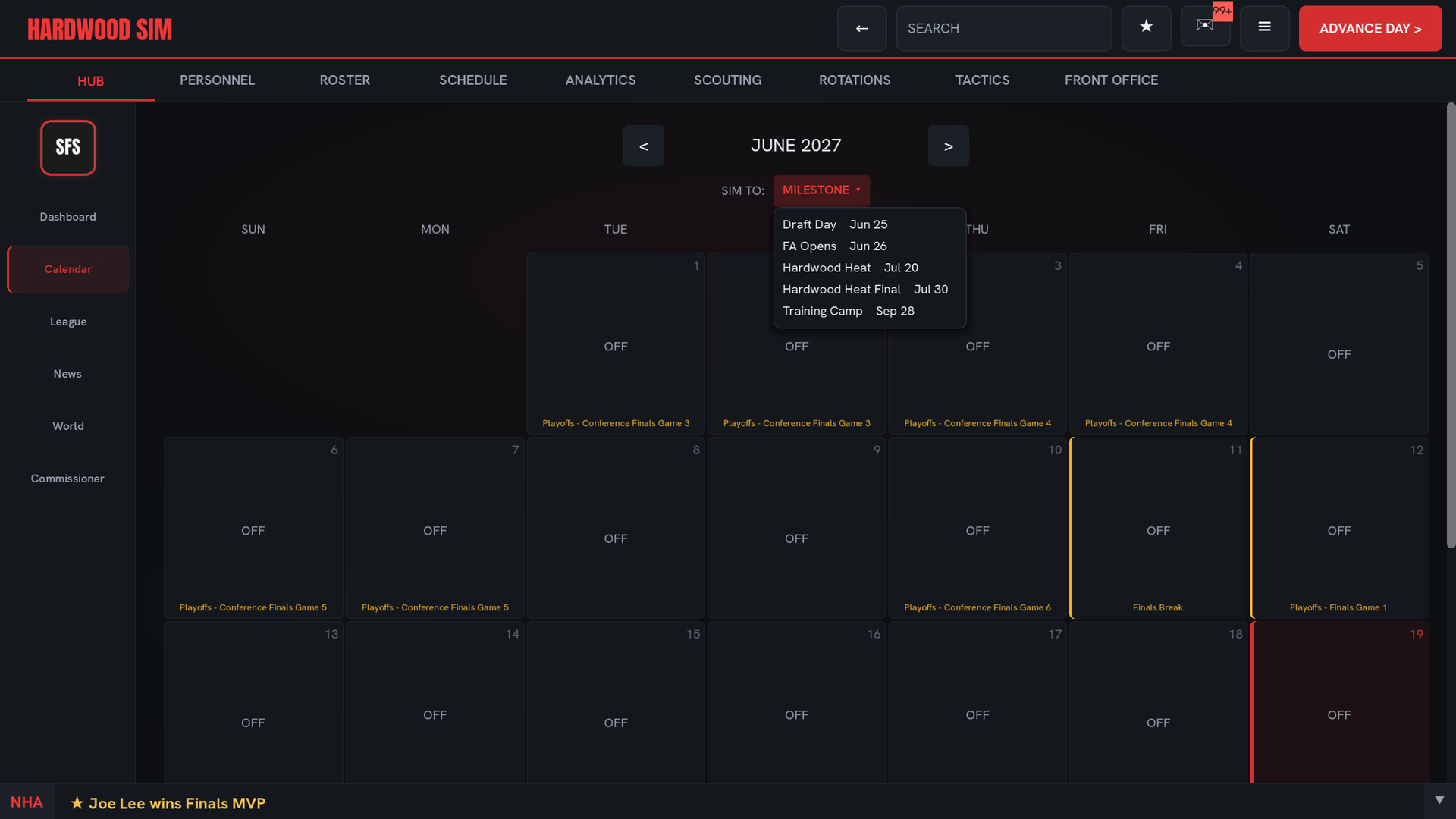
Coach a college program, run a pro front office, take over a club in Spain, live in more than one across a single career, or challenge someone else's club to a live game. The college league, the pro league, and the development league sit on one connected calendar: the players you develop in college enter the pro draft, and the ones who miss the cut keep playing below it. Step away for a week, and the league keeps moving without you.
Your World, One Calendar
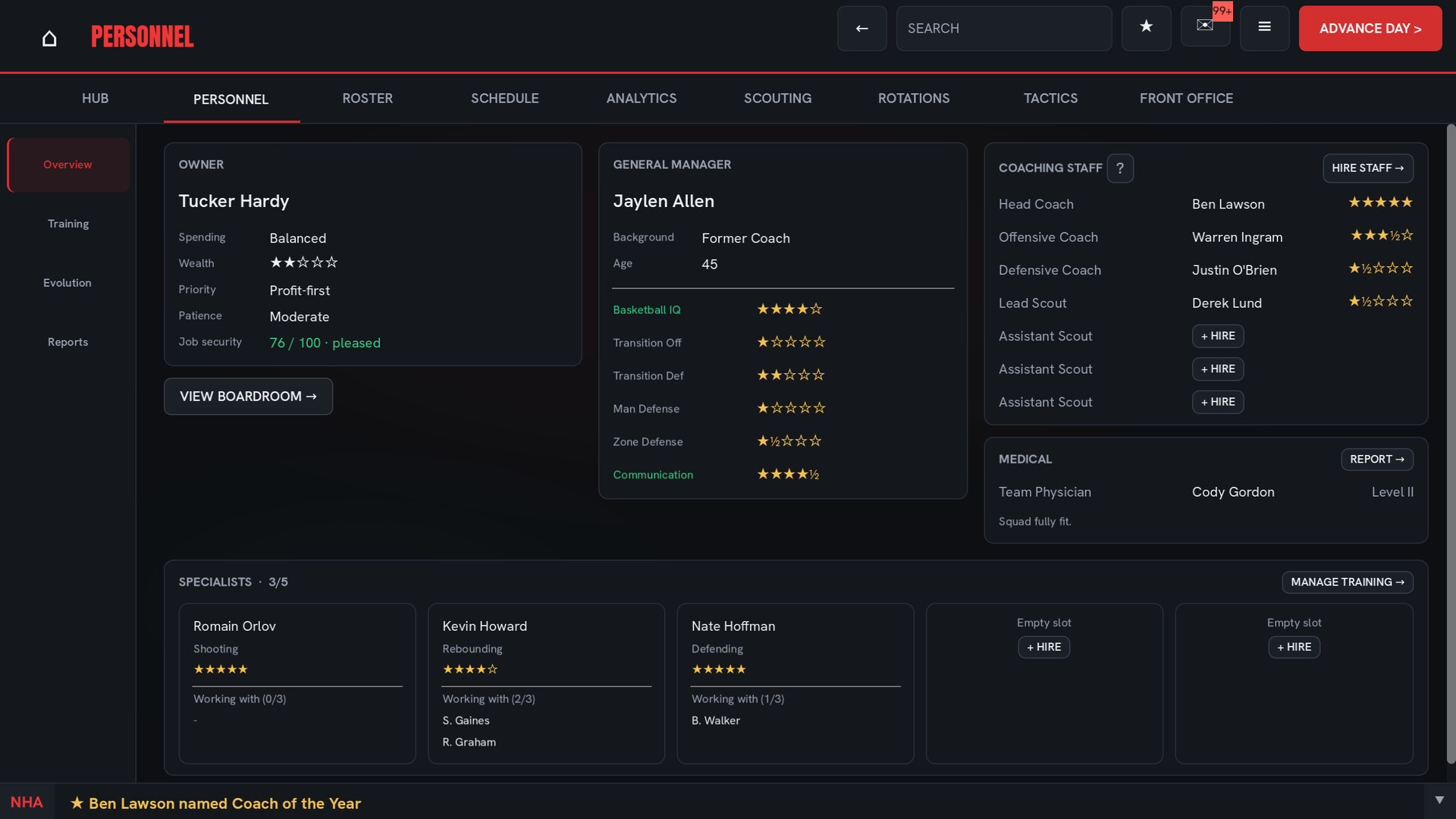
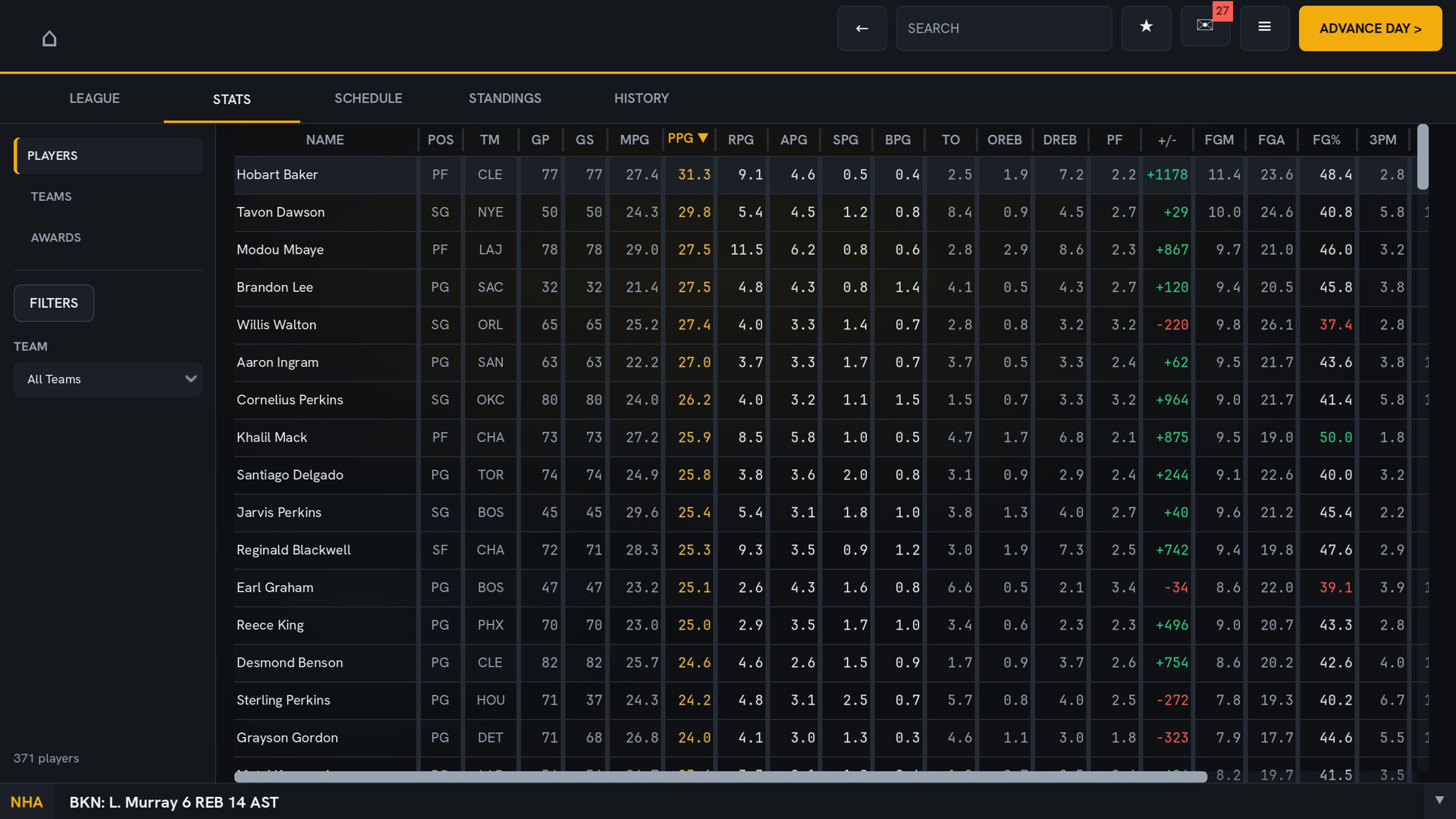
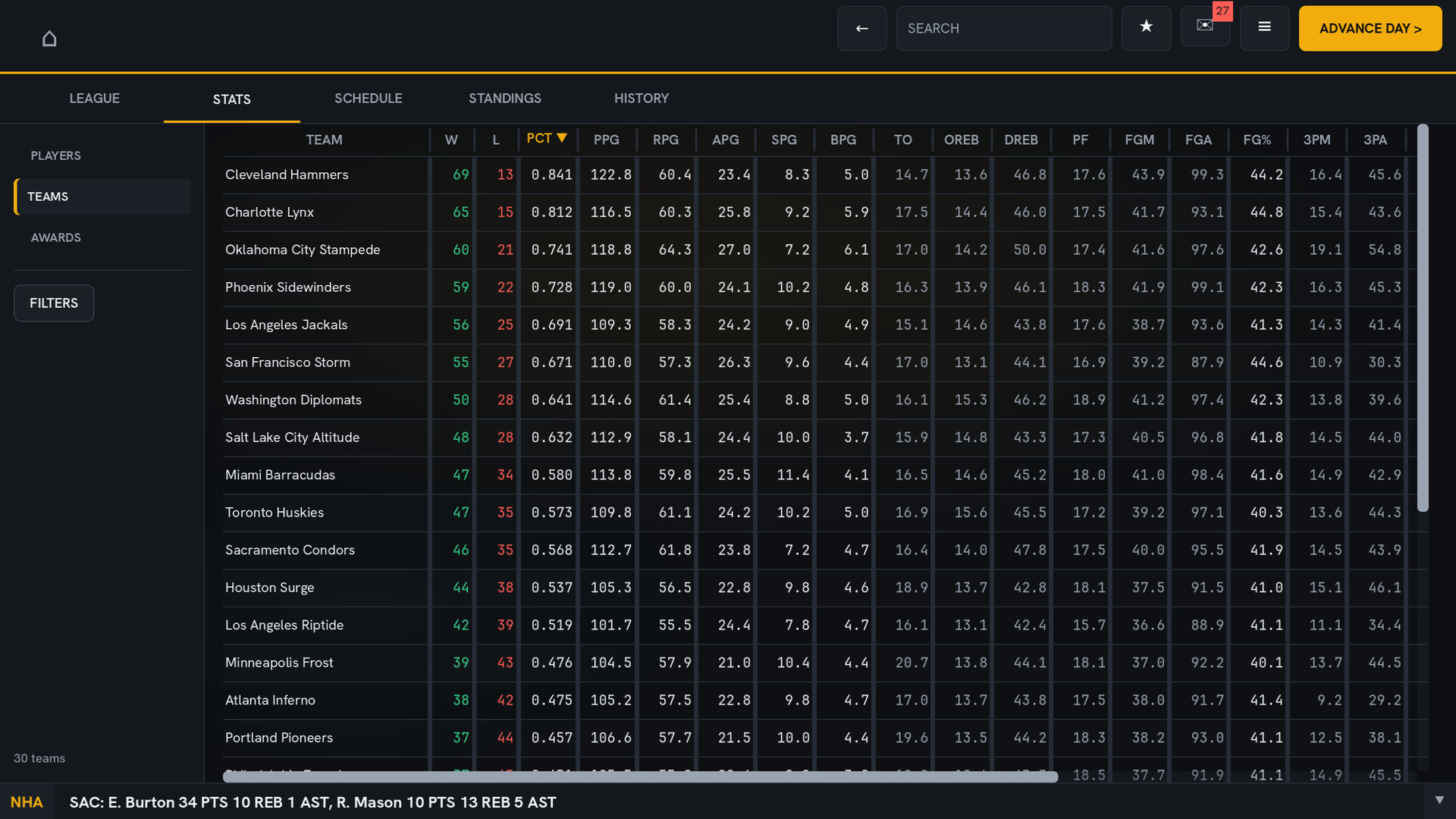
At the top of the American game is the NHA, the pro league: a full season, a playoff chase, and a salary cap that keeps rosters honest. Below it is the college league, governed by the CCC: 365 schools across 32 conferences. In between is the development league, feeding players back to the NHA through its own draft and a call-up market. Across the Atlantic, four more divisions run on Spanish rules, Spanish money, and a Spanish calendar. Seven leagues in all, and every one of them advances while you work.
On the Court
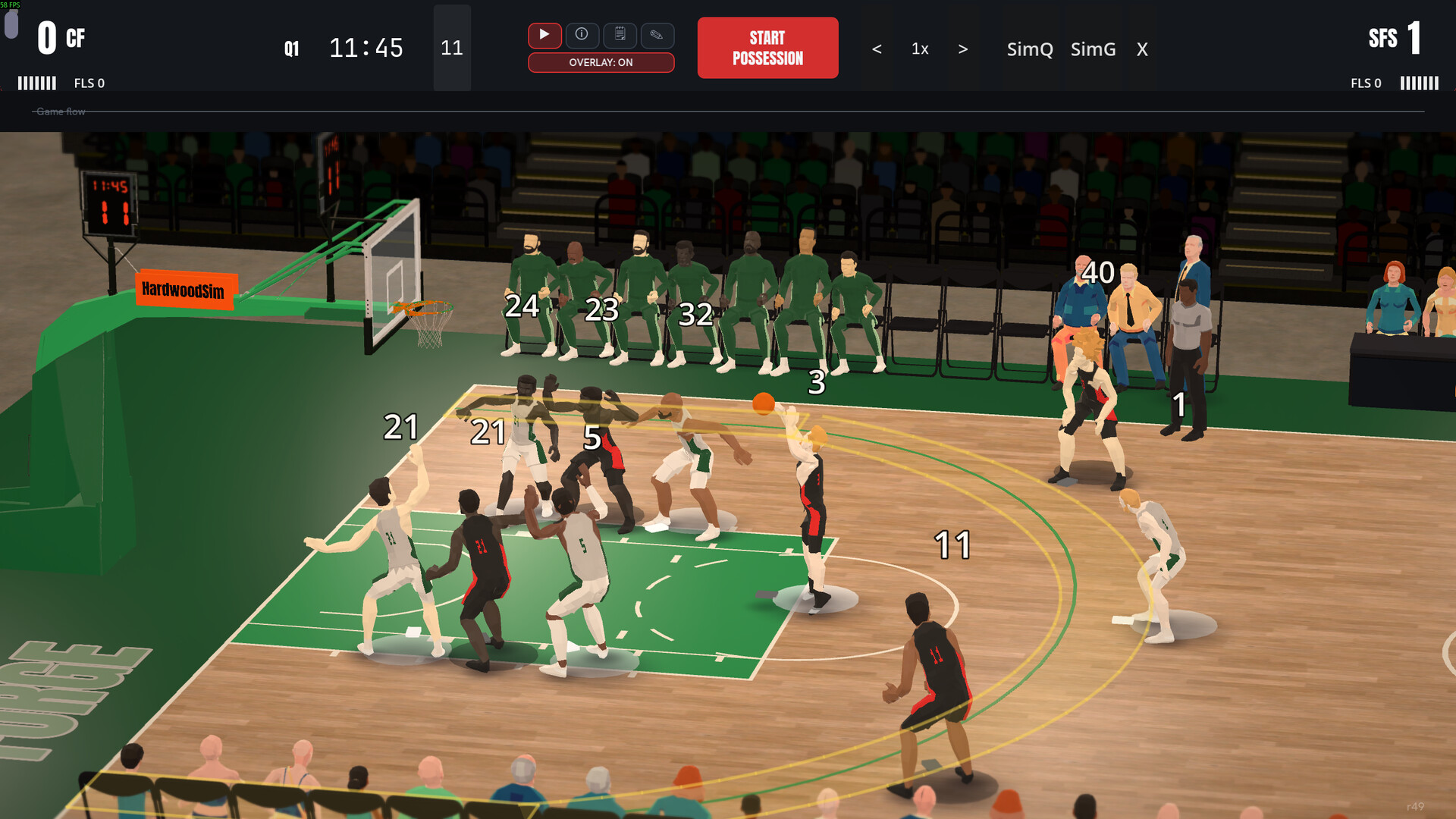
Every game is played on a broadcast view of the floor. Watch every cut, screen, fast break, defensive adjustment. All of the action in real time on a detailed immersive court view. The crowd fills to what the gate sold, and the clocks on both stanchions run the real game clock and shot clock. The floor carries your club's colors and your city and nickname, drawn to whichever rulebook the league plays.
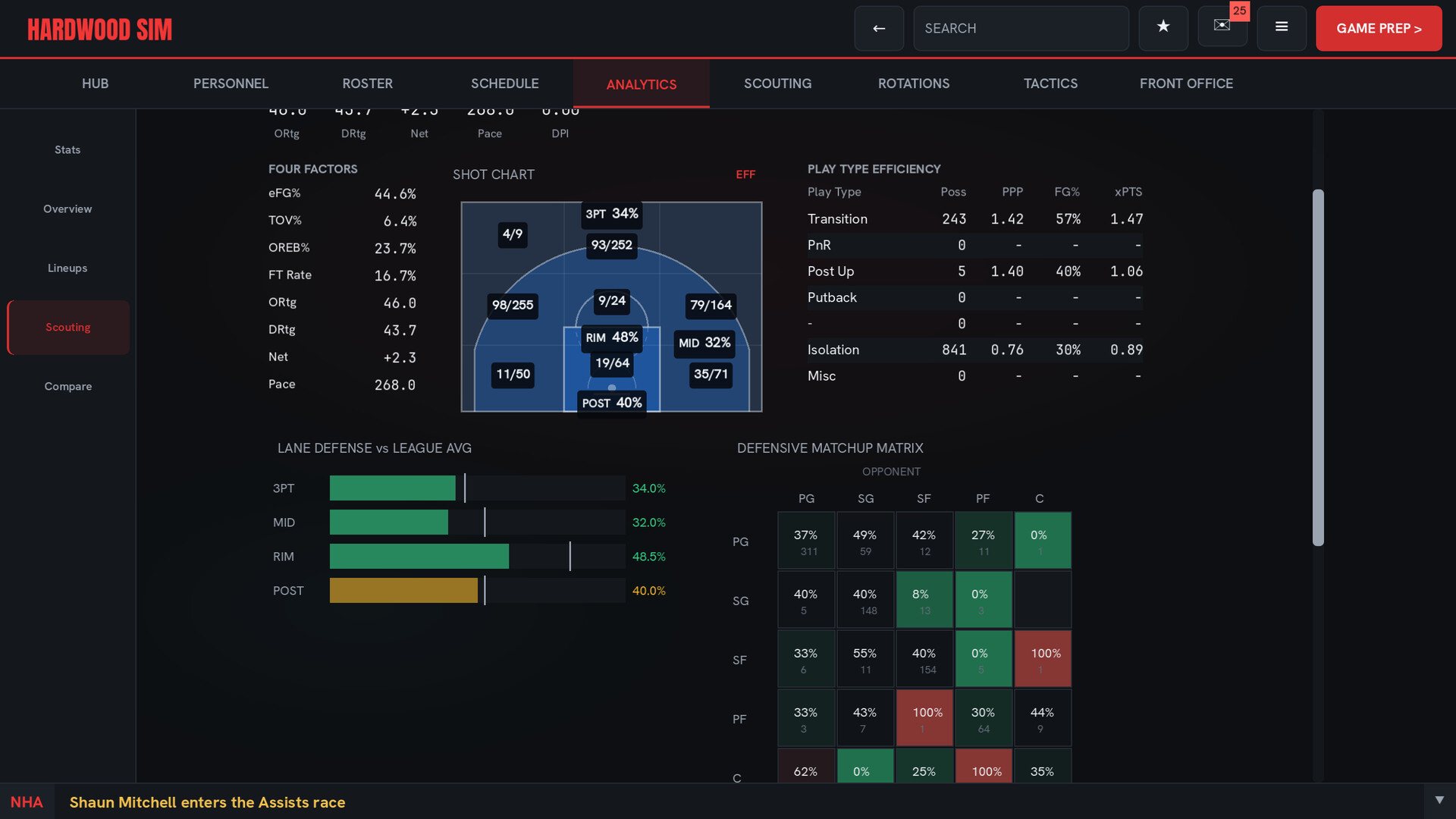
A tactical overlay sits on top of all of it: coverage lines, openness indicators, shot probability, and who is getting doubled. 2D itself is still a view of its own under the Analysis view.
The arena has a mix of its own: the crowd, whistles, a substitution horn and a shot-clock buzzer. The swish, the rim, the catch off a pass. International crowds chant and sing their support.
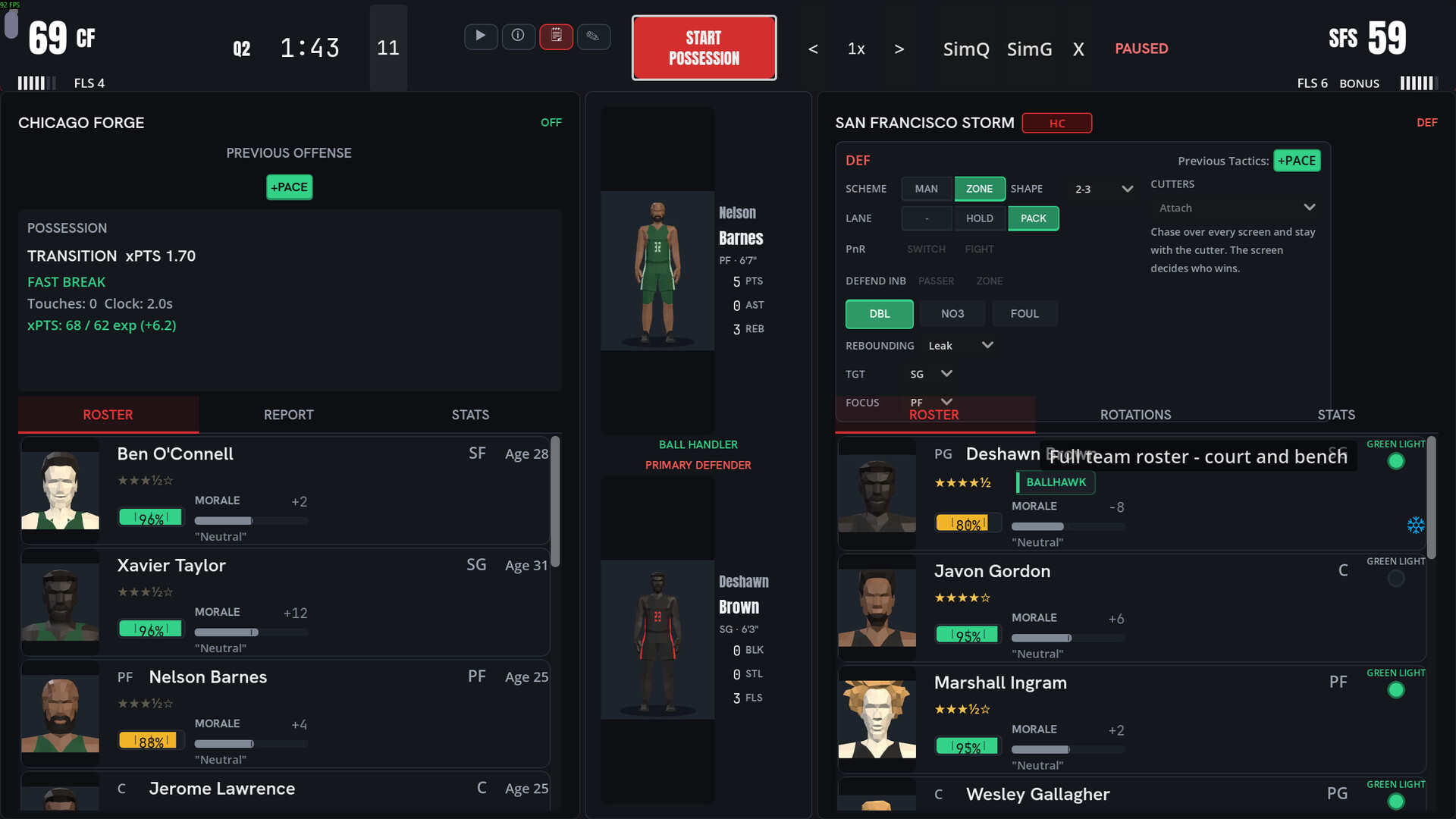
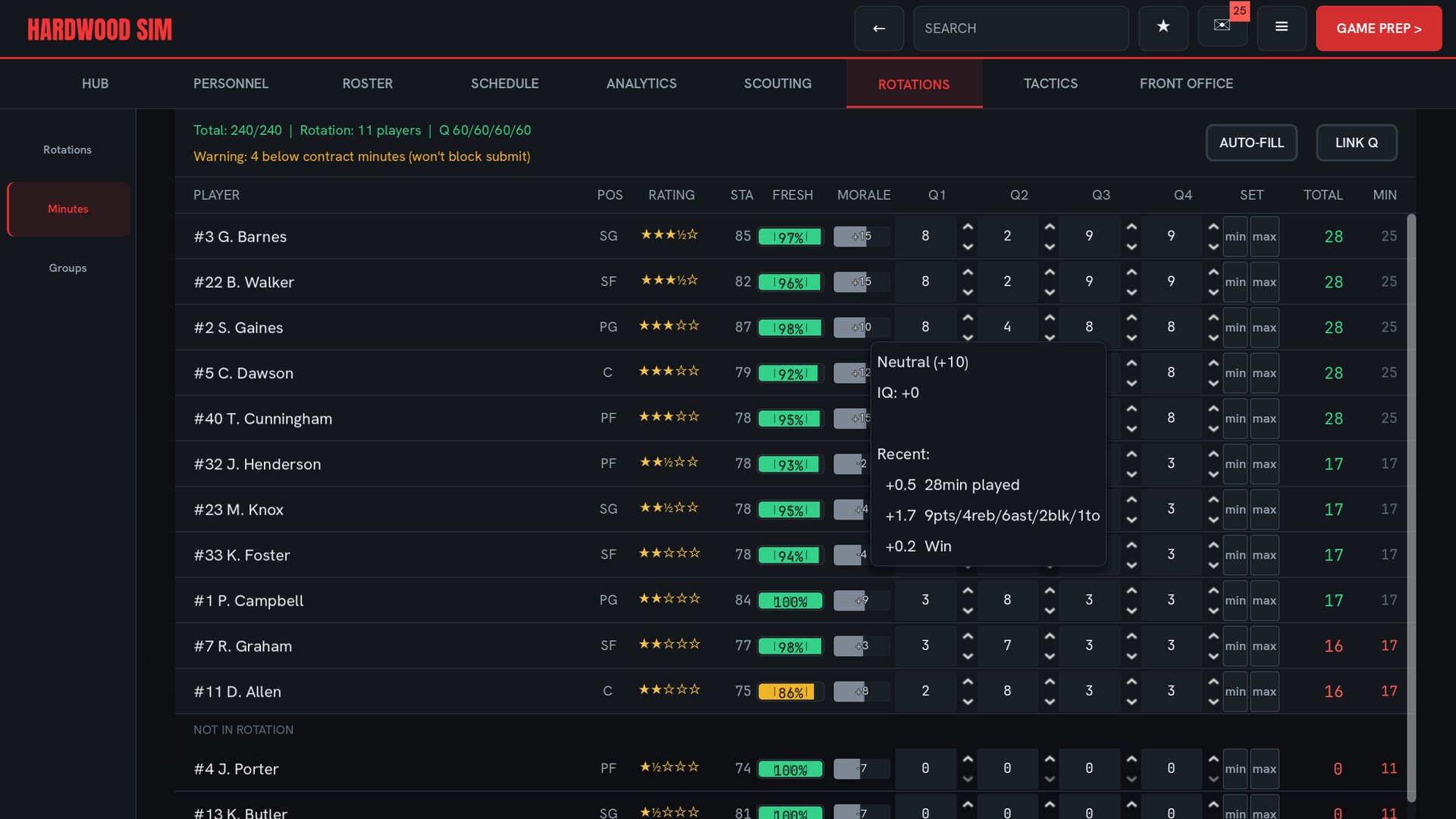
The Flux AI coach can run your tactics, substitutions, and timeouts, or you can take the controls yourself.
- Zone or man defense, pick-and-roll, post-ups, a floor general, double teams, pace control, crashing the boards, inbound pressure
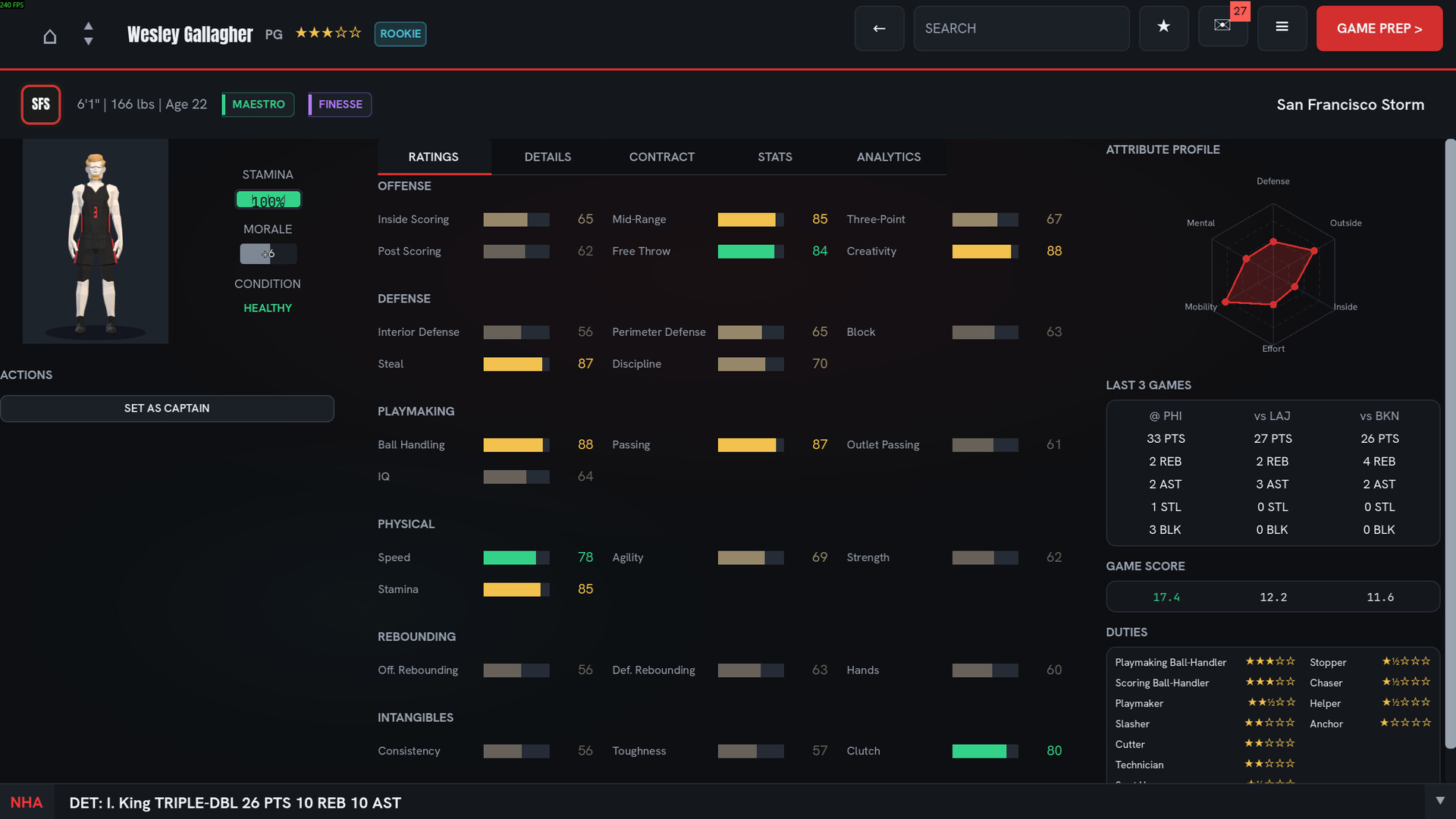
- 28 player attributes across skill, scoring, rebounding, defense, physical, and mental, plus traits like Sniper, Lock, and Maestro
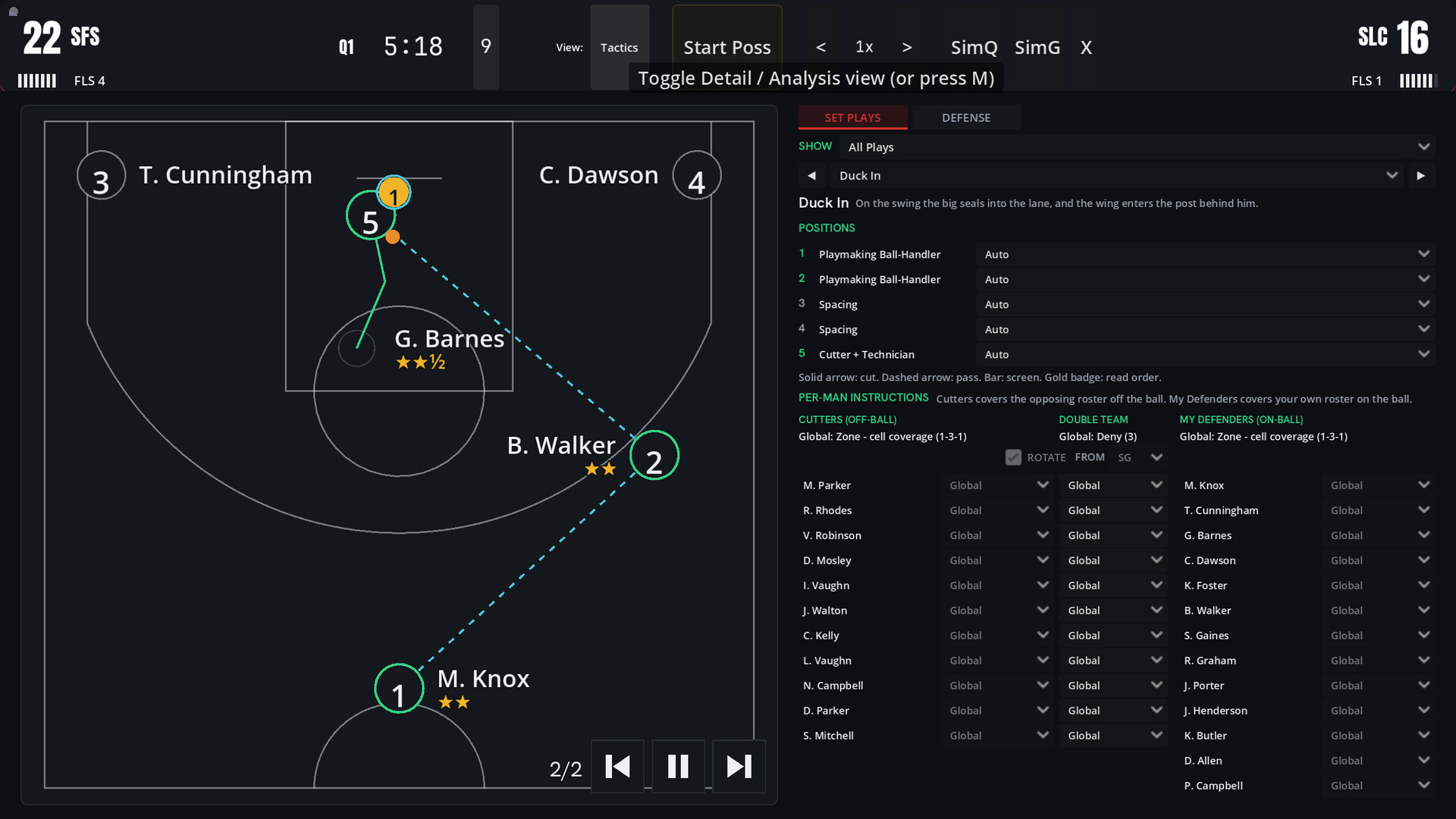
Draw Up Your Own Plays
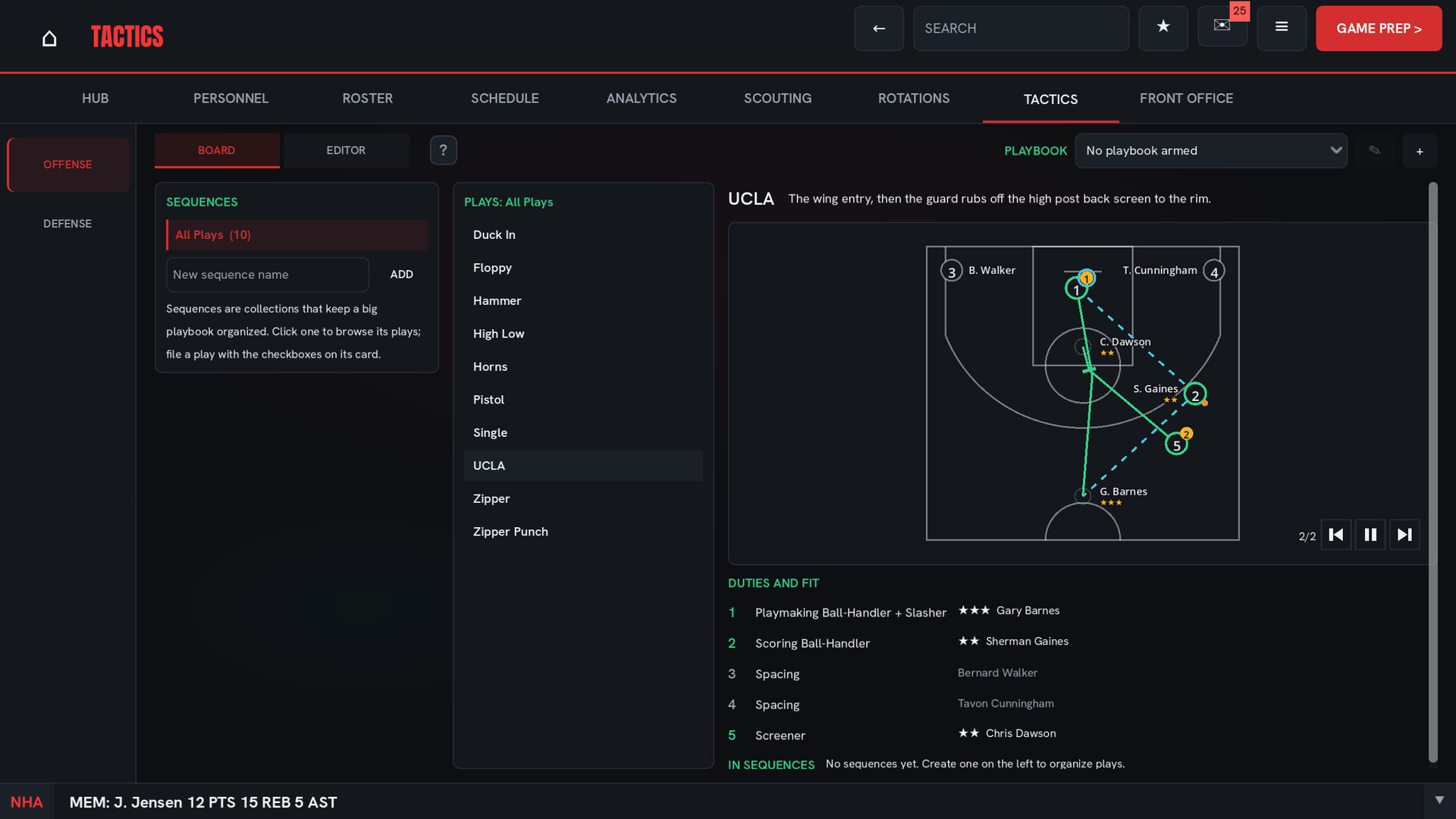
An editor lets you build your own sets from scratch. Give each of the five players a starting spot on the floor, then tell each one what to do and in what order: cut, screen, pass, or feed the post. Mark who the ball should look for first, and the game works out where everyone else stands and checks the design as you build it. Instead of naming a player, you describe what a spot needs: a cutter, a screener, a shooter. The game works out who on the roster fits best and shows it as stars, though you can assign the spot yourself.
Defense gets a matching editor. Place five defenders yourself, choosing where each starts and the one other spot on the floor he covers when the ball goes there. A defender answers for two spots and no more. Spread the coverage across all five and the floor is covered but nobody is pressured; double up on one spot and you can trap it hard, but somewhere else opens up.
Inbound plays are a third kind of design: one player out of bounds making the entry pass, the other four with somewhere to be, and a second wave that only runs if everything in the first one is covered.
- Full sets ship with the game, transcribed from real basketball
- Three ready-made defenses ship too: a 2-3, a 1-3-1, and a 3-2
- Save what you design as a playbook of your own: name it, use it with any club you coach, export it, or share it
Flux, the AI coach, calls sets and zones the same way it runs everything else, reaching for one whenever it fits.
Building a Roster
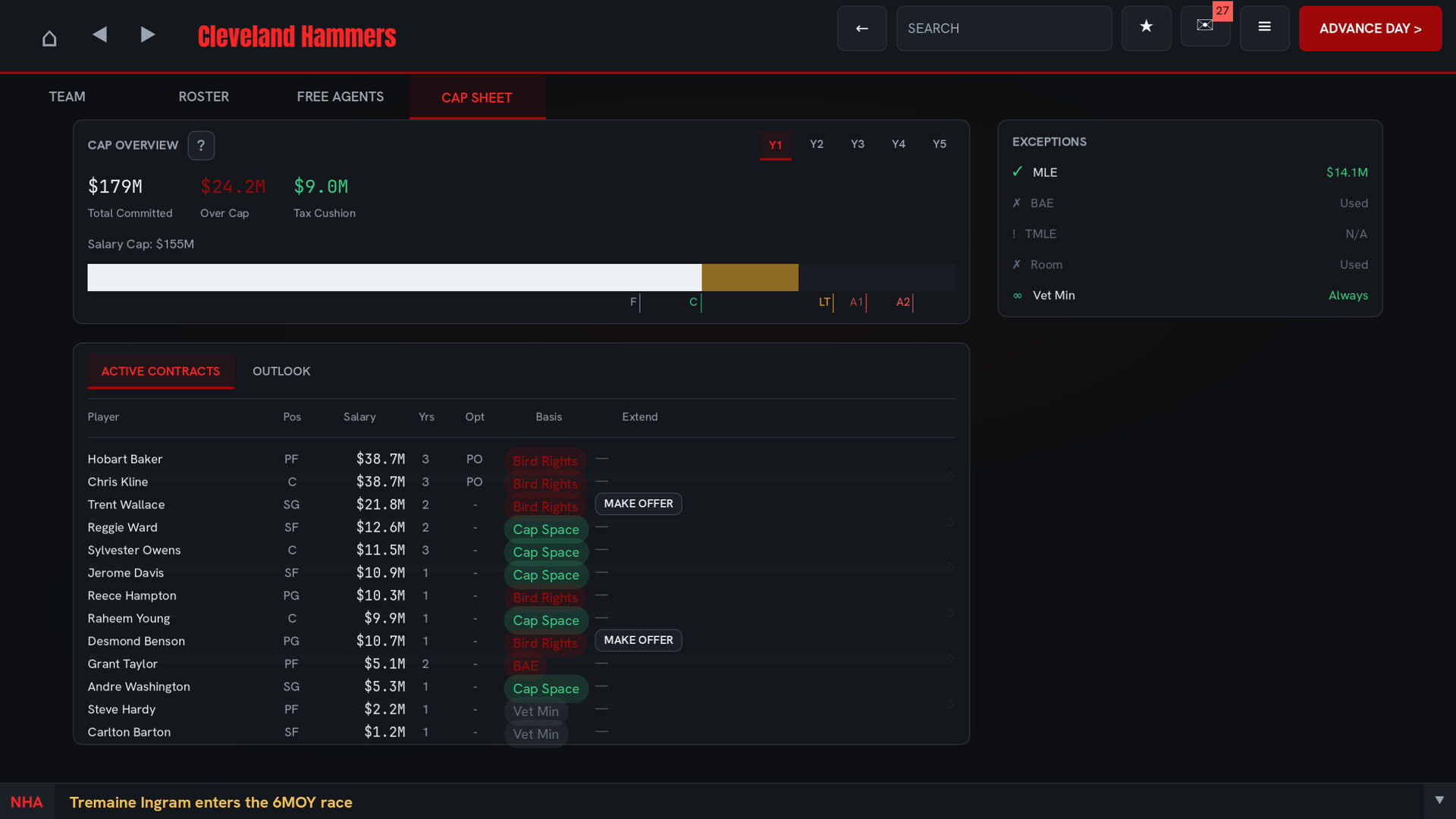
Scouting is never a sure thing: ratings show up as star tiers, not hard numbers, and sharpen the more you scout a player. Prospects declare their draft stock, the league votes on combine invites, and the combine runs measurements, drills, and small-sided games that feed one board. Two pre-draft showcases, the Foundry and Hardwood Hype, let prospects climb that board, and missing the draft sends you to the development league. Build your roster from there through the draft, free agency, and trades, all under the cap. This is just one league example.
The College Game
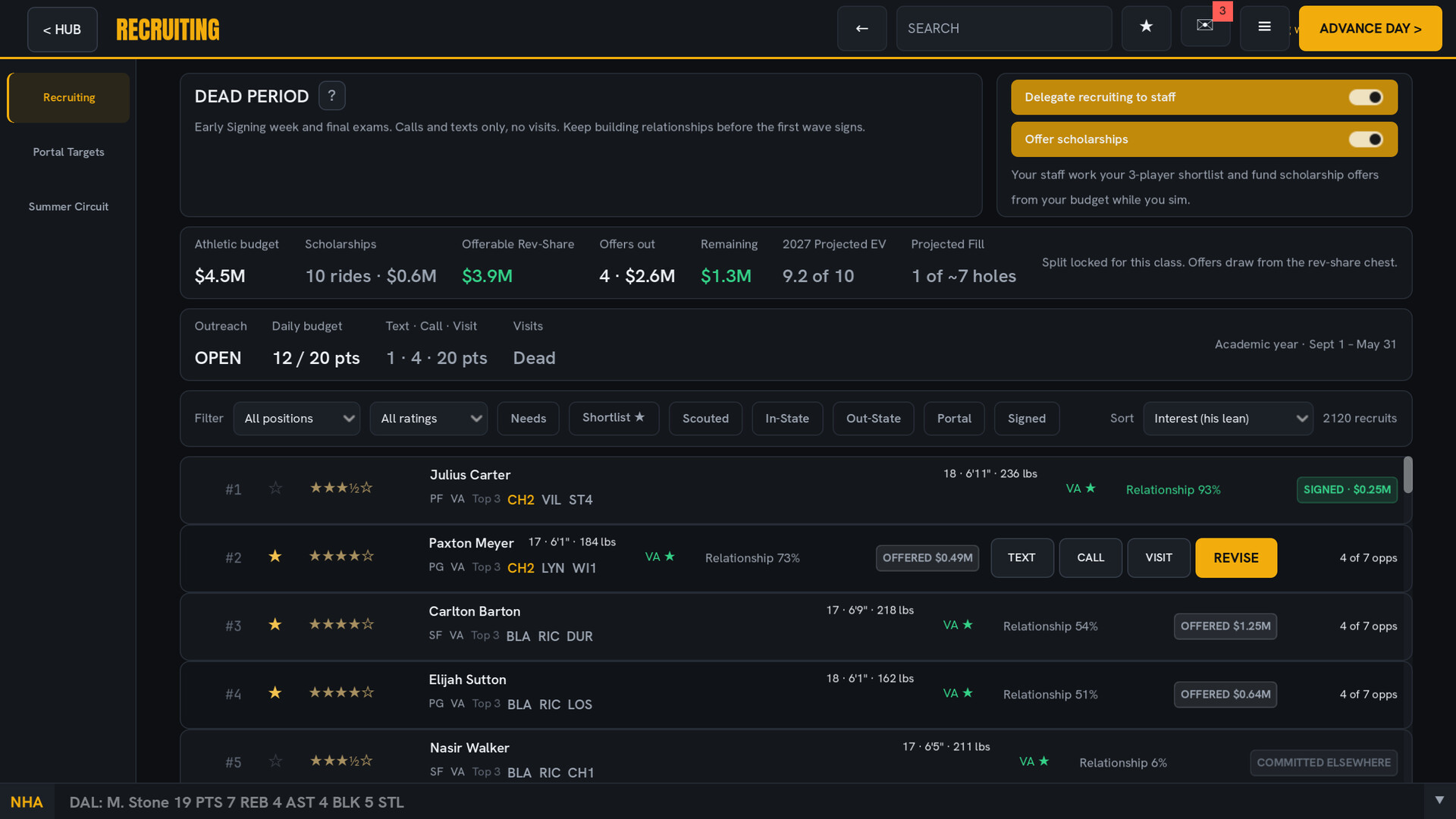
Take a college job and you're not a general manager, you're a head coach, answering to an Athletic Director instead of an owner. Recruiting is the real job: a season-long chase plus a summer circuit, where prospects play actual games and raise or wreck their stock in front of you.
- Scholarships and a cash NIL budget with a split you set, chased through two signing windows, and oversigning means trimming a scholarship you already promised
- A four-year eligibility clock: graduate, leave early, or hit the transfer portal
- Conference play into Hardwood Havoc, a 64-team single-elimination tournament with a Selection Day, a bubble, and a champion
The Blue Blood Index tracks your program's all-time prestige.
Spain: A Different Set of Rules
Cross the Atlantic and the rules change. A four-division Spanish pyramid runs on promotion and relegation instead of a draft, and on a budget instead of a cap: the league verifies your books rather than policing a cap number, and finishing last does not hand you a high pick, it drops you a division. The only ways to get a player are to buy him, borrow him, or talk him into signing.
- Club-to-club transfers for cash, with talks running both directions, fees paid up front or spread across two years, and release clauses that keep nobody's best player truly safe
- Loans that split a wage and carry an option or an obligation to buy, reserve sides further down the pyramid, and an academy class that graduates every July
- A limit on how many non-domestic players you can register and dress, two domestic cups, and a promotion race a club has to clear a budget check to win
Develop someone genuinely elite while he is still young and he declares for the NHA draft. Every league feeds the same pipeline.
Owners and Finances
Every team carries its own fan interest, driving local revenue, attendance, and gate money on playoff home games. Your owner injects cash or pulls it back, you set ticket-price policy each off-season, petition the board for help, and invest in facilities: arena, training, and medical tiers. The owner is a character, not a menu: you negotiate terms at a first meeting when hired, and an owner can be succeeded mid-career by someone new.
A League That Talks
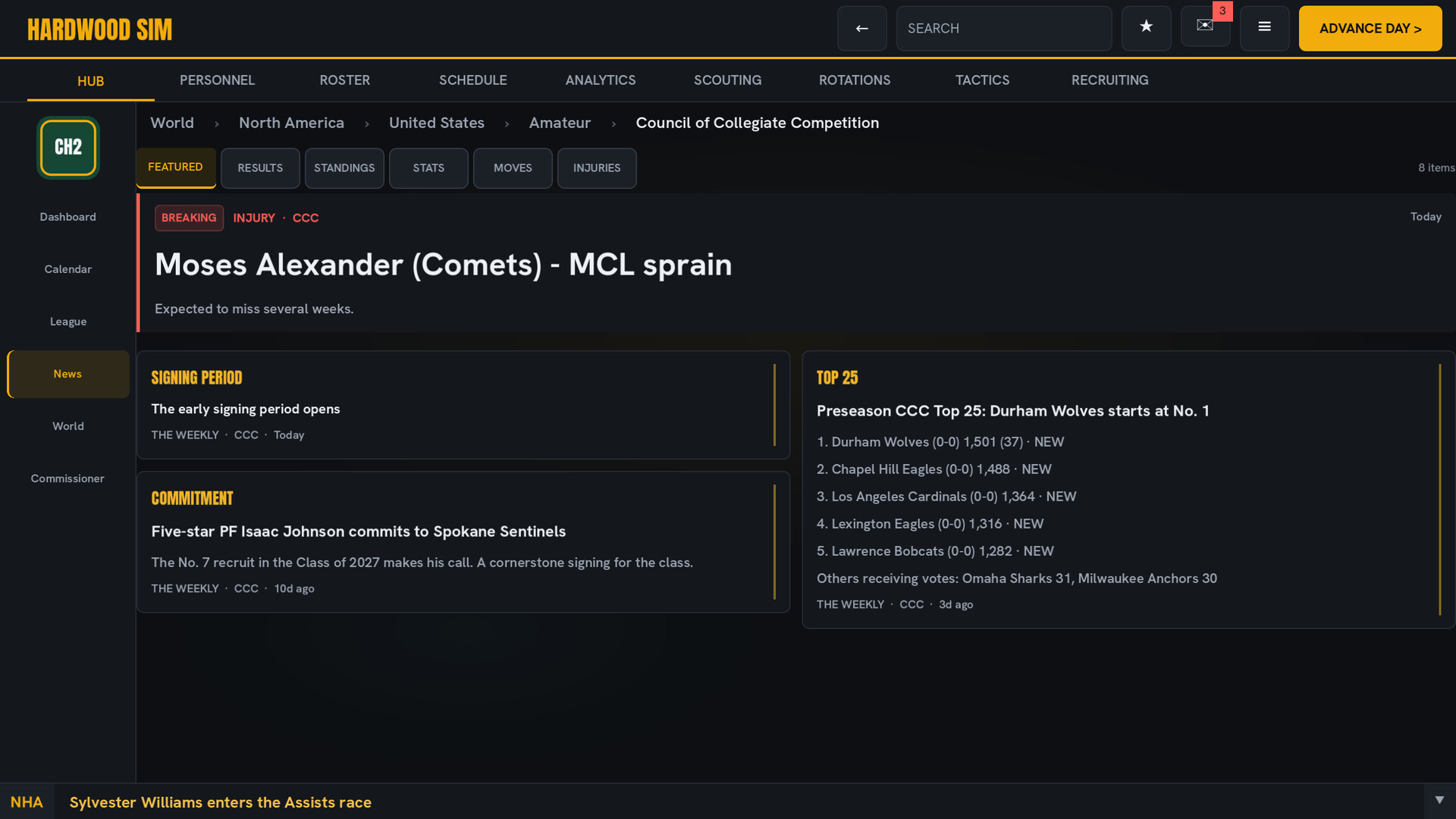
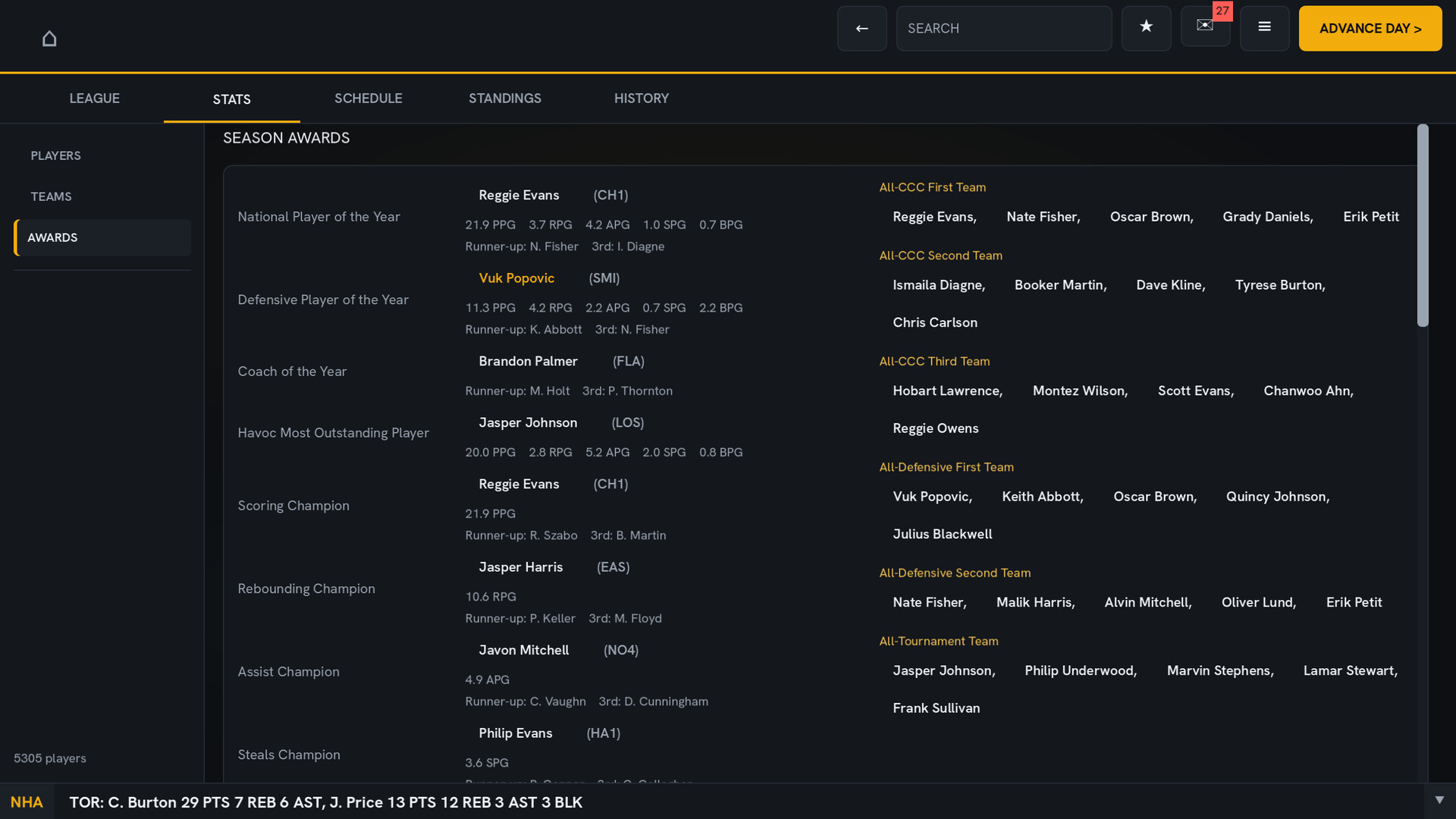
The NHA runs a weekly Power Rankings, tracks clinches and eliminations in the standings, and covers the trade deadline, free agency, and career milestones. A mock draft evolves across the draft cycle off real draft stock and the standings order, grading the steals and reaches once the picks are in. The college league runs its own wire: a weekly Top 25 poll, Selection Day, championship week, the full slate of college awards, and a Top 100 recruit board. The Spanish league reports in its own voice, in Spanish.
Play With Other People
Six ways to bring other people into the league, some played live, some on your own schedule.
- Head to Head: challenge another person to a live match using clubs from your own save. It works in any league with two human-controlled teams: the NHA, the college league, or any of the four Spanish divisions. In a commissioned online league, it can stand in for a real game on the schedule.
- Hardwood Universe: a separate, shared world reachable straight from the title screen, no career or save required, so you and whoever you're playing are always working from the same clubs and rosters. Play a live match there as a full game, a single quarter, or a tight late-game scenario, or queue for ranked matchmaking and climb a permanent leaderboard. Multiverse leagues run without you online: claim a club and hand it to a ghost coach, a version of Flux that plays out the whole schedule using the plays and defenses in your own playbook. Claiming a club takes a playbook you built yourself; the sets that ship with the game don't count.
- Hotseat: pass and play on one save, one PC. The AI never touches a human-owned club on someone else's turn, and when two human GMs are scheduled against each other, both benches show up on the same screen.
- Online Leagues: run a league by file, no accounts or servers. A commissioner holds the copy that advances the calendar. Everyone else imports it, trades, and sends back a turn file checked against the cap.
- Commissioner Mode: take over any club, hand one back to the AI, or edit a player directly.
- Observer Mode: skip the job, watch the league run, drop into any live game as a spectator, and pick up a GM job whenever you want.
Make It Yours
The whole game is moddable through plain JSON files and images, no code required: teams, rosters, logos, commentary, staff, contracts, the salary-cap economy, the rulebook, and the playbooks you draw up. The college world is just as open, down to custom conferences, recruiting classes, and rosters, and the Spanish pyramid takes its own club table. A Modding Starter Kit on the Steam Workshop shows every moddable surface, and online leagues check that everyone runs the same mods.
Playable in English and Spanish. The interface reads with a screen reader, and the arena mix has a mono option.