You know how chess works. You don't know what happens when your knight takes a hit instead of a square.
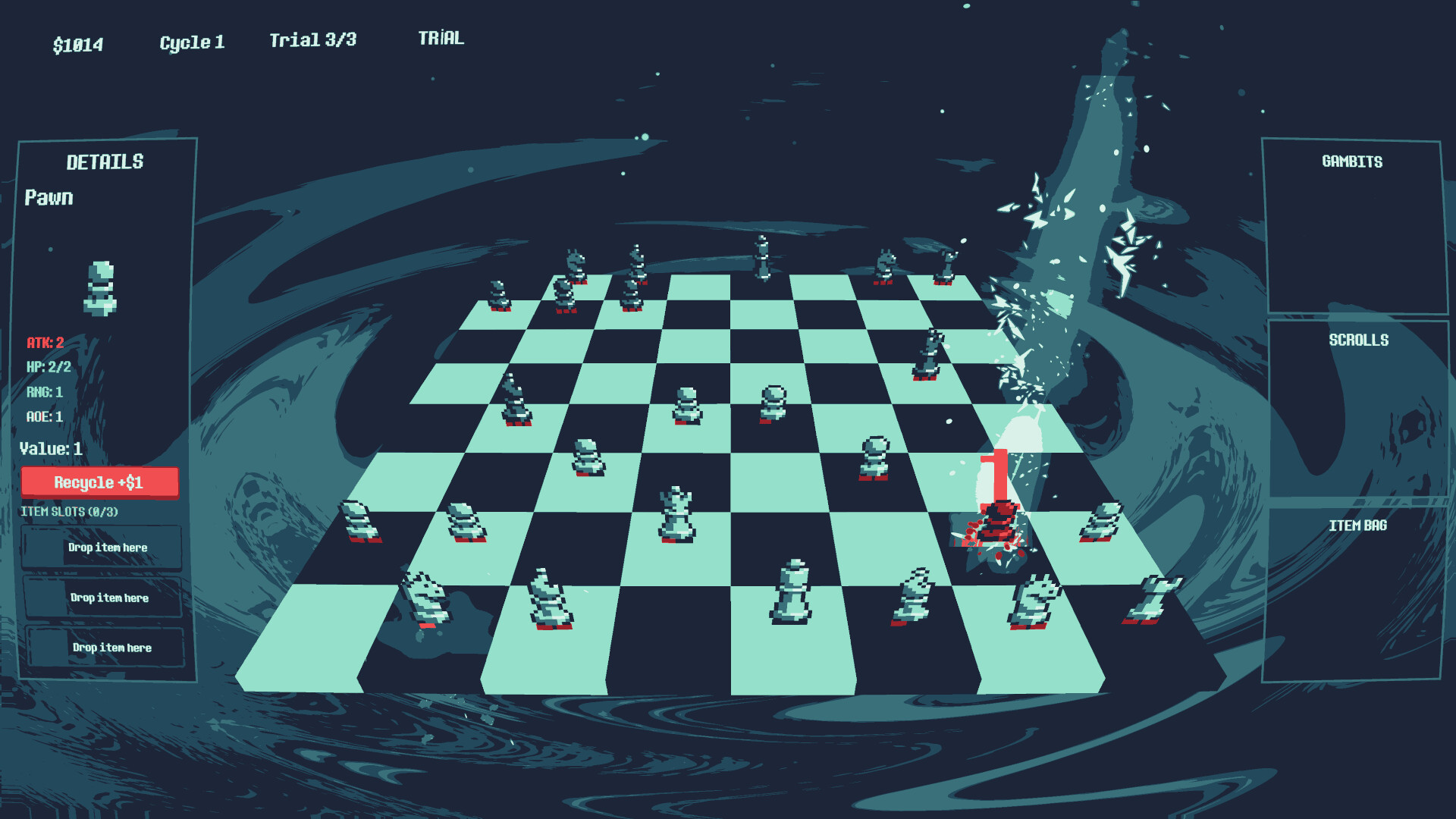
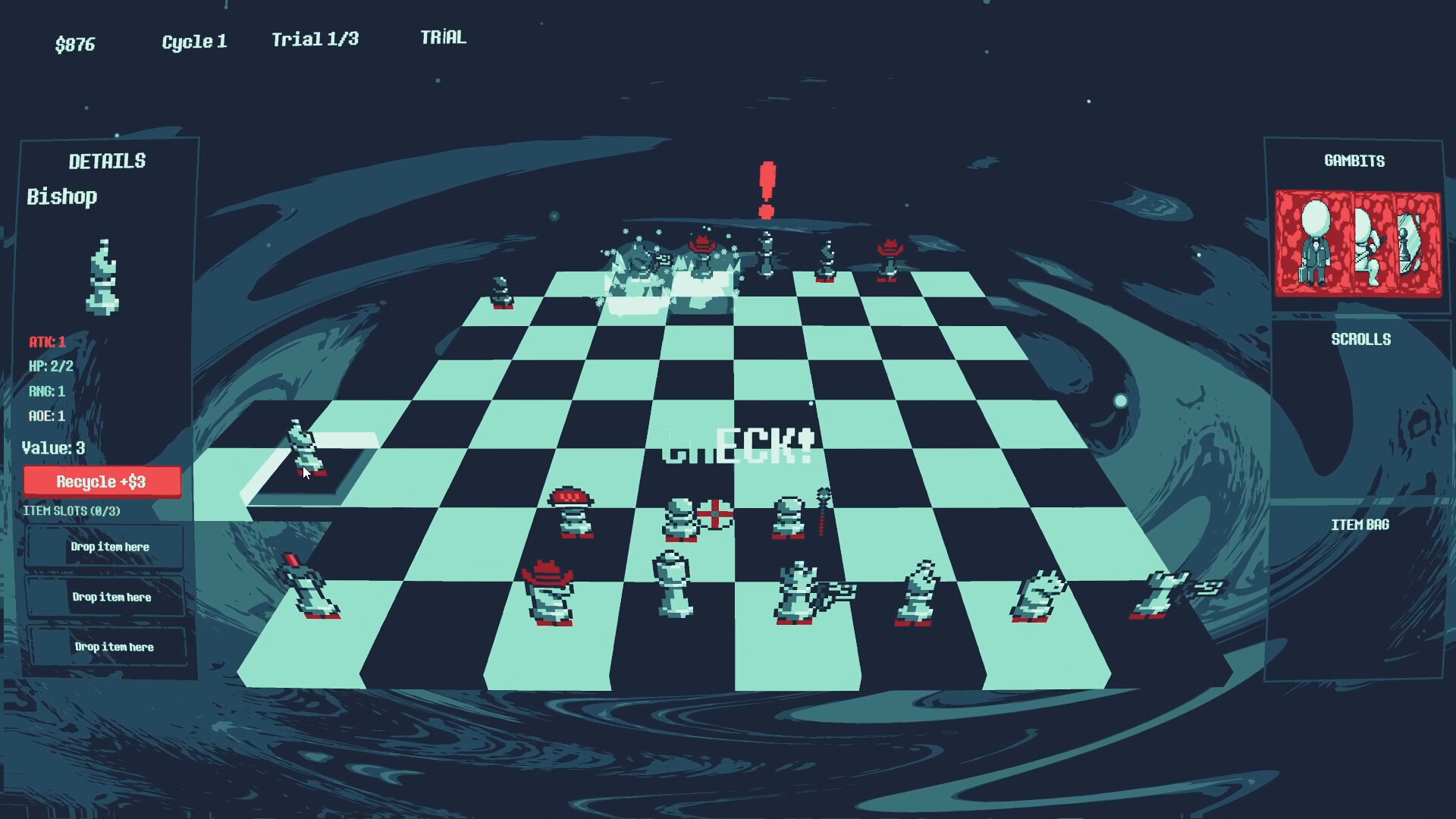
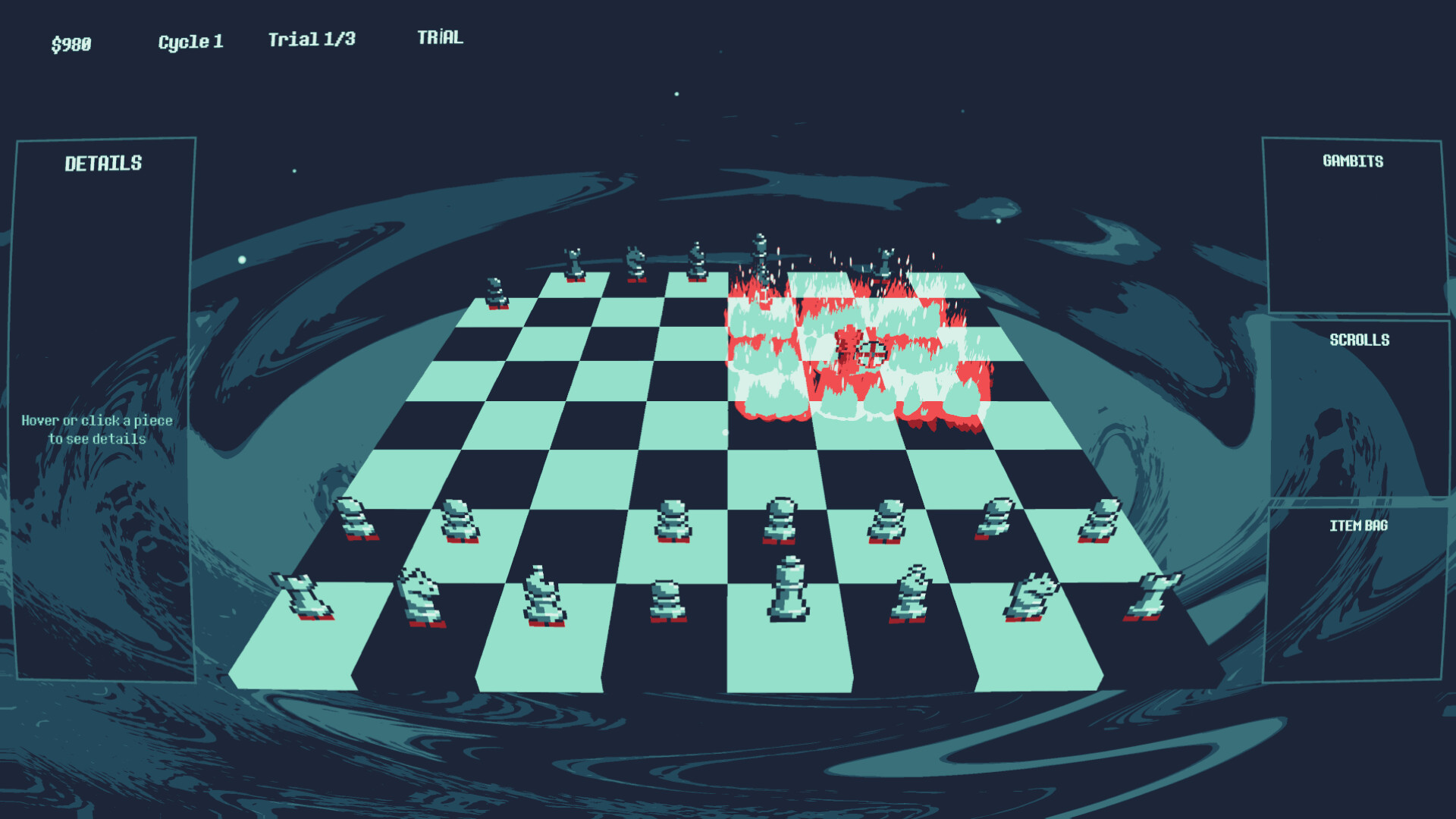
Zeitnot is a roguelike played on a chessboard. Your pieces aren't abstract threats they have health, attack, and slots for shields, weapons, hats, and auras. Captures are fights. A failed strike can bounce back. Shields reflect damage. Guns and projectiles turn quiet squares into kill zones. The board still reads like chess; the outcomes often don't.
The loop
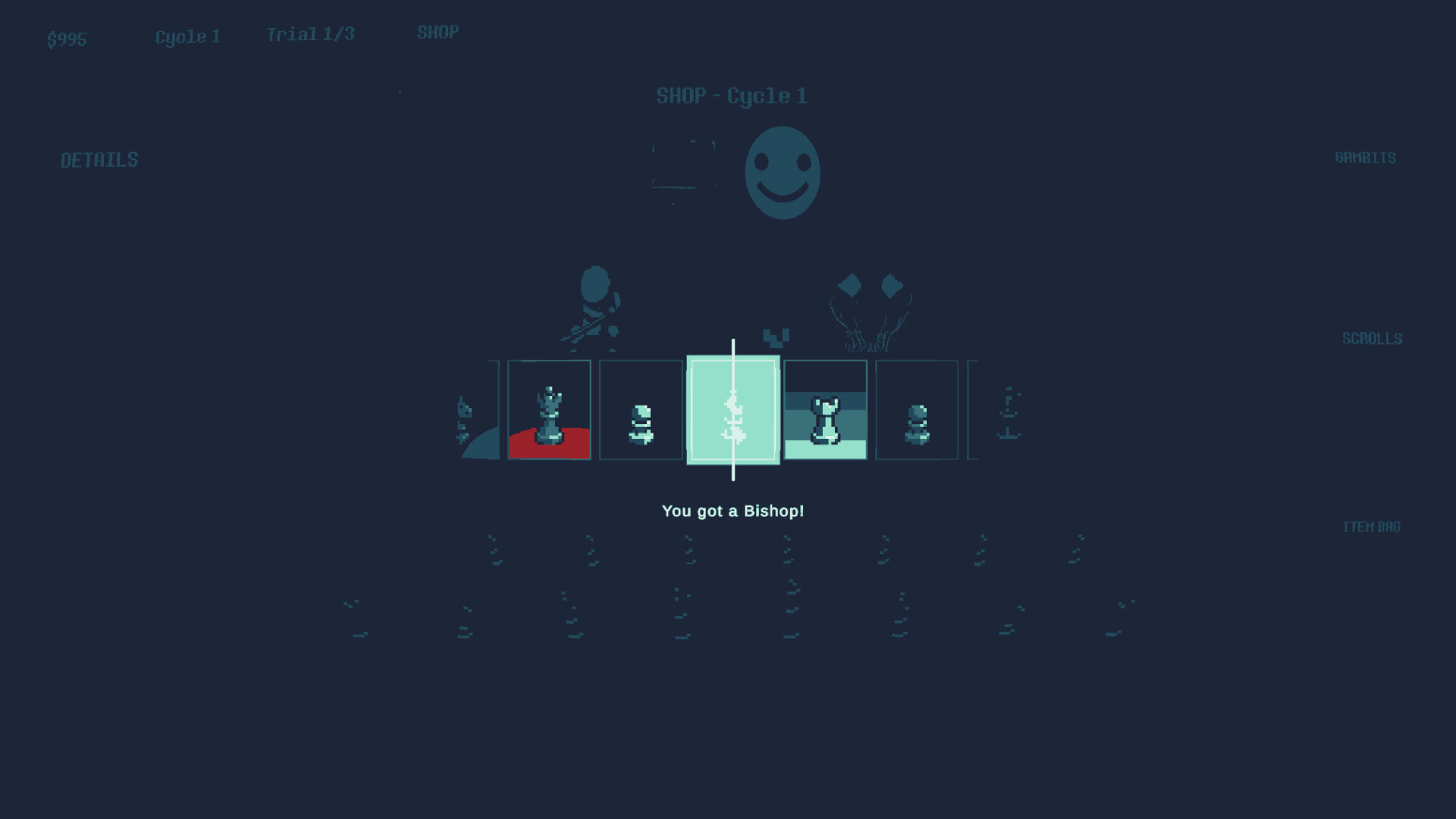
Between trials you hit the shop: buy pieces, pick up equipment and gambits, arrange your formation, reroll if the offers suck. Then you walk into a trial against an enemy lineup — with bosses waiting further in. Win and you push the run forward. Lose and it's over.
What you're actually building
- Equipment — strap gear onto individual pieces, not just your whole army
- Gambits — passive rules that fire on captures, damage, turn start, and whatever else you've stacked
- Scrolls — one-shot effects you burn at the right moment
- Gold — pieces, packs, crates, coin flips, dice rolls; safe shop or greedy shop
No preset build wins every run. All-in offense, reflect tanks, turn start burn, high-risk shop plays the board punishes and rewards all of them differently.
Why it's weird (in a good way)
You're not hunting a single checkmate line every game. Sometimes the right move wins the fight. Sometimes it keeps a piece alive for one more turn. Sometimes it wrecks the enemy's next turn before they can act. Chess intuition still matters — but so does how you geared up three shops ago.
Set your formation. Enter the trial. The move you make next is the bill for every choice before it.