#Action #ActionRoguelike #Aliens
FROM ASHES, BLOOM
A minimalist rogue-like tower defense where you protect Earth against humanity.
View game
Free
 -50%
-50% Positive · 1 reviews
100% positive (1 / 1)
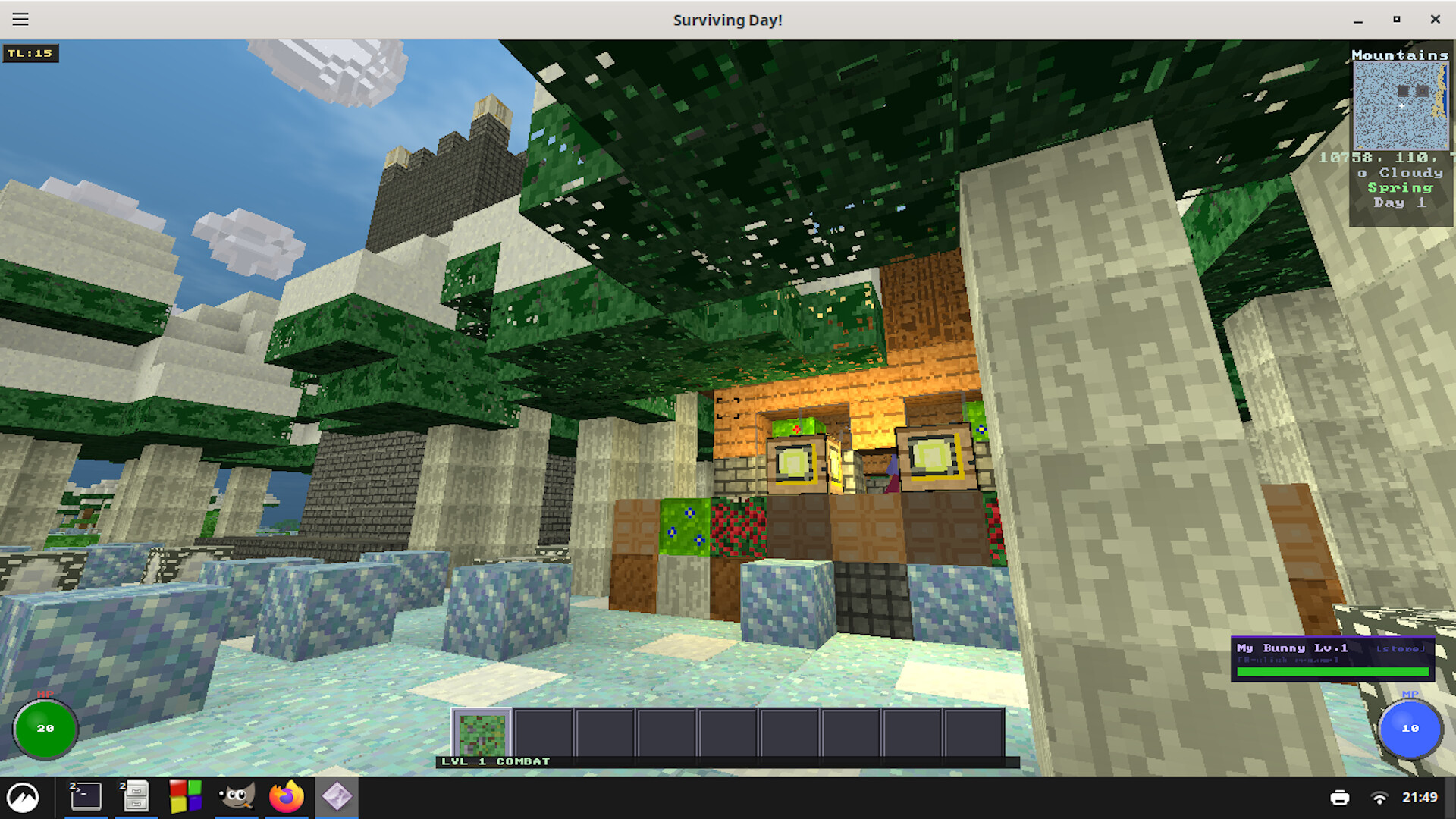
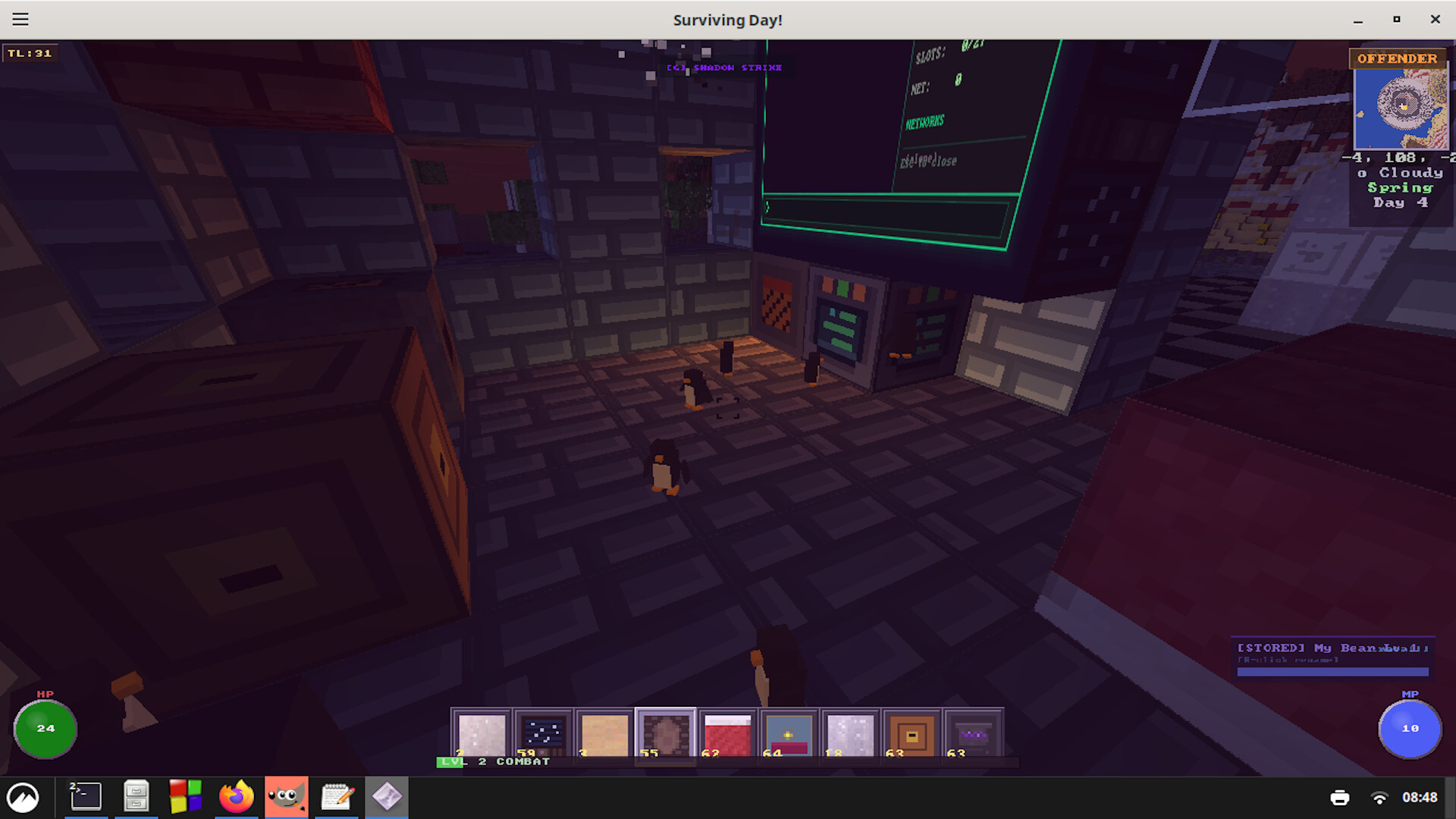

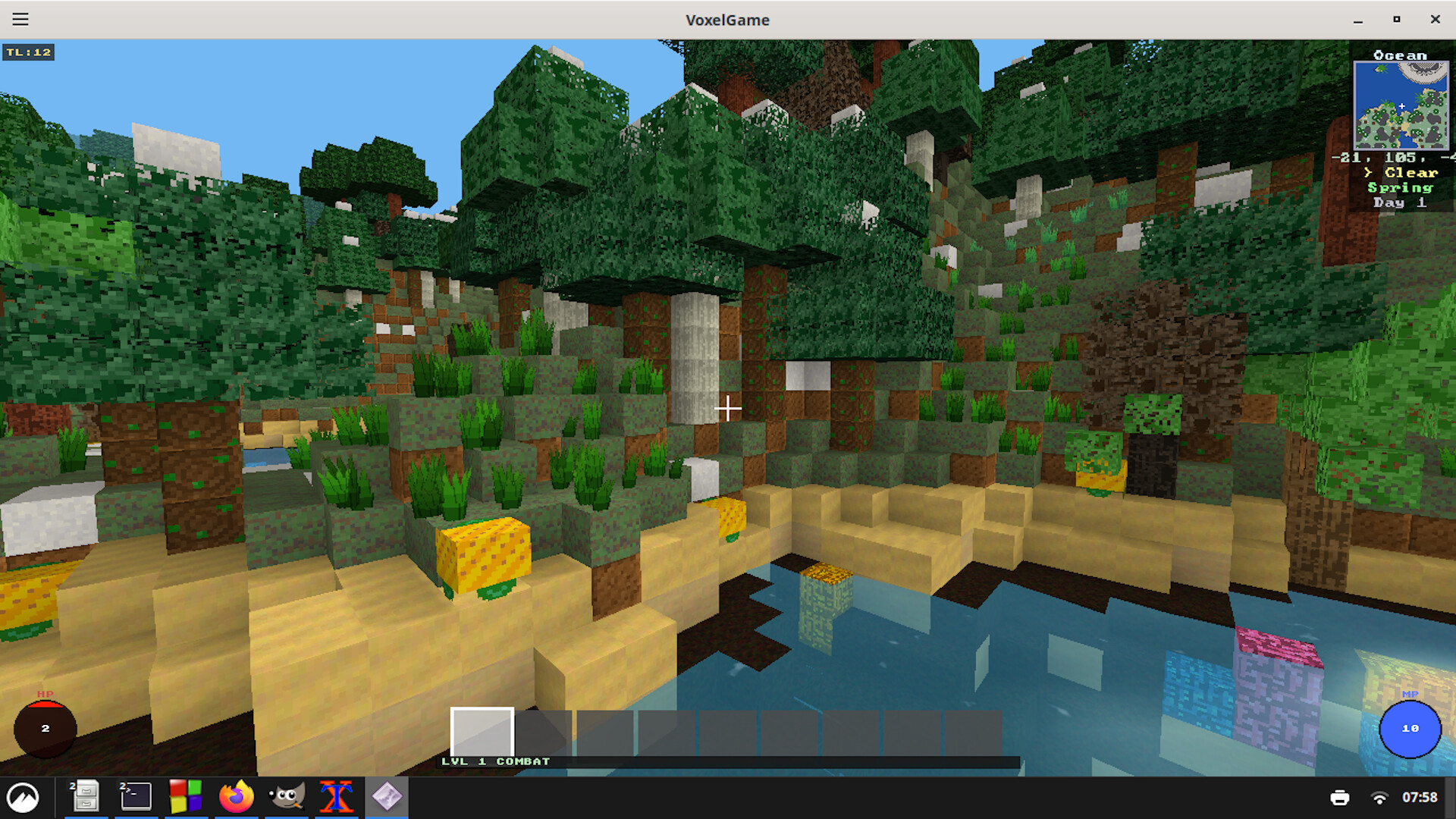
Moddable and Hostable as a server for others to join and adventure, build, or fight. Jump into a new voxel game that is as powerful as it is fun! Experience a new level of detail and special features that keep the game interesting and fun.
Released
July 28, 2026
Price
Platforms
Linux · Windows
Developer
Publisher
Last sync
October 5, 2026
^This is our mod directory and anyone can add to it. All mods are subject to review and rejection.
Now a year into development the game is close to finished. For the next 3 years I'll be updating the game with content and fixes for free!
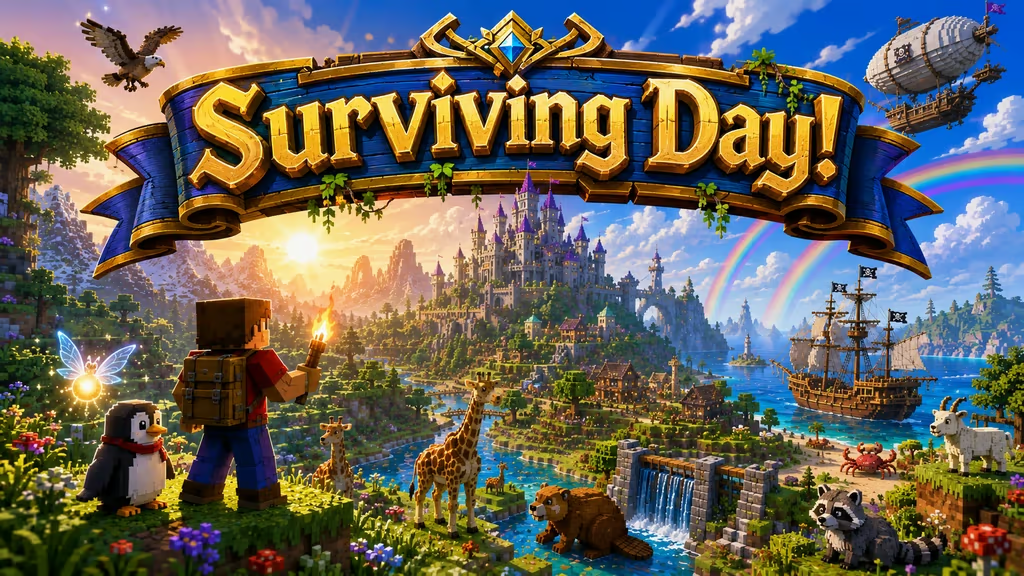
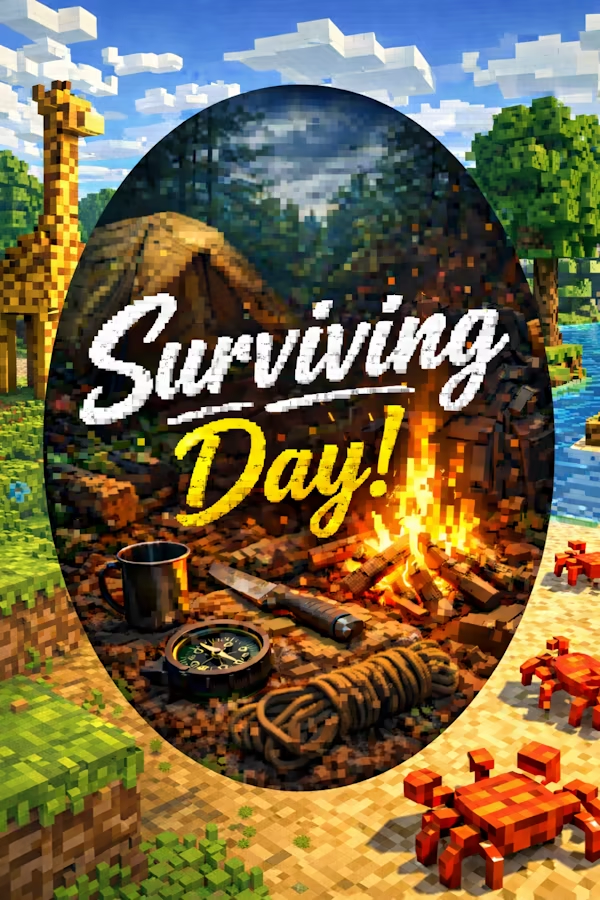
Surviving Day: A Voxel World That Doesn't Sit Still
Voxel survival games have a well-worn shape by now: punch a tree, build a shelter, survive the first night, and slowly bootstrap your way from stone tools to something resembling civilization. Surviving Day starts from that same familiar footing, then keeps going in directions most games in the genre never bother with — living colonies with their own politics, companions that actually remember you, animals with real behavior instead of wandering hitboxes, and a circuitry system that turns redstone-style automation into something closer to actual computing.
GETTING YOUR FOOTING
The controls will feel immediately familiar to anyone who has played a voxel game before: WASD to move, left click to break, right click to place or interact, E for context-sensitive actions like picking things up. Where Surviving Day starts to differentiate itself is in how much sits behind those simple inputs. Pressing Q brings up a full skills panel — Combat, Ranged, Magic, Mining, Woodcutting, Forging, Chemistry, and more — each leveling independently through actual use, RuneScape-style, rather than through a generic experience pool. G opens an equipment panel with dedicated slots for armor, wings, weapons, and an off-hand item. None of this is bolted onto a simple building game — it's threaded through the whole moment-to-moment loop.
The world itself is built from noise-driven terrain generation with genuine biome variety: magic forests with glowing trees, volcanic regions built from obsidian and lava, floating skylands reachable by flight or portal, tundra and desert extremes that punish players without the right gear, dense jungle canopies patrolled by velociraptors, coral-reef oceans, and cave systems that plunge deep enough to feel like their own separate world. A built-in waypoint system (Navi) keeps a HUD marker on anywhere you've flagged, alongside a minimap showing coordinates and your current biome at a glance.
A WORLD THAT KEEPS GENERATING SURPRISES
Scattered through that terrain are structures that reward exploration rather than just decorating it. Deep beneath the world's tallest floating islands sits the Dragon Citadel — a genuine landmark, not a procedural box: a domed central tower wrapped in alternating black-and-white marble bands, ringed by a Parthenon-style colonnade with lit braziers, hanging vines, statue plinths, and four flagpoles flying real physics-simulated cloth. Somewhere inside, a dragon sits caged, guarded, waiting for a player determined enough to reach it. It isn't just set dressing, either — an entire multi-act quest chain, "The Sky Citadel," is built around actually finding and storming that exact structure, not a scripted stand-in.
Below ground, catacombs, rune temples, pirate shipwrecks, sunken vessels, guard towers, and rook keeps are seeded across the map using the same rarity-tunable generation system players can adjust themselves before ever loading a new world — sliders for how common each structure type is, whether dungeons generate at all, how dense villages should be. Nothing about exploration is left entirely to chance if a player wants more control over the world they're dropping into.
A LIVING WORLD, NOT A STATIC ONE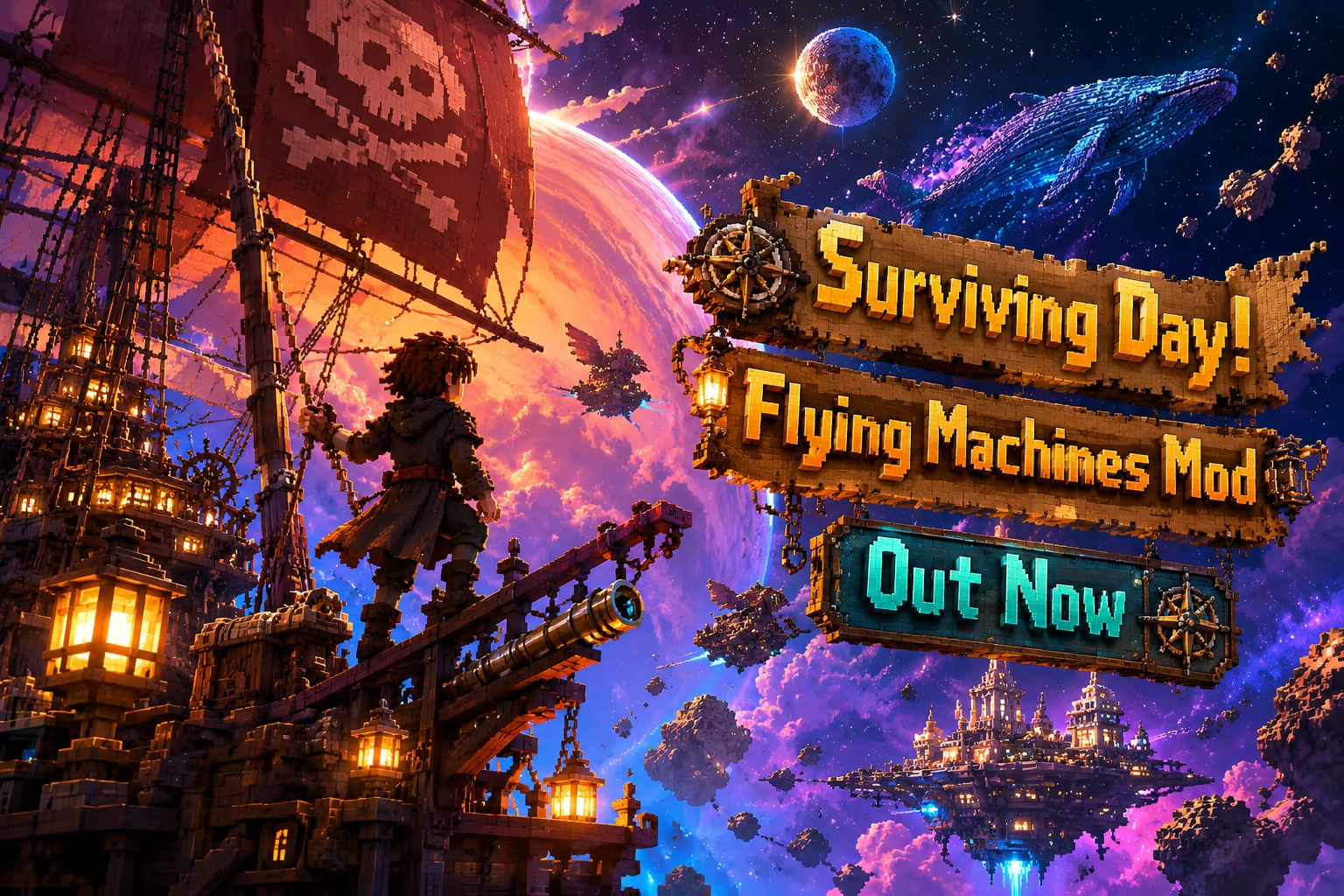
What sets Surviving Day apart most is that its NPCs aren't just quest-dispensers standing in place. Colonies grow, elect leadership, go to war with neighboring settlements, form trade routes, and can collapse if left unsupported. Individual villagers pursue their own life goals — some want to become king, others want to open a shop, marry, or chase down a rare item — and remember the player's reputation across all of it. Guard NPCs patrol watchtowers. Ambassadors travel between allied colonies. None of this happens because a player triggered a quest flag; it happens continuously, in the background, whether or not anyone is watching.
Companions follow the same philosophy. Tame an animal, and it isn't a cosmetic pet — it fights alongside you, levels up its own companion rank, and can be stored to a disk and recalled later. Over 40 wildlife species populate the world, each with its own spawn logic tied to the right biome (seals only appear on icy glaciers, sea turtles nest on tropical beaches and swim the open ocean, fireflies only come out at night in grassy fields), and beyond basic movement, many species have real personality: bears charge when provoked, cats pounce playfully, wolves lunge in packs, stingrays and manta rays can pull off genuine backflips mid-swim. Even something as small as a fish blowing tiny bubbles while it swims got its own attention.
BUILDING BEYOND BLOCKS
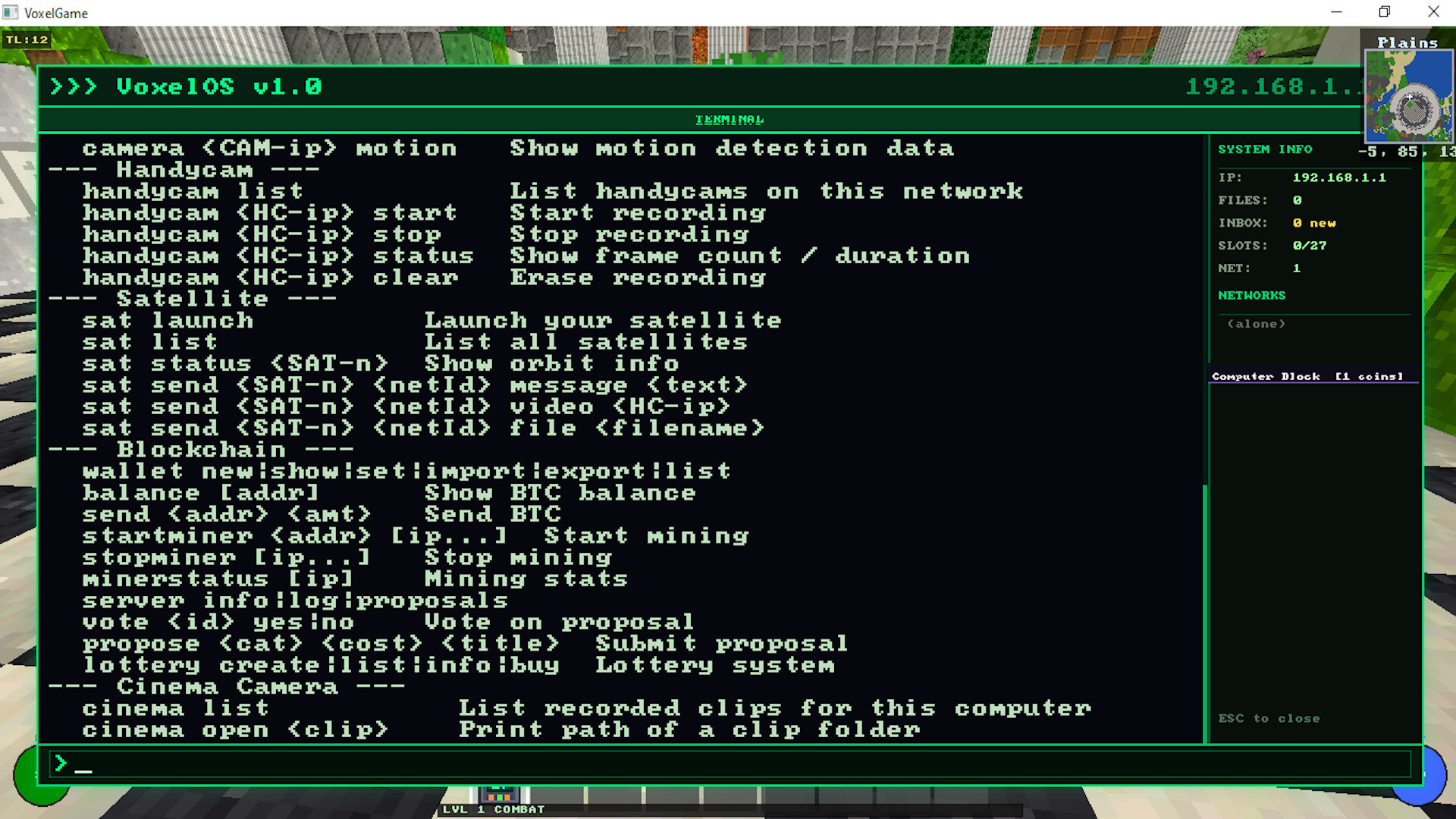
Surviving Day's circuitry system pushes past simple redstone-style switches into something closer to real automation: computers with their own scripting, camera and surveillance networks, arcade cabinets with playable native games, and automated production chains that can run a colony's economy without constant player oversight. Portals and gateways let players link distant points of the map together instantly, and "The Construct" creative mode lets players design and save their own structures as reusable blueprints — including tuning how rare their creation is to encounter in future worlds.
For players who want to go further than the built-in toolset, Surviving Day ships with a full C-ABI modding system. Mods are compiled shared libraries that hook directly into block placement and breaking, NPC events, weather, crafting, chat, and more — including raw keyboard input and direct block manipulation for the more ambitious mods. One of the most recent additions demonstrates exactly what that API is capable of: a Ship Wand that turns any floating, ground-disconnected structure into a pilotable flying machine, block for block, with full WASD-plus-vertical controls and real collision — fly it into a mountainside, and it doesn't just stop, it fuses to the wreckage exactly where it hit.
MULTIPLAYER THAT REMEMBERS WHO YOU ARE
Hosting a game lets a player pick from any world they've already built in singleplayer, rather than forcing a fresh start. A full permissions system scales from casual co-op to properly staffed servers, with dedicated roles for moderators and admins, group-based land protection, and a console for server staff. A global player-profile system carries a player's progress across different servers, so switching where you play doesn't mean starting over.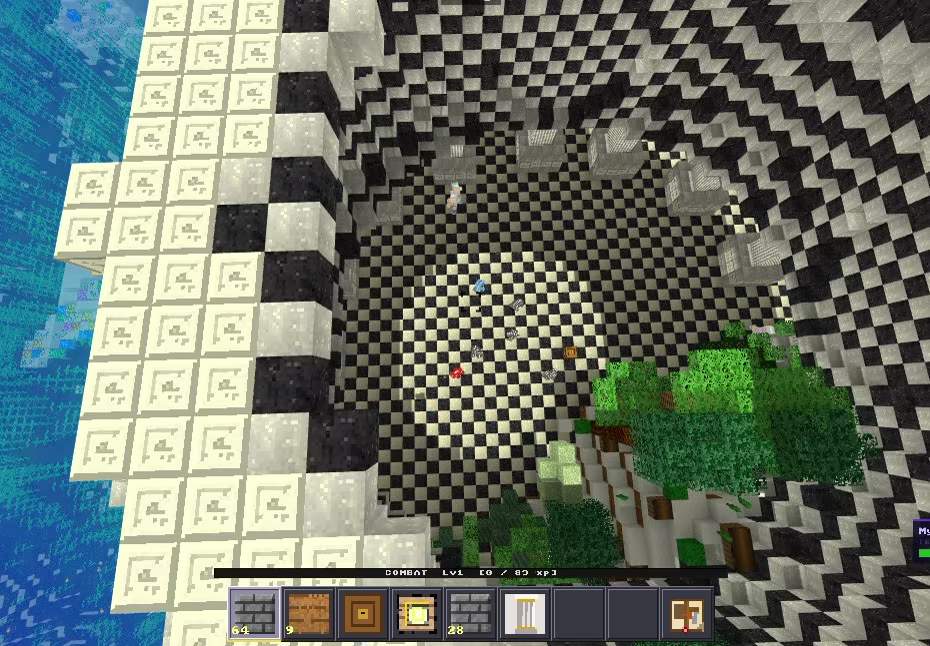
THE THROUGH-LINE
None of this reads like a checklist bolted onto a voxel sandbox — it reads like a world that was built to keep functioning whether or not a player is paying attention to any specific corner of it. Colonies rise and fall on their own terms. Animals live according to their own biome logic. A dragon sits imprisoned in a fortress whether or not anyone ever climbs high enough to find it. That's the throughline running under Surviving Day: it isn't just a game you build things in. It's a place that was already going to keep moving, with or without you.