

Late Night Empire
No Reviews · 0 reviews
Screenshots

Description
Run your own late-night TV show in a living entertainment industry. Book guests, write monologues, manage staff and money, battle rival shows for ratings, and survive your network. Every night is a fight for attention. Build the show. Run the room. Become the empire.
Price
Platforms
Windows
Developer
ThroneGutter
Publisher
ThroneGutter
About
Build the show. Run the room. Survive the industry.
Late Night Empire is a deep management simulation where you are the Executive Producer of your own late-night television show - inside a fully simulated entertainment industry that never stops moving.
Every weeknight, millions of viewers decide what to watch.
Your job is to give them a reason to choose you.
Book the right guests. Write the right monologue. Build the right team. Read the audience. Exploit a rival's bad week. Survive your own disasters. And when the cameras stop rolling, the real game begins.
RUN YOUR OWN LATE-NIGHT SHOW
Every episode is another battle for attention.
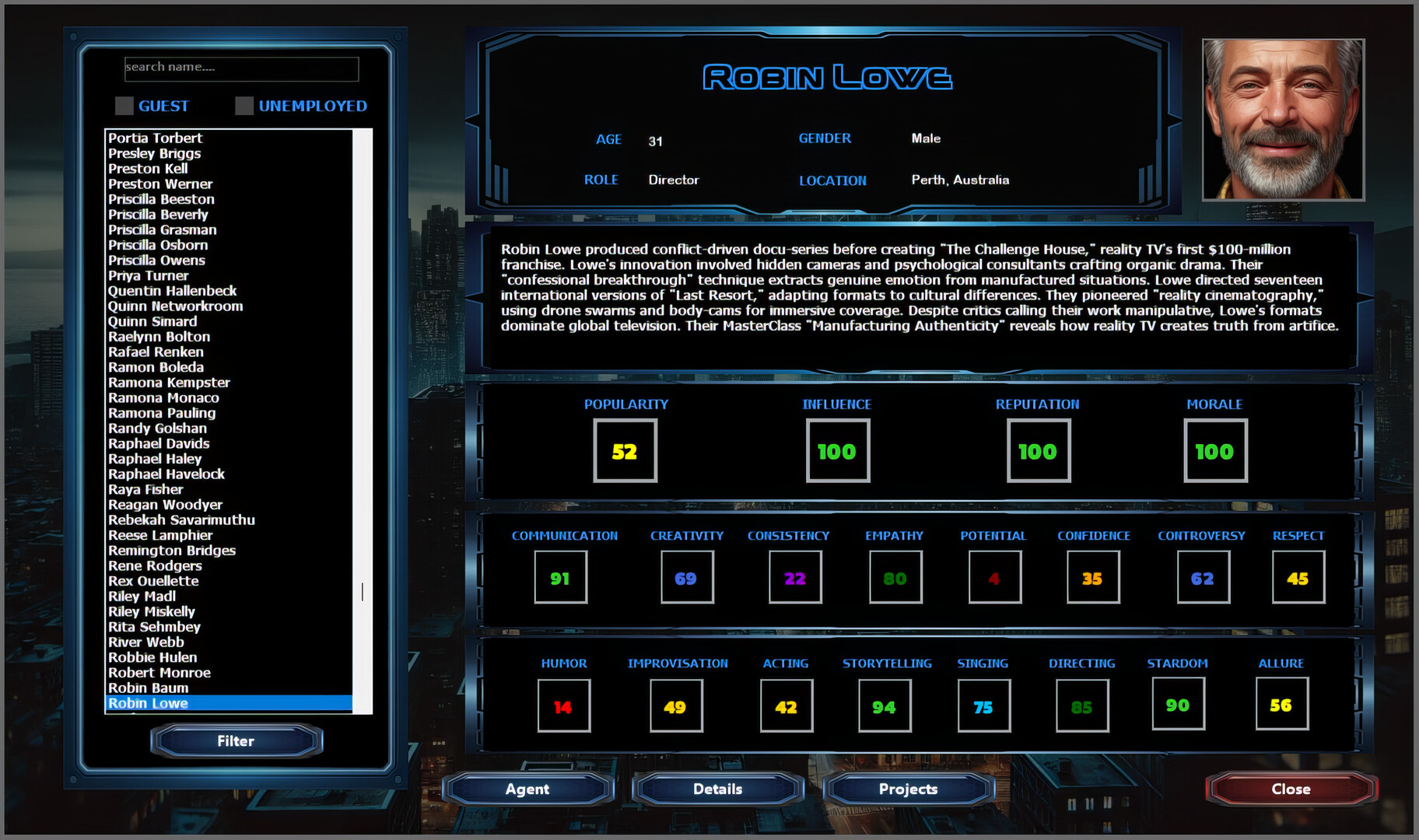
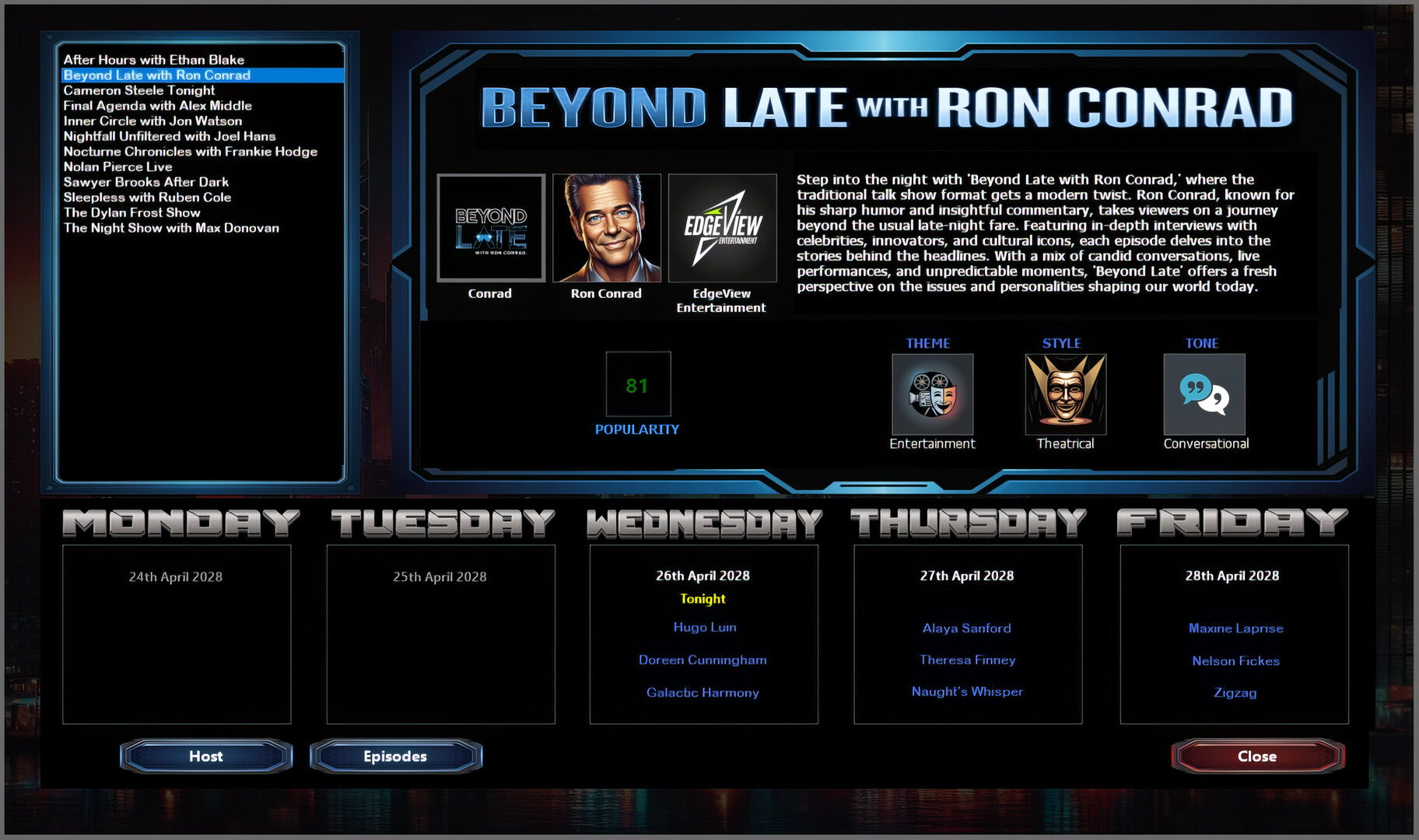
Book actors, comedians, musicians, authors, personalities and rising unknowns. Guests have their own popularity, reputations, personalities and careers - some are easy bookings, others demand more money, negotiate aggressively, or simply choose your rival's couch instead.
Find emerging talent before anyone else does. Chase major celebrities while they're hot. Build relationships with reliable returning favorites.
A famous name brings attention. A great episode still has to earn it.
BUILD EVERY EPISODE, PIECE BY PIECE
Your show is more than a guest list.
Shape each night through monologues, interviews, musical performances, original segments and production decisions:
- Craft the monologue - choose topics, structures and comedic approaches. Assign writers, punch-up specialists and researchers from your own staff. Playing it safe keeps you out of trouble. Playing it safe every night makes you irrelevant.
- Develop original segments - combine frameworks, hooks, locations and production requirements. Decide how ambitious to be, and whether the payoff justifies the cost and risk.
- Put it all together - episode quality emerges from the people involved, the material you create, your production capabilities and how it all lands on the night.
Great episodes create momentum. Bad ones become tomorrow morning's headline.
FIGHT FOR THE AUDIENCE
The television audience is not an unlimited pool of viewers waiting politely for your show. Every night, competing programs fight over the same market.
Rival late-night shows book their own guests, produce their own episodes and chase the same viewers. Their hosts have careers. Their shows have momentum. Their networks have different levels of money, reach and patience.
Track ratings, viewership, Nielsen-style audience measurement and demographic performance to understand who is watching - and why they might stop.
Your biggest rival today may not be your biggest rival six months from now. And sometimes the best thing that can happen to your show is someone else's terrible Tuesday.
BUILD THE TEAM BEHIND THE SHOW
A late-night show is only as strong as the people making it.
Hire and manage writers, researchers, producers, directors and production staff - each with their own skills, personality, morale, potential and professional expectations. Contracts expire. Employees want raises. Burnout is real. A talented employee who is unhappy, overworked or underpaid may not remain your employee for long.
Then give them something to work with. Upgrade your studio, video, sound and design capabilities to raise the ceiling of what your show can produce - because the most expensive studio in television means very little if nobody in the building knows what to do with it.
ANSWER TO THE NETWORK
Your network gives you a platform. It also gives you expectations.
Deliver ratings, control costs and meet the standards attached to your deal. Networks have their own size, reputation, financial strength and business interests. A powerful network offers enormous reach - and very little patience for failure.
Negotiate deals, understand what your broadcaster wants, and make sure your show stays valuable enough that cancellation never becomes the easiest option.
MAKE THE NUMBERS WORK
Television is creative. Television is also a business.
Manage salaries, production expenses, guest costs, technology and marketing. Generate revenue through advertising, sponsorships and the commercial value of your audience. Demographics matter to advertisers. Sponsors have budgets. Networks take their share. Contracts create obligations.
Borrowing money can solve today's problem while quietly creating next month's.
Eventually, somebody has to pay for all of this.
AN ENTERTAINMENT INDUSTRY THAT KEEPS MOVING
The world outside your studio develops whether you are watching or not.
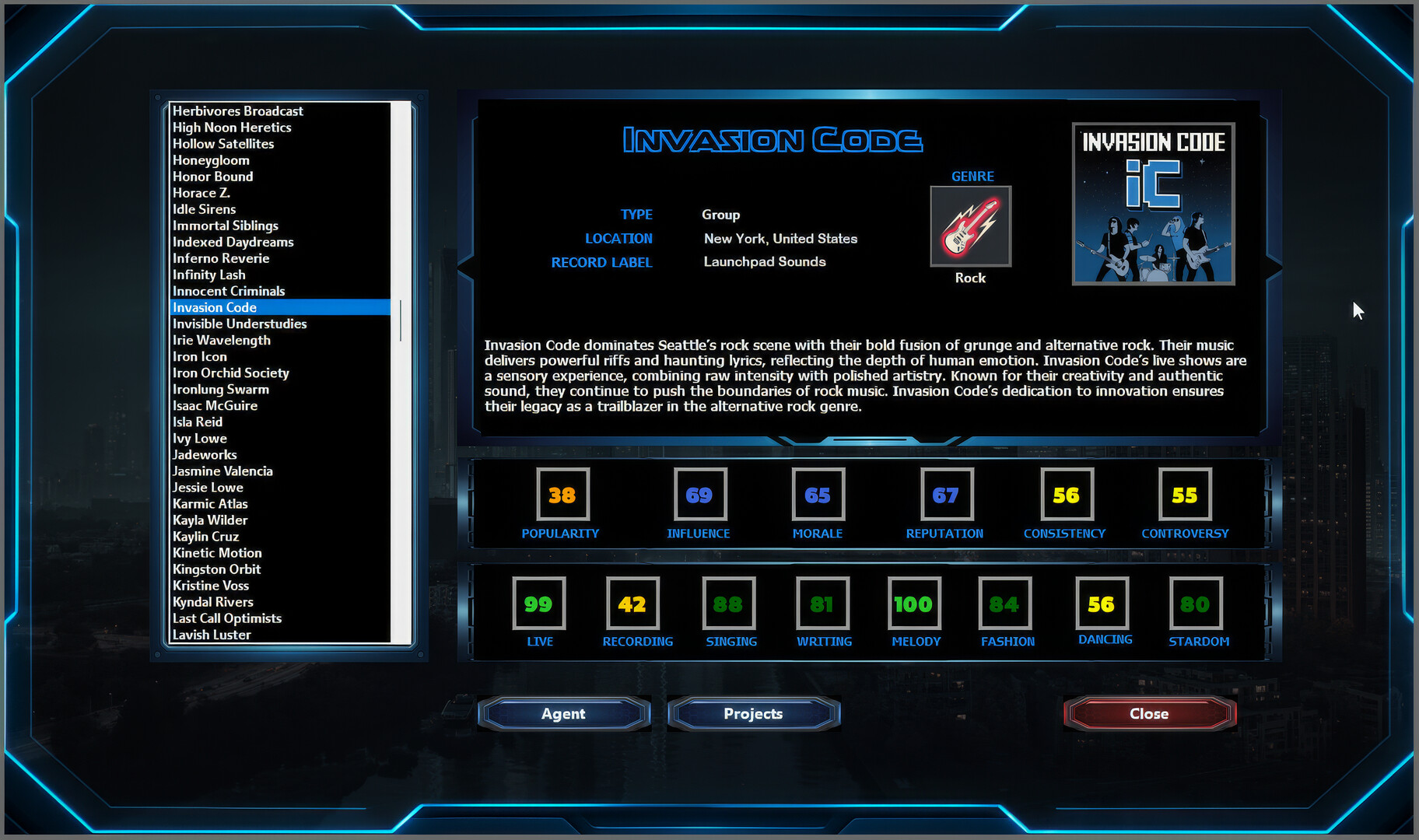
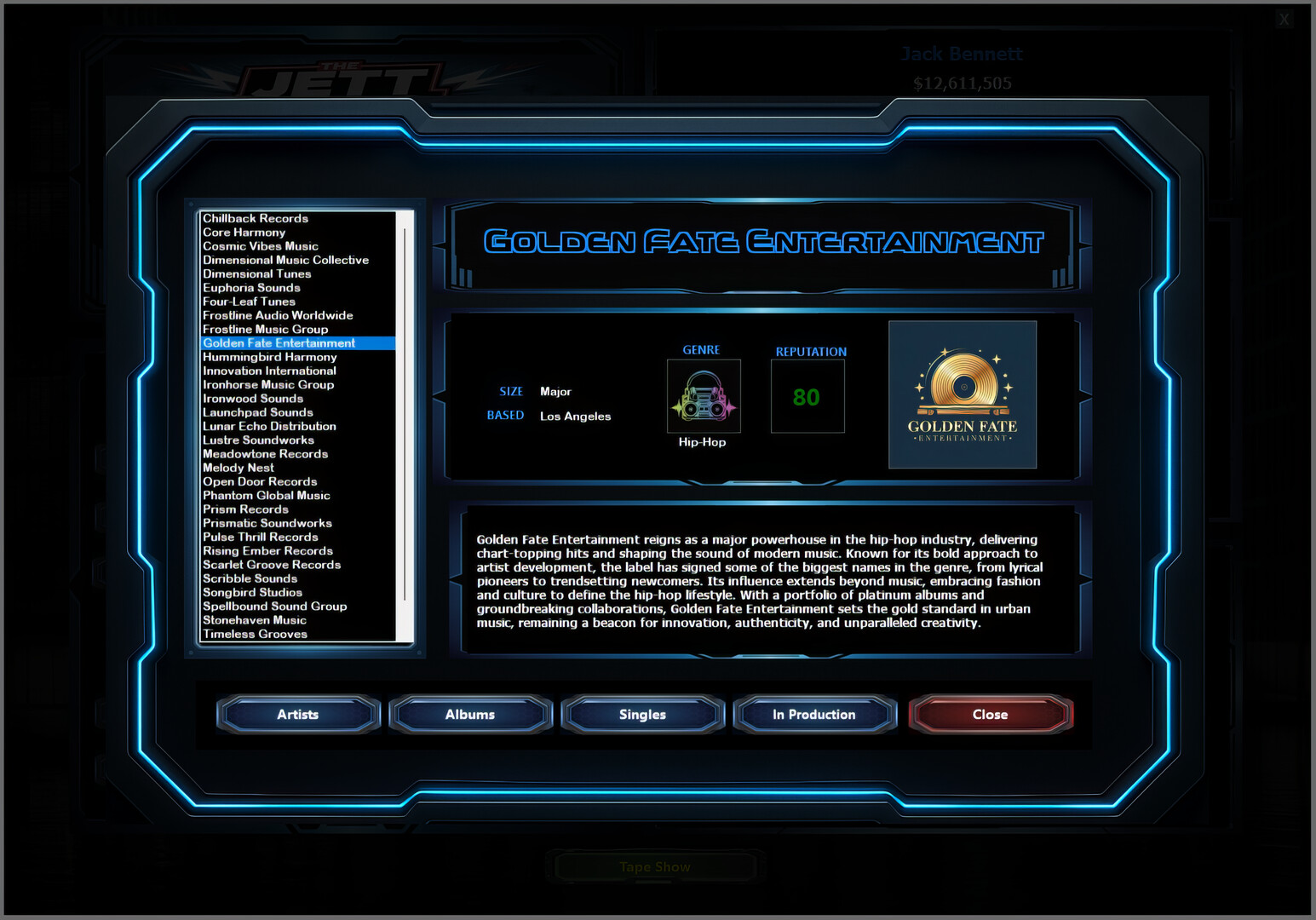
Film studios develop movies, series and specials. Publishers release books. Record labels push songs and albums. Streaming services fight networks for programming. Companies operate on different strategies and resources, reshaping the entertainment landscape as the game unfolds.
The people you book have lives beyond your couch. Careers rise and fall. Projects launch, succeed, flop and disappear. Yesterday's unknown guest may return a year later as the hottest name in the industry - assuming your rival hasn't booked them first.
And the fictional social platform EchoStream reflects it all in real time: posts, comments, likes and reposts reacting to celebrities, shows, controversies and entertainment news. Public conversation can amplify a success, revive an old story, or turn one uncomfortable moment into the only thing anybody is talking about.
The entertainment industry is not scenery. It is part of the simulation.
MAKE EXECUTIVE DECISIONS
Not every problem can be solved from the episode planner.
Departments bring you issues. Staff demand decisions. Opportunities demand money, influence or action. Professional relationships, reputations and grudges develop alongside careers - and entertainment-industry grudges have remarkably good memories.
Some choices offer immediate rewards. Some are investments. And sometimes every available option is unpleasant.
You are the Executive Producer. Eventually the decision lands on your desk.
FROM TALK SHOW TO ENTERTAINMENT EMPIRE
There is no perfect strategy that works forever. Audience tastes shift. Stars fade. Competitors improve. Your job is to see what's changing before everyone else does - then chase the trend, resist it, or create one.
Your show is the centre of the game, but its influence can reach far beyond the studio. Use your success to gain access to better talent, stronger commercial opportunities and a more powerful position across television, music, film, publishing, streaming and advertising.
What begins as a nightly television program can become the foundation of something much larger.
KEY FEATURES
- Deep late-night show management: guests, monologues, segments, interviews and musical acts
- A living, simulated entertainment industry: networks, studios, labels, publishers, streamers and brands all acting on their own strategies
- Competitive nightly ratings with demographic and Nielsen-style audience simulation
- Full staff management with skills, morale, contracts, burnout and career development
- Network relationships, sponsorships, advertising and a real television economy
- EchoStream, an in-game social platform reacting to everything as it happens
- Emergent stories, rivalries, reputations and long-memory industry grudges
- No perfect strategy - a market that shifts, and rewards the producer who sees it first
You might build a respected interview show. You might create an unpredictable comedy machine. You might chase young viewers, dominate the mainstream, cultivate a fiercely loyal niche audience or turn celebrity chaos into ratings.
You might become television's most respected producer. You might become its most notorious.
You might also get cancelled.
The red light is on.