

Regions
No Reviews · 0 reviews
Screenshots



Description
Regions is an agent first deeply simulated city builder where citizens, vehicles, businesses, utilities, traffic, and the economy form one connected system. Shape the land, build detailed road networks, and watch individual choices grow into citywide consequences.
Platforms
Windows
Developer
Exit 5 Games
Publisher
Exit 5 Games
About
BUILD MORE THAN A CITY
Regions is an agent-first, deeply simulated city builder where every person, place, vehicle, and journey belongs to one connected regional system. Start with open land and shape an entire region containing cities, towns, suburbs, industrial districts, rural communities, and the infrastructure connecting them. Build roads, develop land, provide utilities and services, support a growing economy, and respond to the consequences of your decisions. A new intersection can change somebody’s commute. A disconnected neighborhood can struggle to attract residents. A successful regional connection can reshape development far beyond the road itself. Your region is not a painted backdrop. It is a place inhabited by persistent people whose individual choices combine into citywide behavior.
SIMULATE PEOPLE, NOT POPULATION POINTS
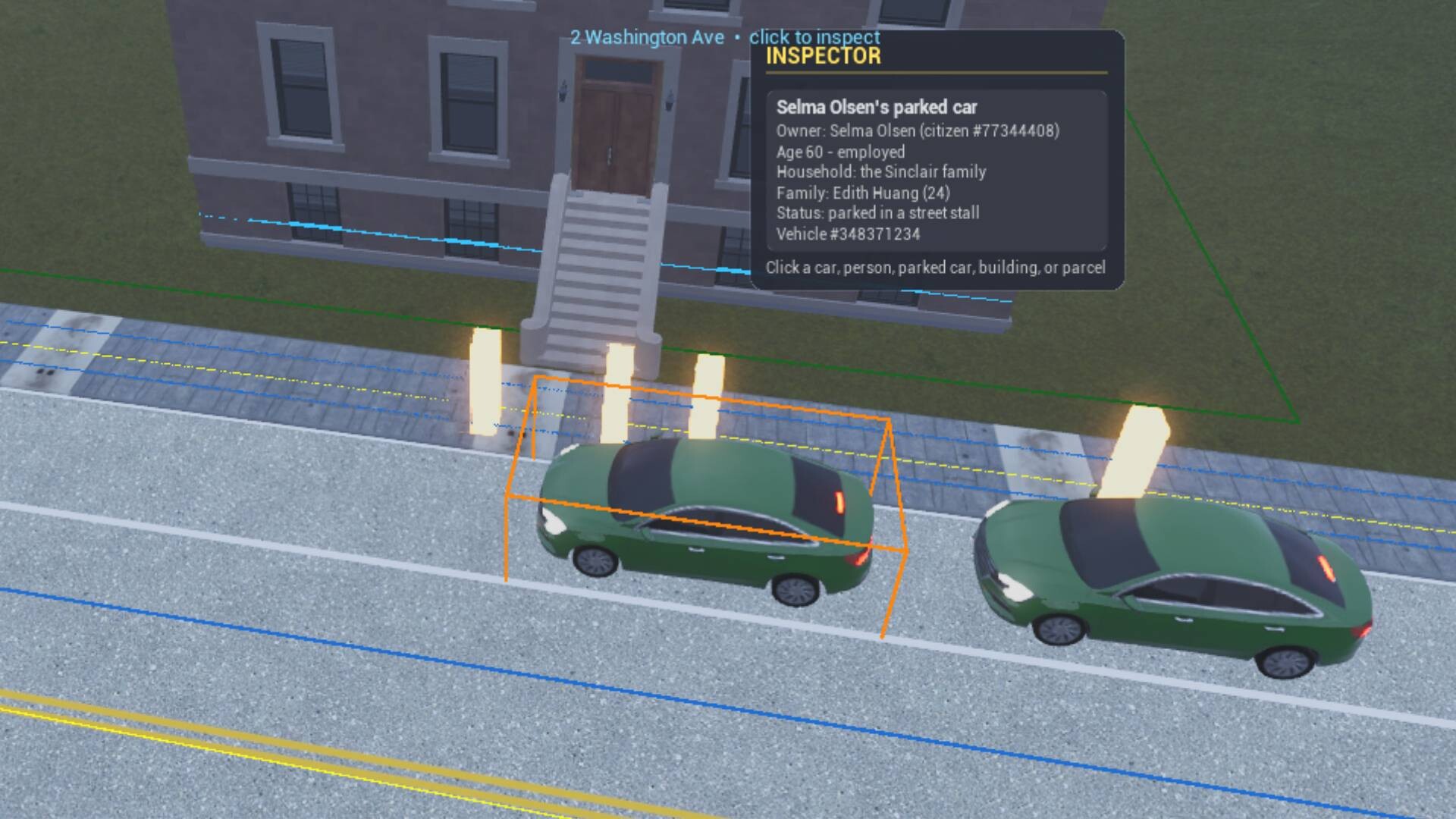
Residents in Regions are persistent agents—not temporary pedestrians or numbers at the top of the screen. People belong to households, live in specific homes, hold jobs at actual establishments, own vehicles, follow daily plans, spend money, use services, and travel between real destinations. When a household moves into the region, it does not simply appear inside a building. Its members enter through an outside connection, travel across your road network, park in an eligible space, walk to the building’s entrance, and only then become residents. Their identities remain consistent whether they are visible on the street, inside a building, travelling across the region, or stored in a saved game.
FOLLOW COMPLETE JOURNEYS
Trips are more than vehicles appearing on one road and disappearing on another. A resident may leave an activity, walk to their exact parked car, enter that vehicle, drive through the traffic network, find parking near their destination, and complete the final part of the journey on foot. The person, vehicle, route, parking space, and destination remain connected throughout the trip. Traffic emerges from the needs of the region. Residents commute to work, visit businesses, use services, and return home. External workers, visitors, tourists, shoppers, and freight can enter through regional gateways without becoming permanent residents. The roads you build determine whether those journeys succeed.
DESIGN FUNCTIONAL ROAD NETWORKS
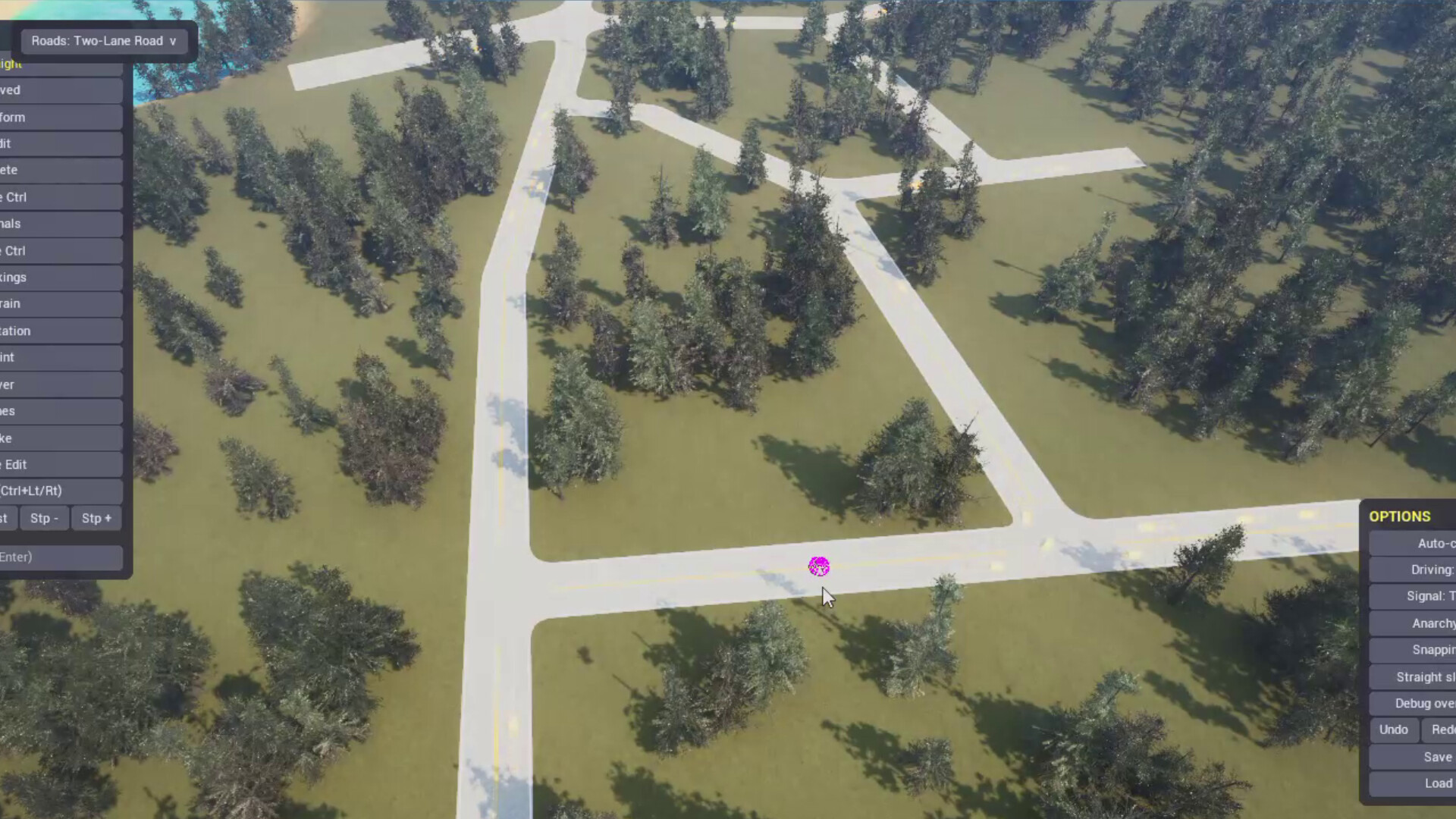
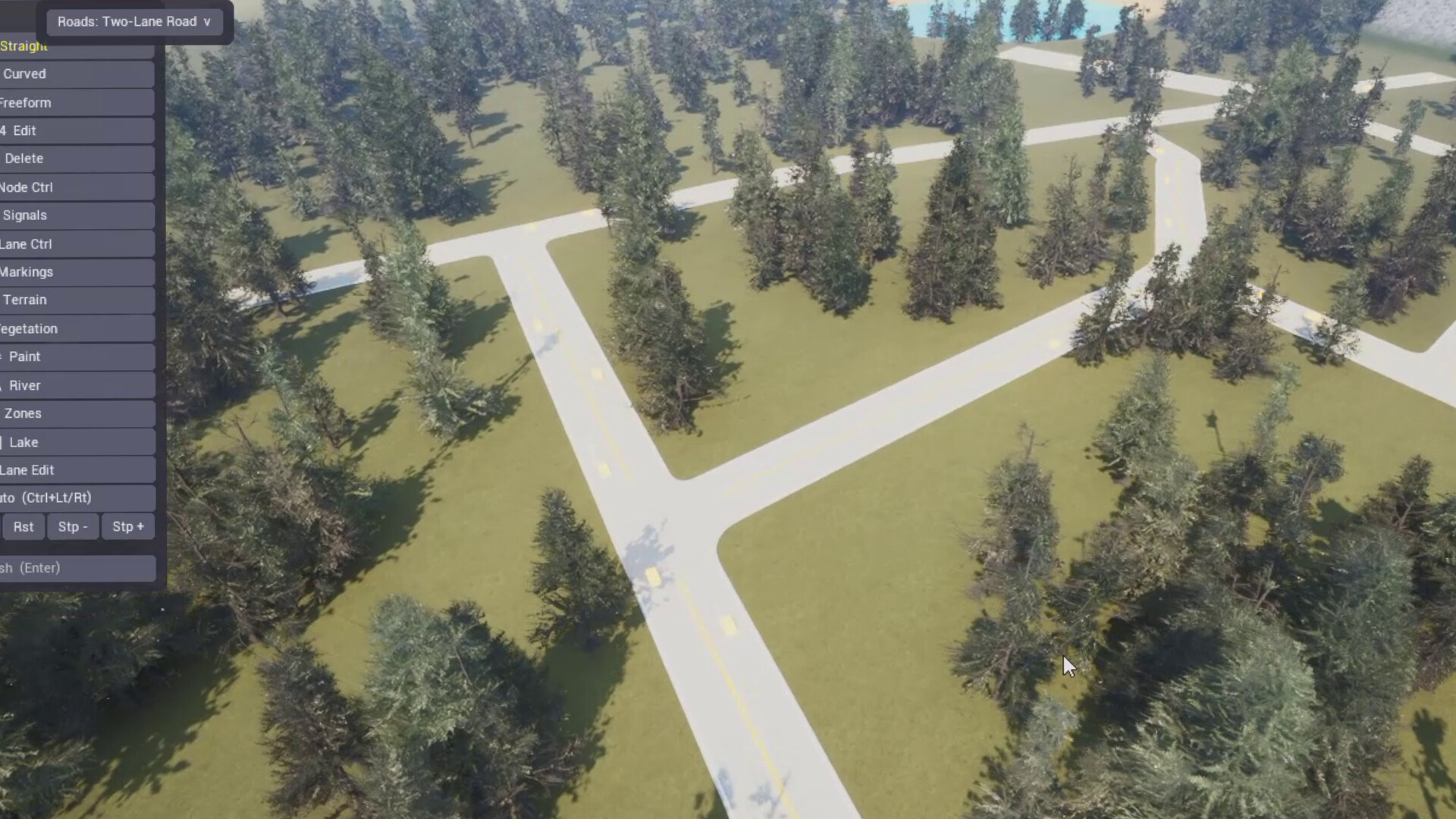
Construct detailed transportation networks using straight, curved, and freeform roads. Create local streets, major avenues, intersections, roundabouts, highways, ramps, bridges, and elevated connections shaped around the needs of your region. Roads are assembled from functional lanes rather than treated as simple visual paths. Driving lanes, turning lanes, parking, intersection layouts, signals, and road geometry influence how traffic moves. As the region grows, infrastructure that once served a small town may become a regional bottleneck. Redesign intersections, add capacity, create alternate routes, and decide whether a corridor should prioritize local access or movement across the wider region. Roads can change while people are using them. Network edits affect real journeys, destinations, parking, and travel plans—not just decorative traffic.
CREATE CITIES, TOWNS, AND NEIGHBORHOODS
Roads create blocks. Blocks create developable land. Use zoning and development tools to guide residential neighborhoods, commercial centers, industrial corridors, downtown districts, suburbs, and smaller communities spread throughout the region. Development responds to more than an available square on a grid. Parcels can consider their shape, road access, parking, nearby services, land value, demand, and their relationship with the surrounding community. Allow neighborhoods to grow naturally or take greater control over important properties and districts. Build one dense metropolitan center, a network of independent towns, or a region where every community serves a different purpose.
CONNECT INFRASTRUCTURE TO DAILY LIFE
Homes, businesses, and institutions depend on functioning regional systems. Utilities need providers, service territory, available capacity, connected customers, and a way to respond when supply cannot meet demand. Electricity, water, wastewater, waste collection, internet, and cellular service are parts of the same region inhabited by your residents. Businesses need workers and customers. Households need income and access to essential services. Governments collect revenue and carry responsibility for construction, maintenance, and regional needs. Money is designed to move between actual accounts. Wages, taxes, transfers, bills, construction, maintenance, and spending create evidence that the wider economy can respond to. Growth must be supported by the systems beneath it.
MANAGE CONNECTED COMMUNITIES
Regions is not limited to one isolated city. People, traffic, employment, services, trade, and development can cross municipal boundaries. One community may provide jobs for another. A highway built for regional traffic may divide a local neighborhood. A growing suburb may depend on utilities, services, and businesses located elsewhere. Regional, county, municipal, and unincorporated areas can carry different responsibilities while remaining part of the same simulation. Your challenge is not simply to make each city function alone, but to understand how every community affects the others around it.
BUILD AT YOUR OWN PACE
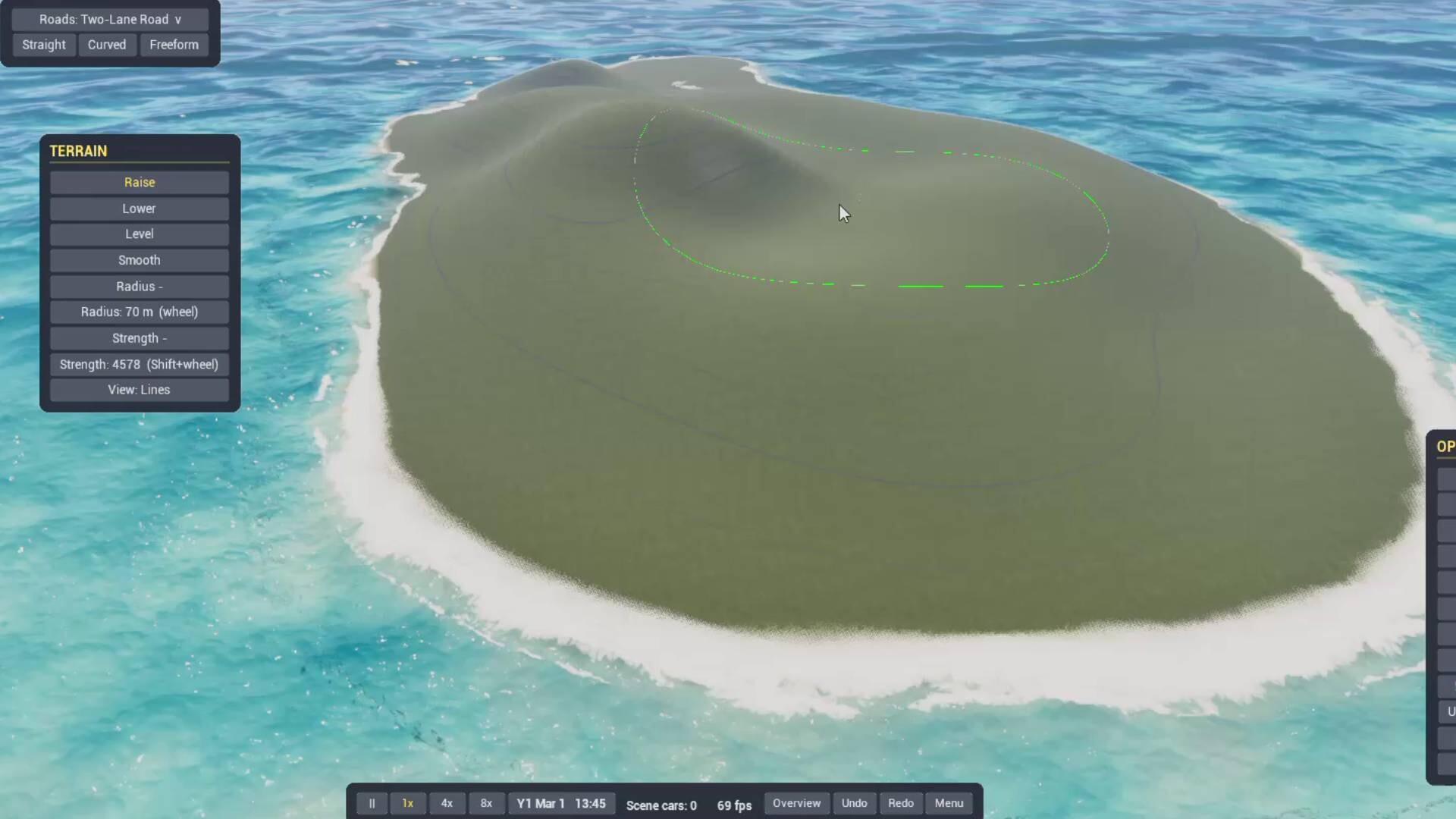
Regions is a single-player sandbox without a required storyline or predetermined city layout. Shape the terrain and decide where development begins. Build a dense metropolitan region, a collection of rural towns, an industrial transportation hub, a suburban network, or something entirely your own. Step back and watch larger patterns emerge, inspect why a neighborhood is struggling, follow an individual resident through their day, or trace a vehicle across its complete journey. There is no single correct region. Build the places you imagine—and discover how the people living there adapt to everything you create.